Rubio makes his strongest prediction yet about Cuba: "It will have a very different future"
The secretary of state stated that Washington considers the Caribbean nation a national security priority and said he is "convinced" that the island will embark on an "irreversible path" of transformation before January 2029.
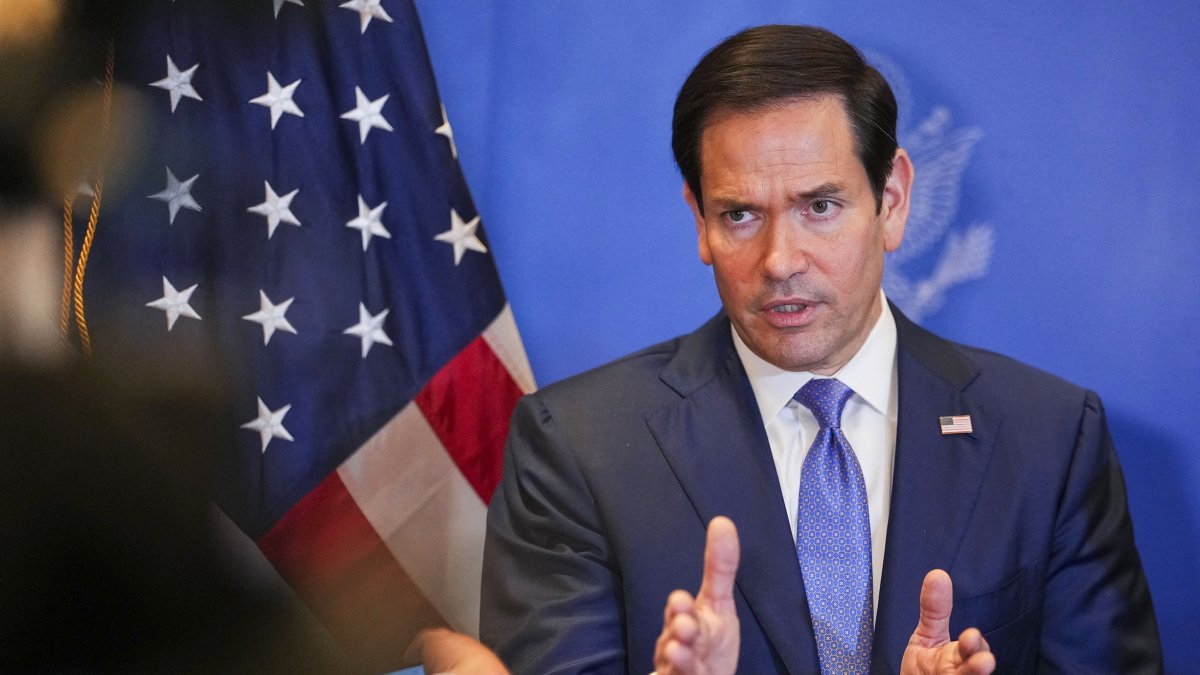
Marco Rubio during a trip to the Middle East / Eric Lee

Secretary of State Marco Rubio stated that he expects Cuba will have embarked on an irreversible process of transformation before the end of President Donald Trump's second term, on Jan. 20, 2029.
"I am convinced that Cuba, before this administration ends, will be on an irreversible path toward a very different future," Rubio said during an interview broadcast by The Katie Miller Podcast.
The U.S. secretary of state maintained, however, that any transformation of the island would not occur immediately and cited the transitions experienced by Eastern European countries after communism.
"You can't have something in place for 70 years, something that has taken root, and then think that, overnight, you're going to uproot everything and plant something completely new," he explained.
According to Rubio, some Eastern European countries needed "between three and five years" to consolidate their respective transition processes.
"Cuba is undoubtedly a priority"
Rubio also framed policy toward the island as part of Washington's strategic interests and not merely as an issue tied to his family history.
"Cuba is undoubtedly a priority for us because it serves our national interest," he stated.
The secretary of state considered it beneficial for the United States to have a Cuba that is "secure, stable and aligned" with Washington.
These statements reinforce a position that Rubio had already expressed publicly in recent months. In February, during an official visit to Saint Kitts and Nevis, he argued that the Cuban status quo was "unsustainable" and asserted that the island needed to "change dramatically," both economically and, eventually, politically.
In that speech, published in full by the State Department, Rubio said that Washington would be willing to help if Cuban authorities promoted reforms that would expand "the space for economic and, eventually, political freedom" for citizens.
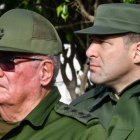
Washington targets the economic model and the power of GAESA
The Trump administration has focused much of its criticism on the island's economic structure and, in particular, on the role of GAESA, the business conglomerate controlled by the Cuban regime's armed forces.
Rubio has argued before Congress that a fundamental part of the Cuban economy is under the control of this military network and has maintained that the island needs "systemic and serious" reforms to prevent further deterioration.
In February, the secretary of state also stated that the current Cuban crisis is linked to an economic model he described as "non-functional" and noted that for decades Havana depended on foreign subsidies, first from the Soviet Union and later from oil supplied by Venezuela.
Rubio noted at the time that the crisis in Cuba's electricity system already existed before the recent political changes in Venezuela and attributed the situation to decades of economic decisions made by the regime.
Rubio rules out the possibility that pressure on Havana is temporary
The secretary of state's latest statements also aim to send a political message to Havana: Washington does not view its current strategy toward Cuba as a short-term measure.
According to Rubio, the Cuban regime should not count on the pressure subsiding simply by waiting for the end of the Trump administration. The official believes that Cuba is going through a particularly delicate period due to the combination of its internal crisis and the weakening of external support that historically allowed it to sustain its economy.
This position aligns with his official statements from February, when he asserted that the Cuban system was facing an "unsustainable" situation and that the authorities had two paths: to carry out profound reforms or to maintain a model that, in his view, will continue to cause economic deterioration and suffering for the population.
Washington has also indicated that certain exceptions to its policy of pressure are intended to directly benefit the Cuban private sector, preventing resources from ending up in the hands of the government or companies linked to GAESA. Rubio explained that the United States could authorize certain transactions with private entrepreneurs, but warned that licenses would be revoked if any diversion of those resources to military or state entities were detected.
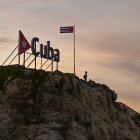
World
The window is closing: The CIA creates a secret unit to step up pressure on the Castro leadership
Andrés Ignacio Henríquez
The energy crisis: The backdrop
The Unión Eléctrica (UNE) itself publishes daily forecasts on the availability and demand of the National Electric System and has for months acknowledged disruptions caused by a lack of generation capacity.
Rubio has used this crisis as one of his main arguments to question the functioning of the Cuban model. In February, he officially stated that the power grid was already in a state of serious deterioration and linked its structural problems to the lack of economic reforms.
The Secretary of State's latest remarks now raise the political stakes of that strategy: Rubio not only anticipates increased U.S. pressure on Havana but also says he is convinced that, by January 2029, Cuba will have begun a process of transformation that he considers irreversible.
LATEST