The Senate deals another symbolic blow to Trump: Four Republicans join Democrats to halt the war against Iran in the midst of the peace process
The vote also laid bare Congress’s unease with Trump’s diplomatic strategy, one week after his administration signed a memorandum of understanding with Iran.
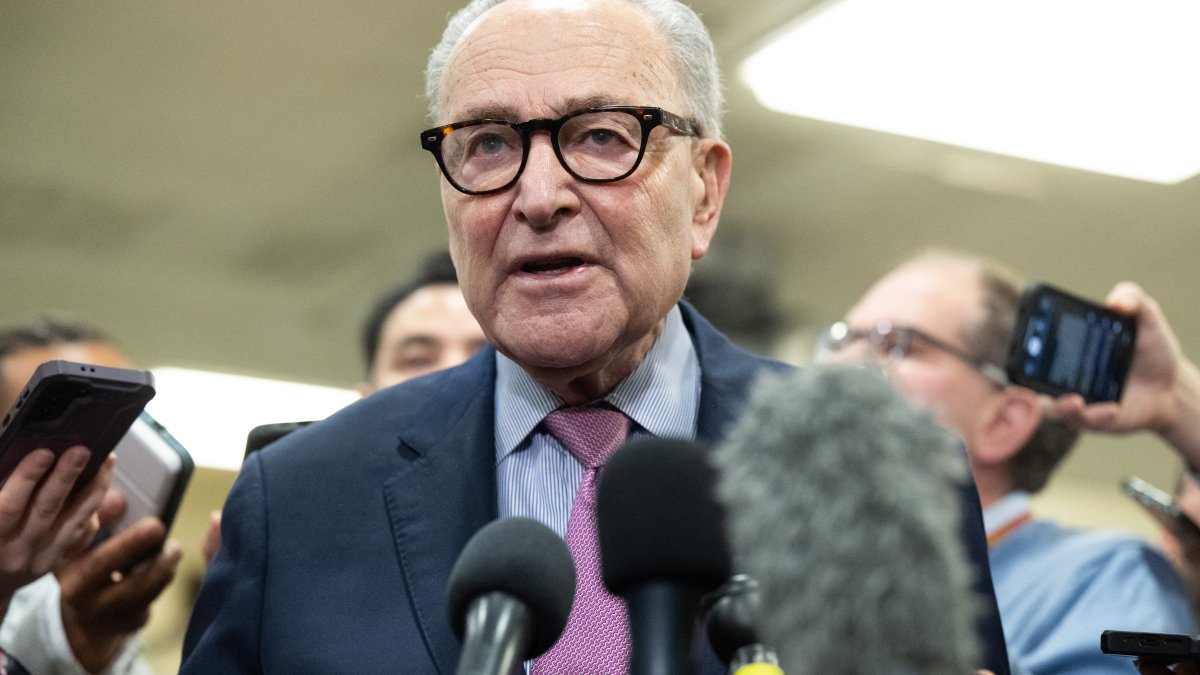
Senator Chuck Schumer in Washington in a file photo

The Senate approved a resolution on Tuesday to halt the military campaign against Iran, marking a new symbolic setback for President Donald Trump just as he is trying to persuade lawmakers and the public that an end to the war is within reach, amid a fragile peace process with the regime in Tehran.
The vote ended 50 to 48 in favor of the measure, which requires congressional authorization for any future military action against Tehran. The result was made possible because four Republicans broke ranks and sided with the Democratic caucus: Bill Cassidy of Louisiana; Susan Collins of Maine; Lisa Murkowski of Alaska; and Rand Paul of Kentucky. Conversely, Democrat John Fetterman of Pennsylvania voted against it, as he has consistently done throughout this process.
Despite passing the measure, the resolution’s actual scope is limited. It is a concurrent resolution—a legislative instrument that does not reach the president’s desk for signature or a potential veto—and therefore lacks the force of law. The Supreme Court has already ruled against such measures when they seek to overturn executive branch decisions that do not require the president’s signature. The White House was quick to dismiss the text as harmless.
Even so, the vote represents an awkward turning point for the Trump administration. It is the first time that both chambers of Congress have formally spoken out against a war that has now lasted more than 100 days (the House of Representatives had passed an identical measure in early June).

The outcome itself was shaped by Republican absences. Had Senators Dave McCormick of Pennsylvania and Mitch McConnell of Kentucky—who was hospitalized earlier in the month—been present, the resolution might have been blocked in a 50–50 tie.
A White House official, who asked not to be identified, downplayed the significance of the vote: he argued that it depended on those absences, that the text has no legal force, and that hostilities had already ceased with the April ceasefire. The sponsor of the measure, Democratic Congressman Gregory Meeks of New York, his party’s leading voice on the House Foreign Affairs Committee, rejected those arguments and announced that he would seek ways to enforce it.
“Regardless of what President Trump says, this measure is binding under the War Powers Resolution, and I will explore all legal avenues to ensure the executive complies with the will of Congress,” Meeks stated in a press release.
The vote also laid bare the unease with Trump’s diplomatic strategy, a week after his administration signed a memorandum of understanding with Iran. Vice President JD Vance traveled to Switzerland over the weekend to lead talks on Iran’s nuclear program. Both he and Trump claim that Tehran agreed to allow inspectors into the country, a claim the Iranian regime denies.
The Democratic minority leader, Chuck Schumer, promised to continue forcing votes and lashed out at the agreement.
"Trump gave Iran everything, their terrorist proxies, their control over the Strait [of Hormuz], their oil revenues," […] "And it's still unclear what we've gotten in return," he said.
The objections, however, are not coming solely from the opposition. Republican hawks such as Roger Wicker, chairman of the Senate Armed Services Committee, have expressed reservations about a reconstruction fund for $300,000 million and Iran’s ability to enrich uranium to levels close to weapons-grade. Trump will speak on Wednesday at the Republican caucus’s weekly lunch, where he is expected to press skeptics.
"I think anybody that's been critical of it has to be educated, even if they're friends of mine," the president told reporters.
LATEST