Mortgage Fraud: Trump renews offensive against Fed Governor Lisa Cook
According to the report, the letter—signed by Dan Scavino, the White House deputy chief of staff—gives Cook 21 days to respond to the fraud allegations. Cook's attorneys deny any wrongdoing.
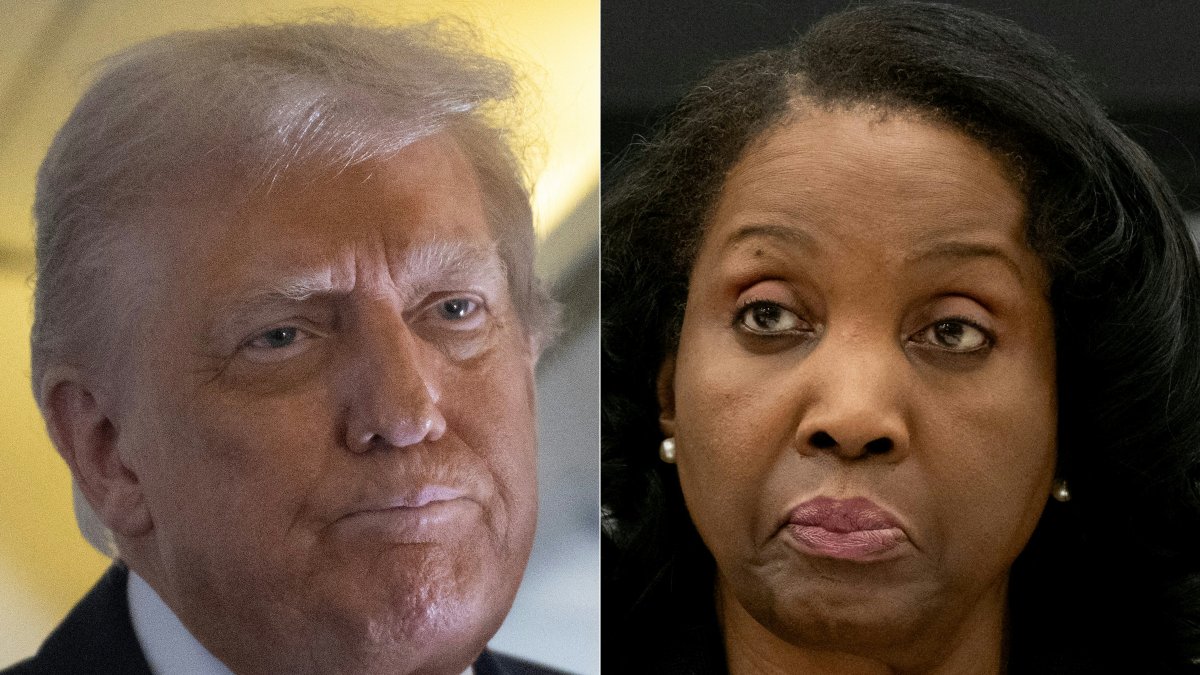
Donald Trump and Lisa Cook in a file photo

After being directly blocked by the Supreme Court, the White House has once again targeted Federal Reserve Governor Lisa Cook. According to a report by The Wall Street Journal, the administration of President Donald Trump sent a letter to Cook this week informing her that the president is "considering" removing her from office due to allegations of mortgage fraud that have been pending against her since last year, and demanded a written response by the end of August.
According to the report, the letter, signed by Dan Scavino, deputy chief of staff at the White House, gives Cook 21 days to respond to the allegations.
The move comes just two months after the Supreme Court blocked Trump's first attempt in June to remove her from the Fed without subjecting her to even minimal legal scrutiny; as a result, the new letter appears designed, this time, to comply with the standard set by the court.
The dispute stems from a criminal referral filed by Bill Pulte, one of the administration's top housing officials, who accused Cook of lying in 2021 about her primary residence in mortgage documents in order to obtain more favorable terms from a lender. At the time, Trump did not give her any formal opportunity to defend herself against the accusation.
Cook has denied any wrongdoing in the matter. Her attorneys argue that, at worst, it was an unintentional error, and they claim the allegations are merely a pretext for President Trump to advance his goal of controlling the country's monetary policy by placing allies within the Fed.
"These allegations are as baseless now as they were a year ago when President Trump tried to remove Governor Cook and interfere with the independence of the Federal Reserve," her attorney, Abbe Lowell, said Friday, as quoted by the WSJ. "As we did before, we will challenge this latest pretext and preserve her position and the historic role of the Fed."

Politics
Trump on reversal of Lisa Cook's dismissal: 'We will take appropriate action'
Alejandro Baños

The offensive against Cook began in August of last year, when Trump posted on social media that she "must resign" and, a few days later, sent her a letter notifying her of her immediate dismissal. It was the first time in the central bank's history that a president had attempted to remove one of its governors. Cook sued the government, arguing that Trump had no grounds to remove her without due process, and in June, the Supreme Court essentially ruled in her favor, determining that she could not be removed from office without certain minimum procedural safeguards.
In the new letter, the White House argues that the allegations "cast doubt" on Cook's honesty, reliability and competence to hold office, and that for this reason Trump "has determined that there are grounds" to consider them grounds for removal.
According to her financial disclosures, Cook has reported that her legal expenses have already exceeded $1 million, covered by donations, as she fights to retain his position.
New Fed Chairman Kevin Warsh, appointed by Trump, declined to comment on Cook's case during his Senate confirmation hearing in April, citing that the litigation was then pending before the Supreme Court. A Fed spokesperson declined to comment on Friday regarding the new letter.
The institution was a constant source of friction between Trump and former Chairman Jerome Powell, whose term ended in May, largely because the Fed kept interest rates higher than the president would have liked. That conflict led, last year, to a criminal investigation by the Department of Justice into Powell's testimony before Congress regarding a reappointment, a case that was dropped this spring after a Republican senator refused to support Warsh's nomination while Powell faced pending charges.
Although most Fed chairmen leave the institution at the end of their term as head of the agency, Powell decided to remain as a governor, citing risks to the Fed's independence; his term ends in January 2028, and Trump's new offensive against Cook could influence how long he decides to stay.
Warsh has downplayed the White House's pressure on the central bank. "Fed independence is up to the Fed," he said during his confirmation hearing, although doubts about that independence have dogged him ever since. Warsh and Trump have frequently spoken by phone about the economy, an unusually close bond between the central bank and the White House.
Since Warsh took office in May, the Fed has kept rates unchanged, although high inflation led several of its policymakers, including Cook, to discuss a possible rate hike—rather than a cut—as the next move. Trump has attributed the lack of rate cuts under Warsh's leadership to what he called a "very political board."
LATEST