From the Middle East, Marco Rubio rejects the possibility of Iran imposing fees in the Strait of Hormuz
From June 23 to 25, the official will visit some of Washington, D.C.’s key Arab allies in the Persian Gulf: the United Arab Emirates, Kuwait, and Bahrain.
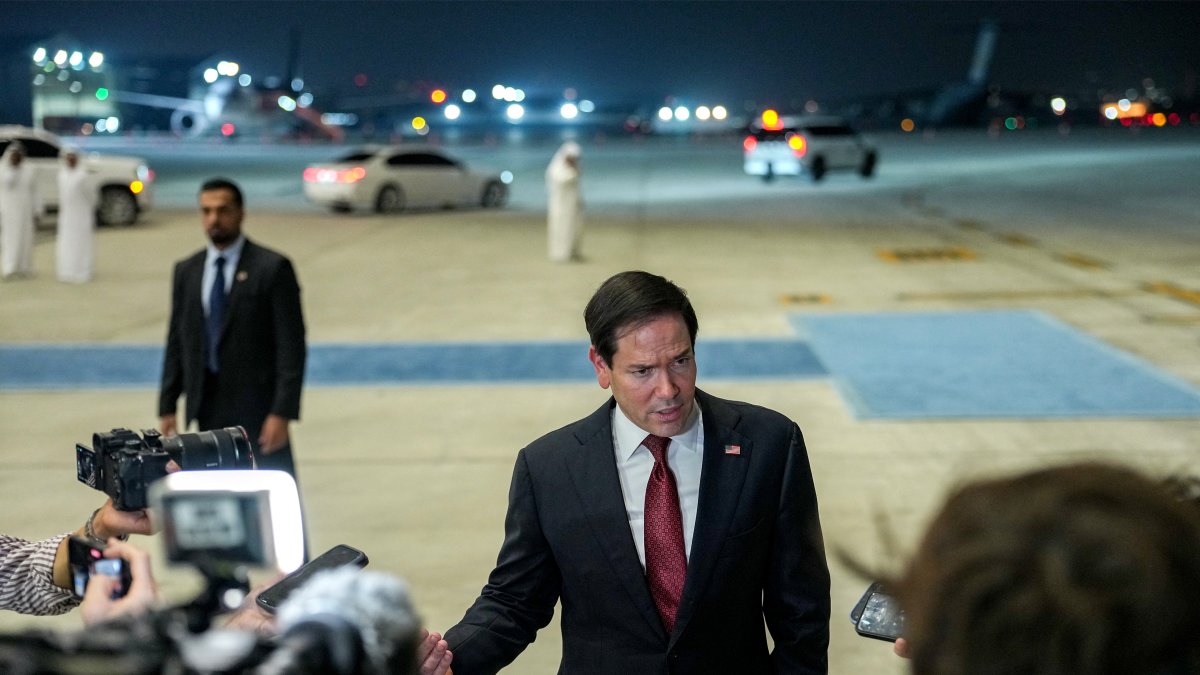
Marco Rubio in Abu Dhabi/ Eric Lee

Marco Rubio stated that no country can levy tolls on ships transiting the Strait of Hormuz. The Secretary of State’s remarks come amid negotiations to end the war with Iran. This is Rubio’s first trip to the Middle East since the conflict began on February 28.
From June 23 to 25, the official will visit some of Washington, D.C.'s key Arab allies in the Persian Gulf: the United Arab Emirates, Kuwait, and Bahrain. Through a statement, the Department of State stated that Rubio will address "a range of regional priorities," including "the memorandum of understanding with Iran, efforts to secure full and free safe transit through the Strait of Hormuz, and the importance of peace and stability in the region."
Upon his arrival at the Al-Bateen Executive Airport in Abu Dhabi, the Secretary of State answered questions from the press.
Rubio began by stating that the White House does not consider the possibility that Iran could charge fees in the Strait of Hormuz, one of the key issues in the negotiations between Washington, D.C., and Tehran: "No country is allowed to charge tolls or fees on an international waterway. That's existing international law. That's the way it is in international waterways all over the world, and that's the way we expect it'll be here."
In addition, the Secretary of State stated that the Iranians have agreed to allow nuclear inspections by the International Atomic Energy Agency (IAEA), even though the regime has denied this: “We know what they agreed to. I don’t know why they have to say the things they say.”
"Whatever their internal or domestic politics is, I guess they'll navigate it. But we know what they agreed to do, and now they'll either do it or they won't. And if they do, the process moves forward. And if they don't, the president will have some decisions to make," he added.
Previously, President Donald Trump had confirmed that Iran had agreed to undergo nuclear inspections "at the highest level."
Finally, Rubio asserted that Iran could attract foreign direct investment and “do incredible things” if it chose to “be a country instead of a revolutionary movement that exports terror.”
LATEST