ANALYSIS
Former Venezuelan dictator Nicolás Maduro and his wife, Cilia Flores, appear for the second time before a federal court in New York
During the hour-long hearing, federal judge Alvin Hellerstein, who is presiding over the case, indicated that he would not dismiss the case despite the fact that the former president and his wife claim they cannot afford their legal defense without support from the Venezuelan regime.
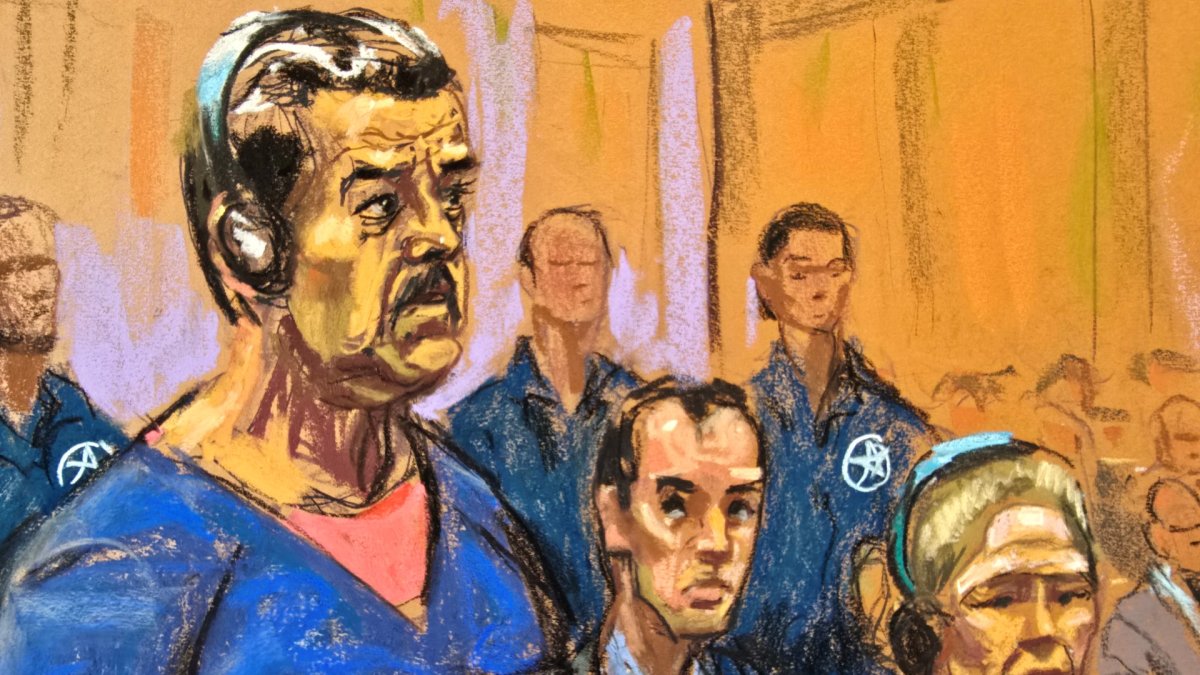
Sketch of the first appearance of Maduro and Flores.

Venezuelan ex-dictator Nicolás Maduro and his wife, Cilia Flores, attended their second hearing this Thursday in the Southern District Court of New York, since they were captured in early January during a U.S. raid in Caracas.
Maduro, who smiled as he entered the courtroom, did not address the court during the session, which focused on arguments over who should pay his legal fees. U.S. sanctions prevent the Venezuelan regime from covering those expenses, and Maduro and Flores argue that they do not have sufficient personal funds to do so.

World
María Corina Machado in CERAWeek: Venezuela could quintuple its oil production once democracy is restored
Luis Francisco Orozco
During the hour-long arraignment, federal Judge Alvin Hellerstein, who is presiding over the case, indicated that he would not dismiss the case even though the former president and his wife claim they cannot afford to pay for their legal defense.
"I’m not going to dismiss the case," the judge said, apparently rejecting the request of the former president's lawyer, Barry Pollack.
Dressed in a gray prison uniform, glasses and headphones for translation, Maduro took notes throughout the hearing and at times spoke to his lawyer through an interpreter, an AFP reporter observed.
Hellerstein says he sees no national security reason to block funds
The magistrate has stepped up pressure on the prosecutor's office over its efforts to prevent the Venezuelan government from covering the former president's defense costs. During the hearing, Hellerstein questioned whether there are national security reasons to justify maintaining such a blockade.
Assistant U.S. Attorney Kyle Wirshba argued that the U.S. government should be able to "use sanctions to influence foreign policy or national security". As he explained, that power is key to limiting access to certain resources. "That is the purpose of the sanctions and a justifiable reason for limiting access to funds," he said. "As your honor knows, that purpose predated the criminal case here."

Wirshba further recalled that the Office of Foreign Assets Control (OFAC) is the entity charged with assessing whether national security and foreign policy reasons persist for maintaining sanctions, and stressed that "they are still in place."
Hellerstein, however, was skeptical of that argument. "The defendent is here. Flores is here. They present no further national security threat. I don’t see it," the judge responded, making clear his disagreement with the government's position.
World
What does it mean when the US lowers its travel advisory for Venezuela to level 3?
Virginia Martínez
"The defendants are plundering the wealth of Venezuela," Wirshba asserted. "It would undermine the sanctions to allow them to access those funds now."
Wirshba added that Maduro and Flores can draw on whatever personal resources they have at their disposal, but not necessarily those of a third party.
Trump anticipates more charges, questions Maduro's judicial future
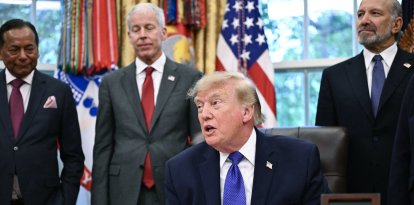
President Trump said Thursday that Maduro could face further charges.
"I would imagine there are other trials coming because they've really sued him just at a fraction of the kind of things that he's done," the president told reporters at the White House.
"Other cases are going to be brought, as you probably know," Trump said, giving no further details.
"We trust the U.S. legal system," son of ex-dictator says
"We hope that the trial will continue to take place within the framework of the legality of the United States," said the son of the former president, popularly known as "Nicolasito."
"We trust the U.S. legal system," he said.
Previously, Maduro has declared himself a "prisoner of war" and pleaded "not guilty" to the four charges he faces: conspiracy to narco-terrorism; conspiracy to import cocaine; possession of machine guns and destructive devices; and conspiracy to possess machine guns and destructive devices.
LATEST