The US begins the closing of its military chapter in Syria with the withdrawal of its troops
US forces have already left the Al Tanf garrison, located at a strategic point where Syria, Jordan, and Iraq converge, as well as the Al-Shaddadi base in northeastern Syria.

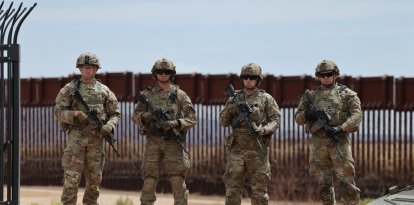
U.S. soldier in Syria.

The United States initiated the withdrawal of approximately 1,000 military personnel still remaining in Syria, according to confirmed three U.S. officials to The Wall Street Journal. The withdrawal, which has already begun on the ground, will be completed in about two months and represents the closure of a military operation that spanned 10 years.
U.S. forces have already left the Al Tanf garrison, located at a strategic point where Syria, Jordan and Iraq converge, as well as the Al-Shaddadi base in northeastern Syria. According to two of the officials, those withdrawals were finalized earlier this month and are part of a phased plan to evacuate the remaining positions.
Separated from deployment off Iran

Politics
Central Command executes new wave of strikes against ISIS infrastructure in Syria
Joaquín Núñez
Changes on the Syrian ground.
Officials said President Donald Trump's administration determined that the U.S. military presence is no longer needed, in part because of the near-total disbanding of the Syrian Democratic Forces (SDF), which for years was Washington's main partner against the Islamic State.
Syrian President Ahmed al-Sharaa's forces recently seized most of the territory that was under Kurdish control. Damascus and the SDF subsequently reached a U.S.-backed ceasefire, and the Kurdish organization agreed to integrate into the Syrian army.
A senior official indicated that Syria is currently leading counterterrorism operations, although the United States would retain the ability to respond tothreats linked to ISIS in the region.
Risk factors and diplomatic pivot.
Another reason put forward for the withdrawal is to reduce the risk of friction with the Syrian army. Previous reports had pointed to the presence of jihadist sympathizers in its ranks. In December, two U.S. soldiers and a civilian interpreter were killed after an attack by a member of the Syrian security forces who was to be dismissed for holding extremist positions.
While some officials fear that a smaller presence will facilitate tensions or an eventual resurgence of ISIS, others argue that the reduced remaining contingent carried more political weight than operational capability.
In parallel, Washington is seeking to bolster its diplomatic presence following the consolidation of power by Sharaa, who in late 2024 ousted Bashar al-Assad. Secretary of State Marco Rubio met last week with his Syrian counterpart to discuss counterterrorism cooperation and the continuation of the cease-fire.
LATEST