ANALYSIS
Trump defies Senate rules: why eliminating the filibuster would be a historic turnaround
The president's request turns out to be an odd coincidence with Joe Biden, who also tried to get rid of a 50-year-old rule that has been screwing the political party with a majority in the upper chamber, while helping the party in the minority.
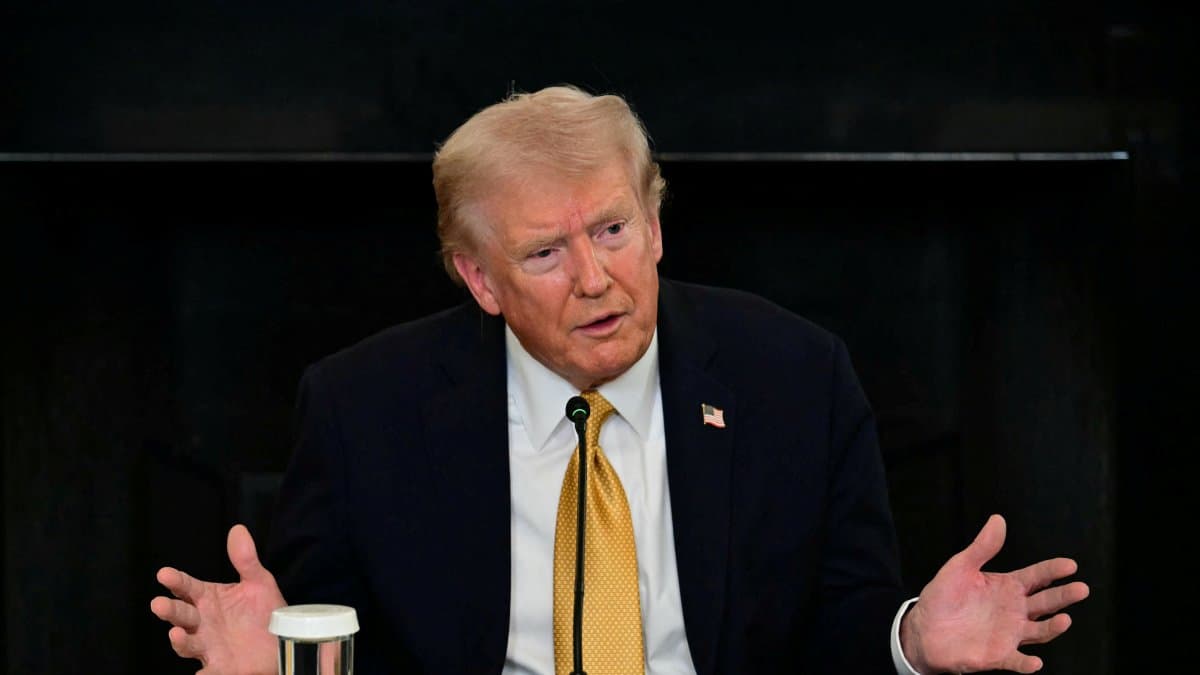

Frustrated that Democrats are reluctant to end the government shutdown, Donald Trump returned from Asia with a very specific request for Republican senators. The president urged them to eliminate filibusterism (filibuster), a rule that is key to the modern functioning of the Senate.
"It is now time for the Republicans to play their “TRUMP CARD,” and go for what is called the Nuclear Option — Get rid of the Filibuster, and get rid of it, NOW!! ", he wrote on his social network.
Trump's request turns out to be an odd coincidence with Joe Biden, who also tried to get rid of a 50-year-old rule that has been screwing the political party with a majority in the Senate while helping the party in the minority.
If eliminated, it could mean a 180-degree turn in the power dynamics on Capitol Hill.
Donald J. Trump Truth Social Post 10:36 PM EST 10/30/25
….BECAUSE OF THE FACT THAT THE DEMOCRATS HAVE GONE STONE COLD “CRAZY,” THE CHOICE IS CLEAR — INITIATE THE “NUCLEAR OPTION,” GET RID OF THE FILIBUSTER AND, MAKE AMERICA GREAT AGAIN!
What is filibustering?
The Congress is composed of the House of Representatives and the Senate. In the former, of 435 members, a piece of legislation is passed by a simple majority. This is the same as saying half plus one of the members. In this case, with 218 representatives.
In the Senate, the situation is a little different. While the founding fathers intended it as a more deliberative body, they did not specifically create a rule to ensure that happens.
However, it naturally evolved into creating a mechanism that limits the power of the majority. Once a bill arrives and goes to debate, more or less lengthy depending on the subject matter, 60 senators out of 100 are needed to end that debate and move on to the final vote. This final vote is governed by simple majority rules: 51 senators or 50 plus the vice-presidential runoff. Currently, since Trump has 53 Republicans in the Senate, he is forced to negotiate with Democrats to reach a majority of 60.
This rule, known as a filibuster, is an ally for the party in the minority and usually a headache for the majority. It affects only legislation, but not judicial nominations, either to lower courts or to the Supreme Court.
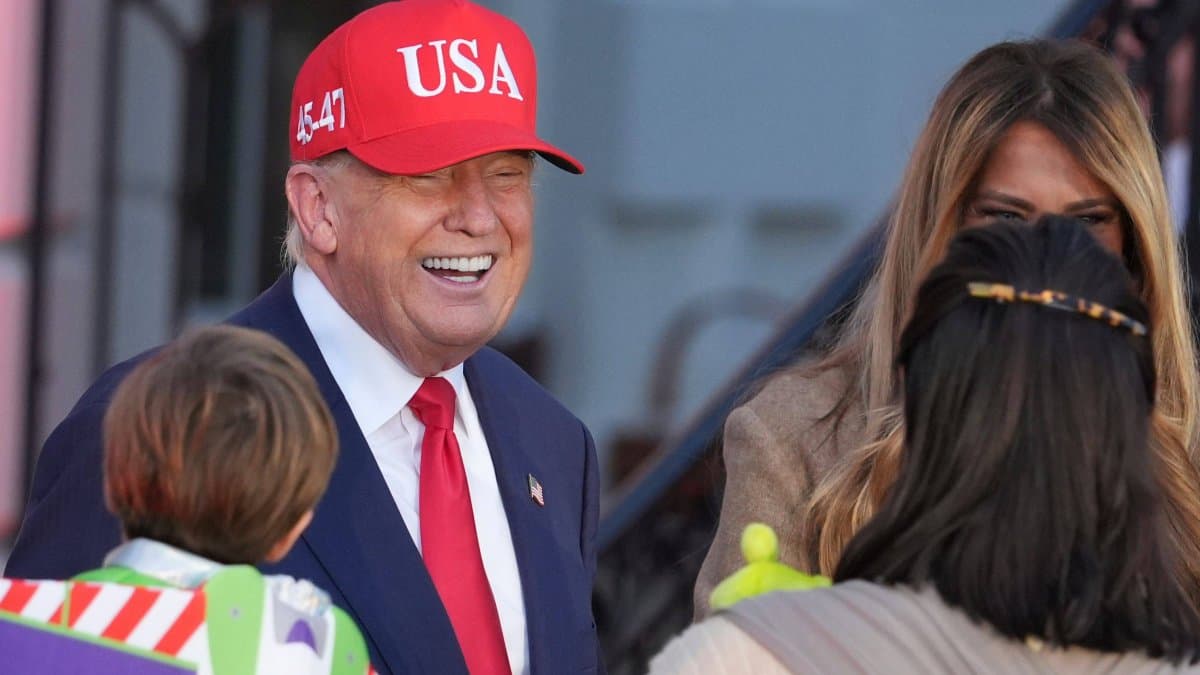
Just the News
Trump urges Senate Republicans to enact nuclear option to end Democrat filibuster, federal shutdown
John Solomon

Society
What is the Supplemental Nutrition Assistance Program (SNAP) and how does it work?
Diane Hernández
Although its modern origin dates back to the 19th century, this rule was not explicitly part of the National Constitution. It came into being in 1806 thanks to Vice President Aaron Burr (yes, the same one who killed Alexander Hamilton in a duel) ordering a revision of the Senate rules.
"You are a great deliberative body. But a truly great Senate would have clearer rules of procedure. Yours is a mess. You have a lot of rules that do the same thing," Burr said, according to the Brookings Institution.
At the time, he opted to eliminate a rule called 'previous question motion,' which allowed debate to be closed by a simple majority. For this reason, many consider it a mechanism that was born almost by accident, given that this simple action forever changed the functioning of the Senate.
With this precedent, between 1806 and 1917, there was no formal rule to end debate on a bill, giving rise to endless speeches and conversations in the Upper House.

Modern obstructionism was then born under the presidency of Woodrow Wilson. Senate Rule XXII was created as a way to force the closure of debate on a bill. For this, a vote in favor by two-thirds of the senators was fixed.
Lawmakers premiered it two years later, in 1919, to end debate on the Treaty of Versailles. Indeed, over the next four decades, the Senate only managed to invoke the closure five times, once to enact the Civil Rights Act of 1964.
The current form of the rule was formalized in 1975, under Gerald Ford, when the number of senators required to close debate was updated to three-fifths. That is, 60 votes out of 100.
For and against: a relic of segregation or a fundamental counterweight?
Because it was used on many occasions to stop laws to stop civil rights laws, mainly between 1957 and 1963, many modern Democrats criticized this rule and associated it with Jim Crow laws.
For example, Barack Obama himself expressed himself this way at John Lewis' funeral: "And if all this takes eliminating the filibuster—another Jim Crow relic—to secure the God-given rights of every American, then that’s what we should do."
Former Vice President Kamala Harris used the same term in March 2021, while speaking out about voting laws passed in Republican states.


"I strongly support moving in that direction… I believe we should go back to a position … and I agree with President Obama that the filibuster is a relic of the Jim Crow era," Joe Biden said on the matter, also in 2021.
On the other side, Republicans and some Democrats argue that the filibuster is a cardinal rule to avoid partisan overreach, especially recognizing that the majority doesn't last forever.
"That’s what the Senate is about. It’s the last bastion of minority rights, where a minority can be heard, where a minority can stand on its feet, one individual if necessary, and speak until it falls into the dust. (...) “The Senate was intended to be a forum for open and free debate and for the protection of political minorities," explained former Sen. Robert Byrd (D-WV), who remained in the upper chamber for 51 years.
"The legislative filibuster … is the most important distinction between the Senate and the House. Without the 60-vote threshold for legislation, the Senate becomes a majoritarian institution like the House, much more subject to the winds of short-term electoral change. No Senator would like to see that happen. So let’s find a way to further protect the 60-vote rule for legislation," said Sen. Mitch McConnell (R-KY), who is retiring next year.

Steve Daines, current Montana senator and former chairman of the National Republican Senatorial Committee (NRSC), spoke to VOZ in 2024 and warned about the dangers of eliminating the rule.
"If you just give the Democrats fifty-one votes and eliminate the filibuster, they will run and restructure our government. So it's not just about implementing higher taxes or more spending, as bad as that is. It's gonna be about actually changing the power structure of the country because there were only two Democratic senators that saved the filibuster last Congress," he said.
Nuclear option as a threat to filibustering
Daines referred to Joe Manchin and Kyrsten Sinema, who were responsible for keeping the filibuster during the Biden Administration. Defying the president and Chuck Schumer, they voted twice for the Senate to uphold the rule.
In 2022, Biden took the same path Trump is currently threatening: the nuclear option. Frustrated that he was falling short of 60 votes to pass the Freedom to Vote Act and the John Lewis Voting Rights Advancement Act, he tried to get rid of the filibuster.
At the time, he tried to use the nuclear option, a legislative mechanism used in the Senate to make rule changes with a simple majority.
Over the past fifteen years, Democrats and Republicans have used the option to change the rules on judicial nominations. The first was Harry Reid in 2013, when he eliminated the 60-vote threshold for lower judicial nominations and executive offices.
Four years later, McConnell did the same for Supreme Court nominations.
🛠 Do you think there is an error in this article?
Recommendations






LATEST