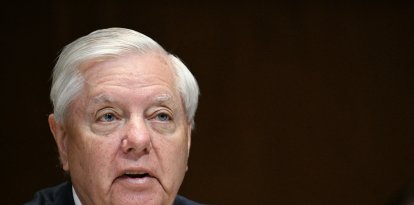
Grand jury formally charges John Bolton, Trump's former national security adviser, with mishandling classified documents
The 18-count indictment under the Espionage Act exposes him to possible decades in prison for unlawful transmission and retention of National Defense Information (NDI).

John Bolton Former former national security advisord to President Donald Trump during his first term in office.

John Bolton, who served as national security adviser during the first term of President Donald Trump before becoming one of his most vocal critics, was formally indicted by a federal grand jury in Maryland this Thursday.
The indictment, consisting of 18 counts under the Espionage Act, exposes him to possible decades in prison for the illegal transmission and retention of National Defense Information (NDI).
The Department of Justice (DOJ) filed the case in a court in Greenbelt, Maryland, where the jury determined there was sufficient evidence to proceed. Bolton, 76, a Bethesda resident, faces eight counts of unlawful transmission of NDI and 10 counts of improper retention of NDI.
According to the DOJ release, Bolton would have used personal email accounts and messaging apps to send classified top-secret documents, which included details about future attack intelligence, foreign adversaries, and foreign policy relationships.
The materials were printed and kept at Bolton's Maryland home, according to the prosecution. Bolton allegedly shared them with two unapproved individuals, identified in the indictment as "Individual 1" and "Individual 2," who are allegedly his wife and daughter and are close relatives without security clearances.
If convicted, each count carries a maximum penalty of ten years in prison, which could result in a total of 180 years behind bars. Bolton is expected to surrender to authorities on Friday.
Background of the investigation
This indictment stems from an inquiry launched by the DOJ following the 2020 publication of Bolton's memoir, "The Room Where It Happened," which detailed his experience in the White House and sharply criticized Trump for allegedly making decisions driven by electoral interests rather than sound geopolitical considerations.
The Trump Administration then sued to block the book, claiming it contained classified information not properly reviewed. A judge rejected the request, and the work was released days later.
The investigation intensified in August this year, when agents from the FBI raided Bolton's home and office in search of classified documents. In that vein, the FBI director, Kash Patel, confirmed that the probe revealed transmissions of "top secret" information through unauthorized channels and retention at his residence, in direct violation of federal law.
On his X account, Patel noted, "NO ONE is above the law… @FBI agents on mission.
NO ONE is above the law… @FBI agents on mission
— FBI Director Kash Patel (@FBIDirectorKash) August 22, 2025
Bolton denies wrongdoing
Bolton, who was also ambassador to the U.N. under President George W. Bush, has denied any wrongdoing. His lawyer, Abbe Lowell, previously said Bolton handled records properly as a former official.
So far, he has not issued a comment on the indictment.
Reactions on the indictment
At a press conference at the White House, when President Donald Trump was asked about the case and the indictment of his former adviser, the Republican leader responded that he did not know anything about it, but he said Bolton "is a bad guy."
'HE'S A BAD GUY': President Trump reacts after former White House National Security Advisor John Bolton was indicted by a federal grand jury pic.twitter.com/5CKm5DI6ve
— Fox News (@FoxNews) October 16, 2025
Section 793, which includes subsections that penalize both unlawful possession and gross negligence in the handling of classified materials, applies in times of peace or war.
This law is crucial because it safeguards information that could compromise military operations, intelligence sources, or foreign relations, such as documents about adversaries or data collection methods. Its breadth allows the Department of Justice (DOJ) to prosecute everyone from spies to former officials who retain classified documents.
Penalties under Section 793 include up to 10 years in prison for each charge, discretionary fines (potentially thousands of dollars adjusted for inflation), and forfeiture of property derived from violations.
There is no mandatory minimum prison term, allowing for probation in minor cases, but multiple charges can add up to decades in prison.
LATEST