The Church of England chooses hatred: Why the Kairos II scandal is much more than just a bad day in York
The approval of Kairos II by a large majority of the General Synod exposes a profound contradiction within the Church of England: after adopting the IHRA's definition of antisemitism and apologizing for centuries of anti-Judaism, it now grants institutional legitimacy to a document that millions of Jews view as a delegitimization of their identity and their right to self-determination.
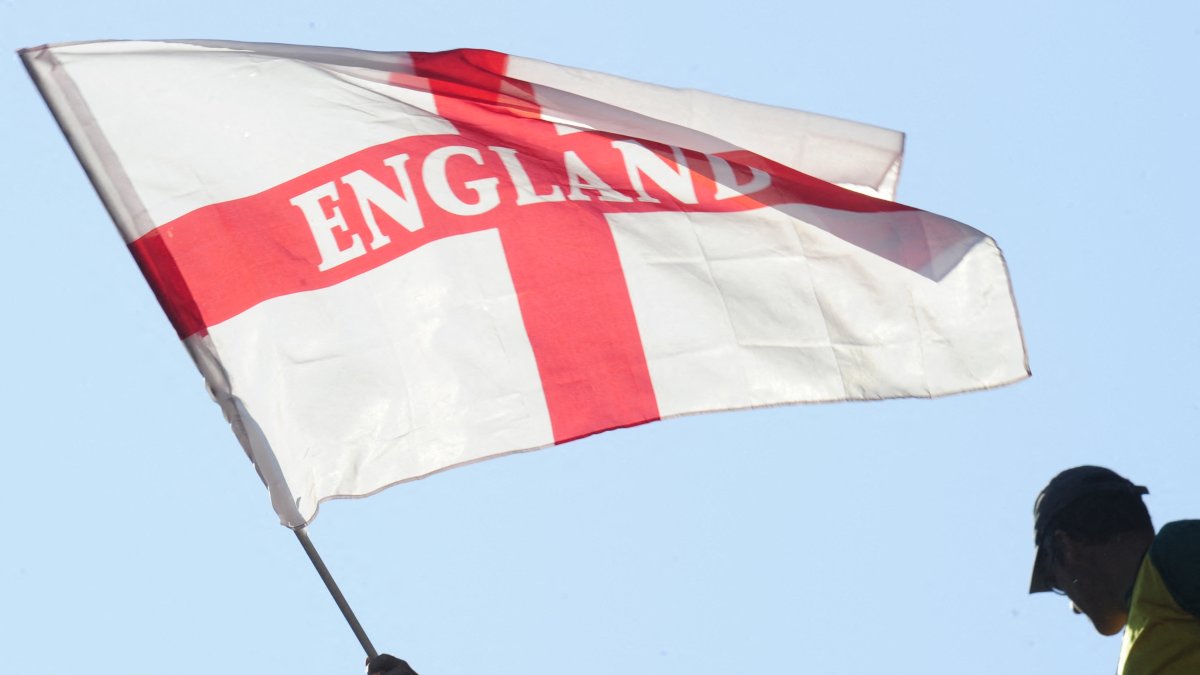
File photo of the flag of England
There is a photo circulating since Monday that sums up the moral state of the Church of England better than any news report: a synod hall in York, bishops in their clerical collars, voting with their hands raised to "listen" (a euphemism if ever there was one) a document that calls Israel a "colonial, settler, and exclusionary entity" and in which it aligns with the Islamist narrative by accusing Israel of committing genocide.
It maintains that this is a process that "began in the minds of the European colonial powers" and that led to a state, founded in 1948, which the document itself describes as "built on racism." This is not a forced interpretation of an ambiguous text. That is literally what it says: "A Moment of Truth: Faith in a Time of Genocide," also known as Kairos II.
The outcome of the vote leaves no doubt about the institutional direction: the House of Bishops endorsed it 25 to 0 (with just five abstentions), the Clergy 115 to 20, and the Laity 113 to 27. An overwhelming majority in all three chambers for a document that Chief Rabbi Ephraim Mirvis described in no uncertain terms as "political activism disguised as theology" and, following the vote, as "shameful." The Board of Deputies of British Jewish Communities itself had warned before the debate that the text spreads "a toxic narrative about Jews" and that "it will do more to perpetuate the conflict than to build peace." Even those who tried to qualify their rejection ended up acknowledging the underlying problem: Rabbi Charley Baginsky, of the Movement for Progressive Judaism, warned that Kairos II's language on Zionism is experienced by a large portion of Jews not as a critique of specific Israeli governments, but as a challenge to a central element of their identity. Not even the most dialogue-oriented sector of British Judaism could save the text.
The Synod's maneuver was a semantic trick that fooled no one. They did not say they would "receive" the document… but rather "listen to" it. A play on words that didn't even convince their own bishops: the Bishop of Blackburn warned that "these subtle distinctions make no difference in how we are perceived from the outside." The Rev. Giles Fraser called the vote "a disgrace" and recalled that Kairos II urges Christians to "boycott dialogue with Zionist voices," that is, with the vast majority of the world's Jews, for whom Zionism is not a laboratory ideology but the concrete way in which their people ceased to depend on the goodwill of others for their survival.
That the Church formally adopted the IHRA's definition of antisemitism in 2018—which explicitly includes characterizing Israel's existence as a "racist enterprise" as a form of antisemitism— and then voted by an overwhelming majority to "listen" sympathetically to a text that does exactly that, is no minor contradiction. It is a betrayal of its own commitment, under the guise of "understanding" and "interreligious dialogue."
It is worth pausing to consider who sponsored the motion: the Diocese of Carlisle—that is, essentially Cumbria, a region where the 2021 census recorded between 50 and 150 Jews in total. Fraser pointed this out with the irony it deserves: with "this extensive experience of coexistence with the Jewish community," the diocese pushed the rest of the Church toward a text that millions of Jews in the United Kingdom—many of them residents of other dioceses with direct family histories of the Holocaust—experience as an assault on their identity. It's the same old pattern: those who have the least to lose make decisions at the expense of those who do.
The most serious aspect of Kairos II is not merely that it speaks of "genocide" and "apartheid" with the flippancy of a propaganda pamphlet. It is that, by describing the massacre of October 7, 2023, as something "born of decades of injustice, oppression, and displacement since the Nakba of 1948," it offers a historical justification for the terrorism of Hamas, the terrorist organization that rules Gaza through terror, that has stolen humanitarian aid intended for its own people, that executes dissidents, and that uses Palestinian civilians as human shields. Those who promote this film show not empathy but selective blindness. If anyone truly cares about the suffering of Gazans, the first thing they should call for is not the delegitimization of Israel, but an end to Gaza's captivity under an Islamist tyranny that has plunged it into misery and hatred for nearly two decades. That, curiously, does not appear in a single paragraph of the document.
Evolutionary psychologist and commentator Gad Saad has a precise term for this attitude: "suicidal empathy," that inability to condemn the violence of the apparent underdog simply because they are perceived as "the underdog," even when that violence is genocidal by its own stated terms. This is exactly what the Synod displayed this week: while Christians are being persecuted, expelled, and murdered by Islamists across much of the Middle East and Africa, the moral energy of the Church of England is focused on castigating the only state in the region where Christians—and citizens of any faith—can live, vote, and practice their religion freely.
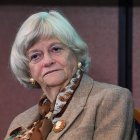
None of this happened in a vacuum. Last month, the new Archbishop of Canterbury, Dame Sarah Mullally, paved the way. During the synod debate itself, she defended the motion stating that "Palestine, which the British government recognized last year, is disappearing." At no point did she have an equivalent word to say when Israeli hostages were being tortured, raped, and murdered in Gaza, nor about the rockets fired at civilians, nor about the totalitarian nature of those who govern Gaza. This imbalance is a political stance.
The motion is not merely a rhetorical gesture: it also instructs the Church's investors (the Church Commissioners and the clergy pension fund, which manage billions of pounds) to review their investment policies "in light of" the International Court of Justice's advisory opinion from July 2024 on the illegality of the occupation. In other words, it goes beyond the symbolic: behind the language of "understanding" and "listening" lies a concrete mandate toward selective divestment from Israel, with the financial machinery of one of Britain's oldest institutions put at the service of that agenda.
And there is a constitutional angle that the Church itself seems not to have fully considered. The former Archbishop of Canterbury, Lord Carey, warned that King Charles III, Supreme Governor of the Church of England and patron of the Council of Christians and Jews, could find himself linked to an institution that now actively promotes a document capable of "undermining decades of careful relationship-building" with the British Jewish community. This is not a mere matter of protocol: it is the Crown itself becoming associated—even if unwittingly—with a text that reduces Israel to a "colonial enterprise built on racism."
Just four years ago, the Church itself apologized for nearly a thousand years of Christian anti-Semitism, on the anniversary of the 1222 Oxford Synod, which imposed identifying badges on English Jews and barred them from almost all trades. Then-Archbishop Justin Welby wrote that he hoped that anniversary would inspire people to "reject contemporary forms of anti-Judaism and anti-Semitism." Four years later, the same institution votes by an overwhelming majority in favor of a text that denies the Jewish right to self-determination, calls for a boycott of dialogue with Zionists, and describes the State of Israel as the product of European racism. One need not be a theologian to recognize the gap between those two dates for what it is: institutional hypocrisy of historic proportions.
The Church of England is not acting out of naivety or an excess of compassion. Although a few voices within the Church itself, such as the bishops of Lichfield and Manchester, did object to the language of Kairos II during the debate, this internal nuance does not change the outcome: an overwhelming majority decided to give institutional space to a document that legitimizes anti-Semitism and the slanderous claims that have been circulating since October 7, 2023. It is doing what so many progressive Western institutions do out of fear of an activism that confuses fanaticism with social justice—an activism that today corrodes much of British public life. The Church of England should take a long, hard look at itself before speaking of tolerance again.
LATEST