Rahm Emanuel plays into the hands of the fanatics
Rahm Emanuel's speech in Tel Aviv was not directed at Israel, but at the U.S. Democratic electorate. Behind his criticism of the Jewish state, the author sees a political maneuver that reflects the extent to which the Israeli issue has become a litmus test of loyalty within a Democratic Party increasingly influenced by its radical wing.
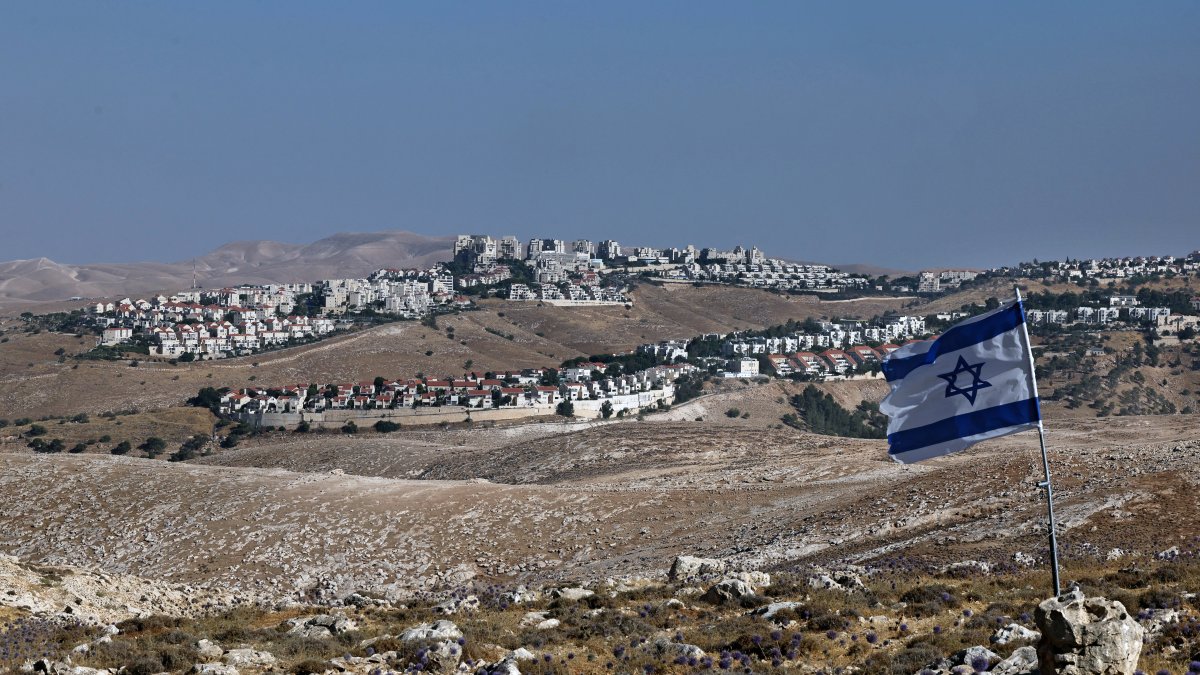
File photo of the Israeli flag
On July 8, Rahm Emanuel took the stage at Tel Aviv University to tell Israel that it has become a "territorial pariah." Days later, with the media coverage it generated already making waves in Washington, the move reveals with complete clarity where the Democratic Party has drifted: even its "moderate" wing needs, in order to survive, to join the chorus that treats Israel as the world's problem.
Let's start with the obvious: Emanuel had no need to deliver that speech in Israel. No one in Jerusalem was expecting it, no one in Tel Aviv needed it and the Israeli press, busy at the time with the NATO summit in Turkey and growing tensions with Iran, barely noted his visit. But a day before he spoke, it was already known what he was going to say, his press agent did his job well… The Washington Post, The New York Times, CNN and the rest of the U.S. mainstream media, all amplifying a man who doesn't even appear in the early polls for 2028, while other candidates with far more real traction struggle to get a fraction of that coverage.
That is the key to understanding the true target audience of the trip. Emanuel didn't fly to Tel Aviv to speak to the Israelis. He flew so that cameras from Washington could film him speaking harshly to the Israelis, and thus be able to present himself to the fanatics, the Islamo-left influencers, the pro-Palestinian activists, donors (from the Gulf?), and the growing radical wing of his own party that he is capable of taking on Israel with the same toughness they demand, a credential that, today, determines whether a Jewish Democrat can run for office in 2028. It's a public relations trick as old as it is effective: using the stage of another country to resolve a domestic positioning issue, and doing so with the added advantage that the (carefully selected) audience at Tel Aviv University, aligned with the Israeli left, guaranteed him the applause he needed for the clip to go viral back in the United States.
What Emanuel called his "23-state solution" is nothing more than the old and failed two-state formula of Clinton and Obama, now dressed up with the symbolic weight of the entire Arab League. It is, moreover, the same logic that Emanuel himself helped design 17 years ago, when, as Obama's chief of staff, he pushed the strategy of creating "light of day" between Washington and Jerusalem: public distance as a supposed tool for constructive pressure.
The outcome of that gamble is well known: it did not bring peace a single centimeter closer, and it coincided with the belated Second Intifada, the ultimate failure of Oslo, and, finally, the massacre of Oct. 7, 2023. That the architect of that strategy should return nearly two decades later to peddle the same recipe, now with explicit sanctions targeting Israeli citizens, officials, and banks, is neither diplomatic prudence nor accumulated wisdom. It is the recidivism of a man who needs, out of personal ambition, to prove to his party's radicalized base that he, too, knows how to speak tough to the Jewish state.
Emanuel chooses not to join in the slanderous attacks that are spread daily, but he confronts those who do. That cynical neutrality is the diplomatic formula of progressive Judeophobia, which lectures the Jewish state and its "right-wing government" to convince its own base that its own anti-Israel bias is justified.
There is one point that deserves more attention than it usually receives, because it lays bare the complete hypocrisy of Emanuel's "tough love." Netanyahu, Emanuel included, is criticized for his decision to tolerate the flow of Qatari money into Gaza and to keep the passage of Gazan workers into Israel open, calculating that this economic benefit would bring calm. It is easy to level this criticism in hindsight. At the time, while that arrangement was working, almost no one pointed to it as a mistake; and it is difficult to imagine those same critics supporting, before Oct. 7, 2023, an Israeli offensive to disarm Hamas by force. The failure of that gamble, then, does not reveal a miscalculation on the part of the prime minister: it reveals that on the other side there was no interest whatsoever in preserving even the precarious peace that money had bought.
The Oct. 7 massacre was not a response to any Israeli policy but rather confirmation that, for Palestinian politics, any gesture of coexistence is, at best, a tactical opportunity to prepare for the next attack. What Emanuel did, from a podium in Tel Aviv, was to rewrite history so as not to have to admit that the failure was never due to an Israeli decision, but rather to the Palestinian refusal, sustained for a hundred years, to accept any future that does not involve the disappearance of the Jewish state.
The same double standard is repeated when Emanuel calls for an end to U.S. military aid as a gesture of "tough love" toward Israel, presenting it as a bold idea of his own. He fails to mention that it was Netanyahu himself who first raised the possibility of phasing out that assistance. By claiming this idea as his own, Emanuel seeks to appear bolder than the Israeli government. Nor does he acknowledge that Israel's deteriorating image is the result of Qatari funding of universities and media outlets, which have shaped much of public opinion regarding Israel.
Emanuel is unable to accept that the Democratic Party has been hijacked by its most radical wing and certainly does not seek to challenge Mamdani's anti-Jewish and anti-Western narrative, which now reigns within the party. He insists that this faction does not represent the party, as if the fact that he won the mayoral race in the country's largest city, doubled his party's representation and is winning the primaries ahead of the upcoming elections were not, in fact, representative of the party.
That denial is the very same thing that allows Emanuel to present himself as if his speech in Tel Aviv were about foreign policy, when in reality it is about internal electoral survival. It also fits in with the mechanism that explains why the entire party revolves around Israel rather than around housing, inflation, immigration, or public safety. Gaza has become the litmus test for any Democratic candidate who doesn't want to be ostracized from the party. It's a convenient logic for those who apply it, because it turns a distant foreign policy issue into the only parameter that matters, while the party itself governs cities where none of those domestic problems are being resolved.
This climate also explains incidents that should shame any honest Democrat: California State Senator Scott Wiener, who is running for the seat vacated by Nancy Pelosi, was recently kicked out of a park in San Francisco simply for being Jewish, despite having adopted the very same "genocide" rhetoric that the left wing of his party demands in order to tolerate someone with his last name. It didn't matter that his position on Israel was practically identical to that of those who harassed him. The only thing that distinguished him from them was his Jewish identity and his historical connection to the state that every Democrat is now supposed to, at the very least, question.
Emanuel's shift does not occur in a vacuum: it occurs because the ground beneath his feet has already changed hands. On June 23, when the socialist wing doubled its bloc in the New York State Assembly, a centrist assemblyman described that night, without metaphors, as an "earthquake" and "a massive defeat" for the party leadership; another summed up the mood bluntly with "son of a bitch, brace yourselves." Progressive Ro Khanna made no secret of the reason for the victory: he celebrated that those candidates won because they were "willing to stand up to AIPAC."
Emanuel understood that message better than anyone. That's why he didn't go to Tel Aviv to talk with an ally; he went to secure a spot in the exit line, for when the party's radical wave begins to collide with the reality of governing and competing in districts where that rhetoric isn't enough to win. His bet is that by 2028, the party will need someone who can say, with the authority of having served under Clinton and Obama, that he also knew how to speak "toughly" to the Jewish state. This is the stance of someone who decided that the only way to survive in his party is to join, using more elegant language, in the same contempt for Israel professed by the very wing he claims to be fighting against.
And this strategy doesn't necessarily have to be aimed at the White House, which, frankly, seems highly unlikely. At 66, with a resume that already includes serving as chief of staff, mayor and ambassador, Emanuel could very well be building the profile of a running mate: the Jewish figure a Democratic candidate would need by his side to maintain his alibi, reassure traditional donors, while still demonstrating, thanks to the spectacle in Tel Aviv, that he also knows how to speak harshly to Israel when the Mamdani wing demands it. In either scenario, the calculation is the same: to show understanding toward the current that defines the party today. Emanuel consciously chose to play into the hands of the fanatics.
LATEST