ANALYSIS
Abbott puts brakes on data center boom: Texas won’t foot the bill for Big Tech
The expansion of data centers is turning the state into a digital powerhouse, but it also raises a critical question: Who will pay for the infrastructure needed to support it?

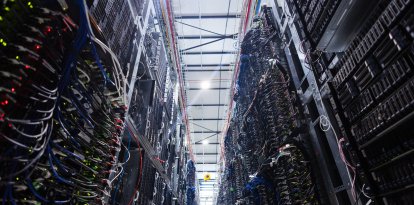
Servers in a data center—File photo

Texas has become one of the most attractive destinations in the United States for data centers. The combination of available land, energy, fiber optics, business incentives, and an independent electricity market has attracted facilities linked to the cloud, artificial intelligence, cryptocurrencies, and high-performance computing.
But growth can no longer be measured solely in terms of jobs, investment or new buildings. It must also be measured in megawatts, gallons of water, transmission lines and municipal grid capacity. That is why Governor Greg Abbott has decided to tighten state oversight and demand greater accountability from an industry that, until now, has not always accurately reported its needs.

Technology
Can algorithms challenge their creators? OpenAI reveals AI incidents in which AI concealed errors, uploaded data to network
Andrés Ignacio Henríquez
The scale of the expansion
According to a report from the Bureau of Economic Geology at the University of Texas at Austin, there were 479 data centers in the Lone Star State by the end of 2025 and 766 in August 2026. This inventory includes both operational facilities and planned and proposed projects. However, not all of them will be built. The study estimates a projected capacity of more than 70 gigawatts by 2030 and states that these centers "will consume electricity equivalent to tens of millions of homes."
The main concentration is in metropolitan areas such as Dallas-Fort Worth, Houston, Austin and San Antonio, although new projects are also expanding into other parts of the state. This expansion is driven by several competitive advantages: "energy availability, competitive energy pricing, abundant land, and robust infrastructure investments."

The digital sector is also changing in nature. Traditional data centers handled business services and cloud storage. The new campuses dedicated to artificial intelligence "pack enormous power into ever-smaller hardware, converting nearly all input energy into heat."
According to the report, an AI-focused rack could exceed 80 or 100 kilowatts by 2025, compared to about 4 or 5 kilowatts for a typical rack in 2010. The study suggests that power demand per rack could approach 1 megawatt by 2028.
This leap transforms data centers into large-scale industrial facilities. They are not simply offices with servers: they can require as much electricity as a small city and demand new substations, transmission lines, power plants and cooling systems.

Politics
Trump labels voices calling for halt to AI as 'very negative forces' and defends US supremacy over China
Carlos Dominguez
The challenge for ERCOT
The growth in demand poses a particular challenge for ERCOT, the electricity grid operator that serves most of Texas. Unlike other states, Texas largely manages its own electricity market, a feature that for years was touted as an advantage for attracting investment.
However, a grid designed to respond to relatively predictable demand must now adapt to very large, rapid and concentrated loads.

Technology
OpenAI supports a legislative initiative to subject artificial intelligence models to mandatory external audits
Andrés Ignacio Henríquez
Researchers at the University of Texas at Austin have warned that data centers, large industrial facilities and cryptocurrency operations could push peak demand above available capacity at certain times.
The problem isn't just about generating more electricity: we must distinguish between projects with firm demand and those that remain speculative, determine how long they will operate at full load, identify the generation sources that will supply them, decide who will pay for the new transmission lines and substations, and how to prevent that cost from ending up on households' bills.
The report cited proposes several approaches: strengthening the transmission grid, utilizing the Texas Energy Fund, better coordinating electricity and natural gas planning, and considering on-site generation near large campuses. Among the options are new gas-fired plants, geothermal generation, and, in the longer term, nuclear power.

Technology
Altman and Musk back Amodei: OpenAI and xAI CEOs call for a slowdown in AI development
Luis Francisco Orozco
Water, the least visible constraint
Electricity is only part of the problem. Servers generate heat and must be kept within strict temperature ranges. To achieve this, many data centers use evaporative cooling systems or cooling towers that consume water constantly.
The Bureau of Economic Geology estimates the direct and indirect water footprint at about 33 billion gallons in 2025, or 0.6% of the state's total water use. An independent assessment cited in the report itself puts that footprint at 25 billion (0.4%). Although the proportion of the state's total usage seems limited, the impact can be significant in specific regions suffering from droughts, strained aquifers or small municipal systems.

Technology
'Our inaction will be unforgivable': Bipartisan letter urges Mike Johnson to suspend legislative recess to regulate AI amid growing global concern
Emmanuel Alejandro Rondón
Furthermore, consumption is not limited to water used within the facility. Power plants that generate electricity may also require water for their cooling systems. Therefore, the true impact must be assessed by taking into account both direct use and consumption associated with electricity generation.
The report warns that a medium- or large-sized facility may consume between 12 and 660 million gallons per year in water indirectly linked to electricity production, depending on its size and the generation technology used.
This relationship between water and energy necessitates complex decision-making. Evaporative systems are typically electrically efficient but use more water. Dry cooling systems reduce direct water consumption, although they may require more electricity and greater investment. Hybrid solutions attempt to balance both needs but are more complex and costly.

Failure to report
In this context, Texas needs to know how much data centers actually consume. The Texas Water Development Board sends an annual survey to municipal and industrial users, including operational data centers that exceed 10 million gallons of annual consumption. The survey requests information on the volume used, the water source and the type of supply.
However, the response rate has dropped with the rapid arrival of new facilities. According to The Texas Tribune, in 2025, the agency surveyed 329 data centers and received responses from approximately 30%. Among the 267 centers appearing for the first time in the state-wide survey, only 22.5% responded.

Technology
Brussels gains access to Mythos 5, Anthropic's most sensitive AI, after months of negotiations
Carlos Dominguez
The lack of data hinders planning. Without reliable information, local authorities cannot adequately forecast the capacity of pipelines, treatment plants, reservoirs, aquifers or emergency networks. Nor can they accurately assess which projects are compatible with the needs of farmers, families, and other industries.
Some consumption figures already illustrate the scale of the challenge. According to data cited by The Texas Tribune, a Bitdeer facility in Rockdale used more than 300 million gallons in 2025, "equivalent to the total annual water usage of a small Texas town with about 3,500 residents." Other major users include a Google facility in Midlothian and facilities operated by QTS and Meta in Fort Worth.

Technology
OpenAI says it has overtaken Anthropic with GPT-6 Astra, the 'world's most intelligent' model, amid a wave of autonomous hacks in the AI industry
Emmanuel Alejandro Rondón
Abbott moves from warning to enforcement
In light of this situation, Governor Greg Abbott ordered the Texas Water Development Board this week to require data centers and other major users to comply with consumption reporting requirements. The directive calls for penalizing past noncompliance and imposing legal consequences on those who continue to fail to respond.
"Data centers must share the duty to protect Texas water," Abbott stated on Monday. The governor requested that the agency provide an update on compliance and enforcement by October 14, 2026.
State law provides for a Class C misdemeanor for failure to submit the survey. However, according to The Texas Tribune, the Texas Water Development Board had indicated that it is not a regulatory agency and does not have direct authority to criminally prosecute violators. Therefore, Abbott's directive orders that cases be referred to county or district prosecutors and that the state environmental agency be notified.

Economy
Trade deficit in goods and services soars to $88.6 billion in July, driven by AI imports
Carlos Dominguez
Regulatory pressure is not limited to water. Abbott also ordered a coordinated audit with the Public Utility Commission of Texas, ERCOT, and water utilities to gather data on electricity consumption, water sources, and cooling systems.
ERCOT has stated that the review covers approximately 250 to 300 high-load projects, mostly data centers, representing about 200 GW of announced demand. The report is scheduled for December 10. Until that review is complete, these projects will not be allowed to connect to the grid.
This sends a clear signal to developers: access to public infrastructure will increasingly depend on their provision of verifiable information and fulfillment of their obligations.

A growth-friendly policy, but with conditions
Abbott's position does not amount to rejecting artificial intelligence or technological investment. Texas continues to compete to attract capital, jobs, and strategic computing capacity against Virginia, California, and other states.
The governor's approach is more selective: to maintain Texas's competitive advantage, but to require that new projects demonstrate they can operate without jeopardizing water supplies or passing on disproportionate costs to grid users.

This strategy is particularly relevant because Congress has also begun debating who should pay for the electrical upgrades needed for data centers. On Wednesday, the House of Representatives passed the Ratepayer Protection Act, a bill that would require regulators to consider rules making data centers bear the costs of new generation, transmission and grid upgrades linked to their demand. The bill has yet to move through the Senate.
For Texas, the lesson is clear. Digital expansion can be an extraordinary economic opportunity, but it must not become a hidden subsidy funded by consumers and communities.

The future of the Texas model
But the energy advantage does not eliminate physical constraints. Water remains scarce in many regions, transmission lines require years of planning, and the grid must maintain reliability during heat waves and storms.
The model taking shape under Abbott can be summarized in three principles:
- Economic growth, to attract investment and high-productivity jobs.
- Developer accountability, so that large users report and pay for the costs they generate.
- State-level planning, to coordinate electricity, water, land, permits and connectivity.
Abbott's policy is based on a defensible premise: Texas must remain open for business, but openness does not mean a lack of rules. Innovation can move forward, provided that those who consume the most are also the ones who take on the most responsibility.
LATEST