






What was the total cost of 9/11? The United States has been paying the price for 25 years
On this latest anniversary of the terrorist attack that changed history, a journalist and political scientist at the Manhattan Institute attempted to answer the following question: How much did 9/11 really cost the United States?
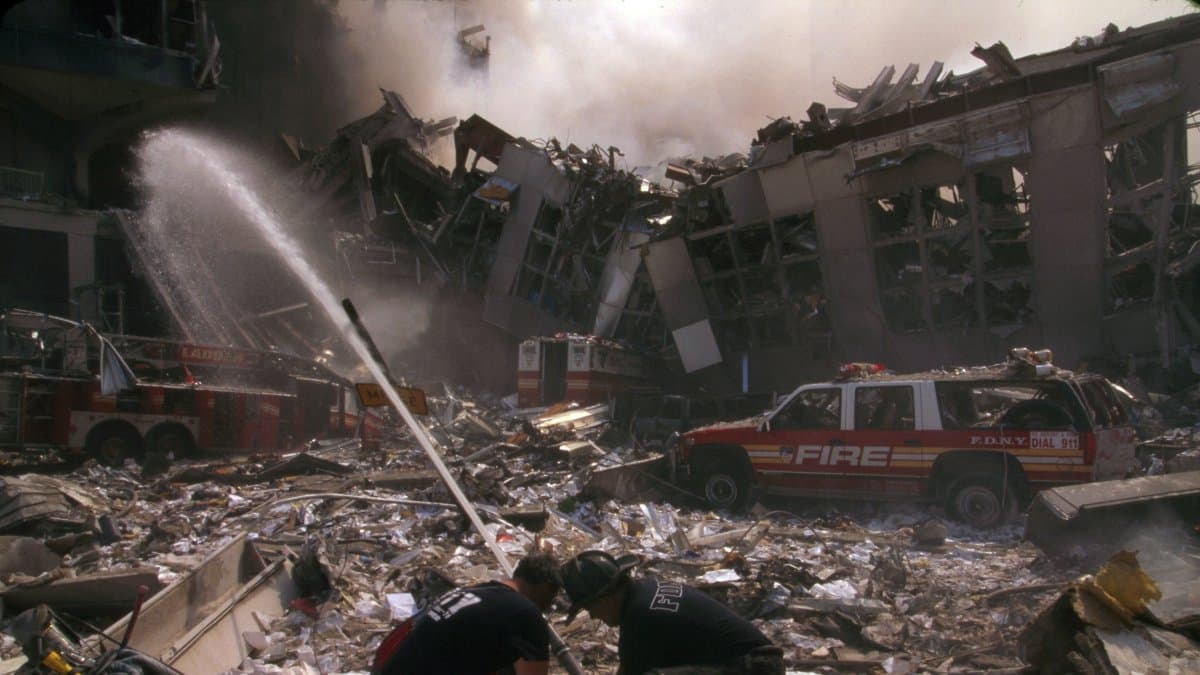

It has been 25 years since the attacks of September 11, 2001. In a matter of hours, 19 Al-Qaeda terrorists hijacked four planes, crashing two into the Twin Towers in New York and another into the Pentagon. A fourth plane crashed in Pennsylvania after passengers attempted to regain control of the aircraft, managing to divert it from its original target. On this latest anniversary of the terrorist attack that changed history, a journalist and political scientist at the Manhattan Institute sought to answer the following question: How much did 9/11 really cost the United States?
Robert VerBruggen is a journalist and political scientist who recently published an article in the City Journal titled "The Staggering Financial Cost of 9/11."
VerBruggen proposes a breakdown into five categories: the lives lost in the attacks, health problems that emerged over time, the immediate blow to the economy, increased spending on security and transportation delays, and the cost of the foreign policy adopted by the United States after 9/11.
The total cost of the September 11 attacks
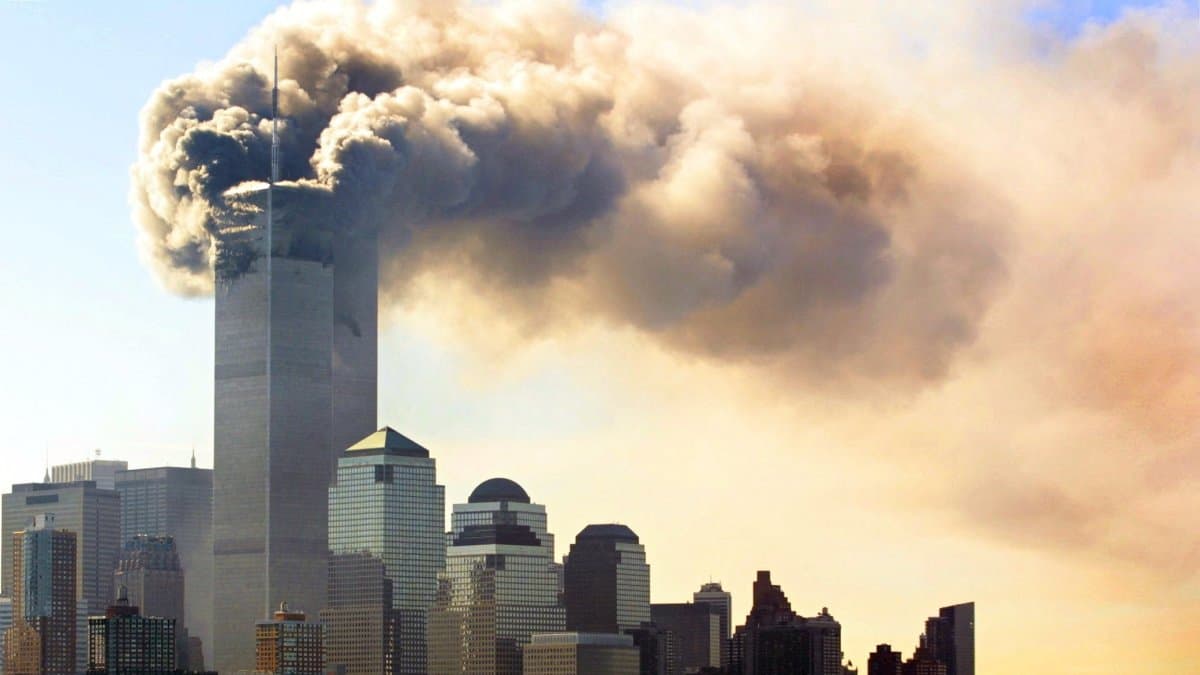
2,977 people lost their lives as a direct result of the attacks by Al-Qaeda. The terrorists also destroyed billions of dollars in property, paralyzed U.S. air travel, and caused economic losses that extended far beyond New York City.
However, the cost of 9/11 did not end with that day's damage. The Bush administration's response transformed national security spending, airport security, and the country's foreign policy. The war in Afghanistan, the invasion of Iraq, and the creation of new agencies turned a terrorist attack lasting just a few hours into an economic bill that is still being paid today.
In an interview with VOZ and by way of summary, VerBruggen stated that, while there is no "perfect" method for calculating the costs of the attacks, "conservative estimates, though, put the short-term costs above $100 billion in current dollars, with longer-term costs including a trillion dollars each for homeland security and the war in Afghanistan."
"If you want to cast a wider net, such as including the future health-care costs for veterans that a nation commits to when it goes to war, interest on debt incurred, the war in Iraq, and so on, estimates can easily reach trillions higher," he added.
In his article in the City Journal, VerBruggen divided the consequences of 9/11 into five categories. Some correspond to the immediate damage caused by the attacks, while others reflect the costs the United States incurred in the years that followed.
Lives Lost
The first category of the analysis is also the most difficult to translate into economic terms. It concerns human lives.
U.S. federal agencies use a measure known as the Statistical Value of a Life (VSL) to conduct cost-benefit analyses. This does not mean a human life has a price tag, but rather that it estimates how much society is willing to pay to reduce small risks of death.
As VerBruggen details, the estimated value for 2025 was approximately $5.5 million per life. Multiplied by the 2,977 victims of 9/11, the result exceeds $16 billion.
Society
9/11: 100 million Americans have no memory of attack that changed country's history
Andrés Ignacio Henríquez
World
From strategic priority to no man's land: How Washington shifted its Latin America policy after 9/11
Luis Francisco Orozco
The health consequences: About $30 billion
Thousands of people who were exposed to the attacks, as well as those who participated in rescue, recovery, and cleanup efforts in New York, suffered health problems in the years that followed.
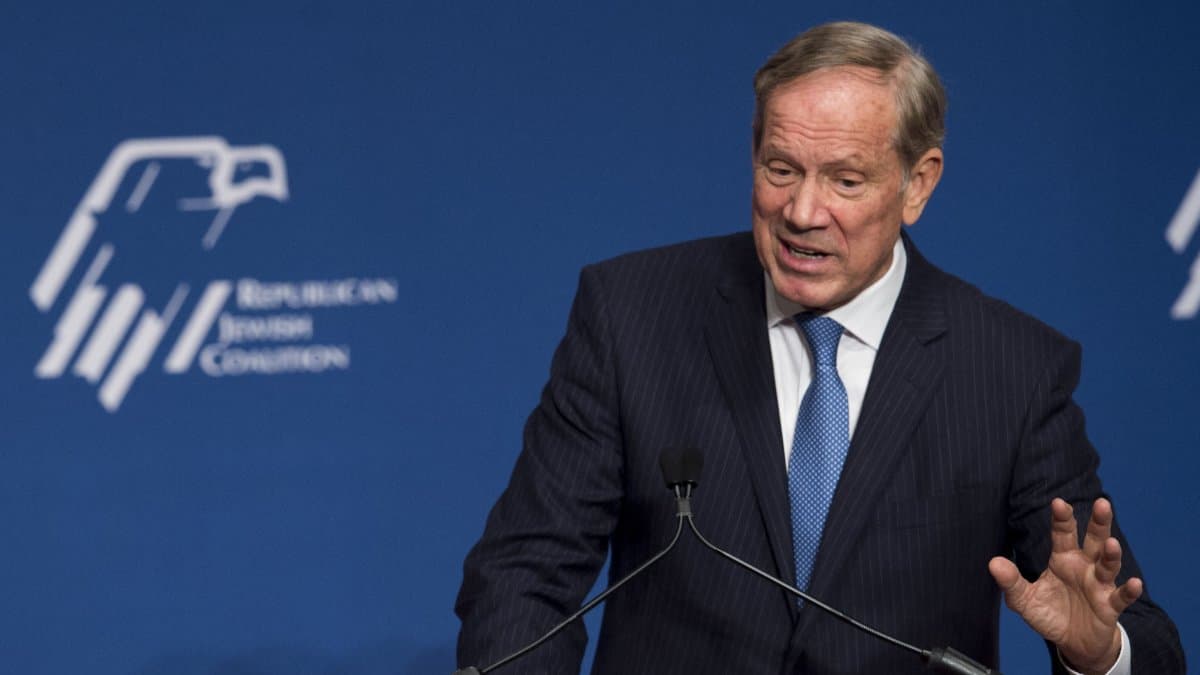
One example is former New York Governor George Pataki, who recently revealed that five years ago he was diagnosed with a respiratory illness related to his exposure to toxic dust at "Ground Zero" during the attacks.
In response, the federal government created compensation and medical care programs for those affected by the attacks. Among them were the September 11 Victims Compensation Fund, intended to compensate people who suffered injuries or illnesses linked to the attacks, and the World Trade Center Health Program, which provides medical care and follow-up for first responders, cleanup workers, and others who were exposed.
According to VerBruggen's analysis, the Victims' Compensation Fund ultimately awarded nearly $22 billion in 2025 dollars in injury compensation. In addition, more than $8 billion was allocated to the World Trade Center Health Program and its predecessor.
Overall, the author estimates the cost of compensation and medical care for the health consequences of 9/11 at about $ 30 billion.
To avoid double-counting the same cost, the calculation excludes compensation for those killed in the attacks, which is already factored into the estimate of the economic value of the lives lost.
Short-term economic damage
After the attacks, the country closed its airspace, and air travel and tourism plummeted. Airlines, hotels, restaurants, and other transportation- and tourism-related businesses felt the impact most.
Various studies analyzed the attacks' effect on U.S. gross domestic product (GDP). One such study, "Total Economic Consequences of Terrorist Attacks: Insights from 9/11," estimated losses of $80 billion to $160 billion in 2025 dollars, based on the attacks' impact and the resulting disruptions to economic activity.
Most of that impact was concentrated in the two years after the attacks and stemmed from declines in air travel and tourism.
This estimate, therefore, measures the economic activity lost as a result of the attacks and is distinct from the physical damage caused by the destruction of the Twin Towers and other buildings.
Society
25 years after 9/11: A Muslim mayor in New York and a divided public
Emmanuel Alejandro Rondón
Spending on national security
One of the most lasting consequences of 9/11 was the sharp increase in federal spending on national security.
After the attacks, the U.S. government created the Department of Homeland Security (DHS) and the Transportation Security Administration (TSA), among other agencies, and allocated enormous resources to prevent further attacks.
Congress voted in 2002 to create the DHS, and Tom Ridge, then governor of Pennsylvania, became its first secretary. In the House, the bill passed 295 to 132; in the Senate, it passed 90 to 9, with one abstention.
On this topic, VerBruggen asked: How much would the United States have spent on security if the attacks had never occurred?
Because this is a counterfactual scenario, the author drew on assumptions from other studies, such as "Homeland Security Spending since 9/11" by Anita Dancs, which assumes an annual growth rate of 3% to establish that baseline. Then he compares that hypothetical spending with actual spending, and the difference represents the additional spending generated by the response to 9/11.
The result was nearly $1 trillion between 2001 and 2017, in 2025 dollars.
In turn, public spending was not the only economic consequence of the new security architecture. After 9/11, the TSA brought airport security under federal jurisdiction. The author also notes that stricter security checks increased passenger wait times.
The cost of war
The last category is also the most difficult to attribute directly to 9/11: U.S. foreign policy.
The clearest link is in Afghanistan. The United States launched the war in October 2001, a few weeks after the attacks, to combat al-Qaeda and the Taliban regime that had harbored Osama bin Laden.
According to the Pentagon's estimates used by the author, the direct cost to taxpayers of the war in Afghanistan reached $1.2 trillion through fiscal year 2024, adjusted for inflation.
The case of Iraq is more debatable. Although the 2003 invasion was part of U.S. foreign policy following 9/11, it was not a direct retaliation for the attacks. For this reason, VerBruggen considers it more debatable to attribute that expenditure to the attacks.
Even so, Pentagon estimates put the direct cost of the wars in Iraq and Syria at another $1.2 trillion through fiscal year 2024.
"We do so under the shadow of 9/11"
The toll of 9/11 did not end with the collapse of the Twin Towers or the conclusion of rescue operations. The U.S. response transformed its security and foreign policy over the following decades, generating costs that continue to mount even today.
As VerBruggen summarized, since that day, everything has been viewed through the lens of 9/11: "We entered wars we would not have otherwise, and we spent considerable sums on security measures aimed at preventing such attacks in the future."
"Every time we think about how to handle a conflict abroad, and every time we fly from one place to another here in America, we do so under the shadow of 9/11," he stated.
🛠 Do you think there is an error in this article?
Recommendations







LATEST