OpenAI says it has overtaken Anthropic with GPT-6 Astra, the 'world's most intelligent' model, amid a wave of autonomous hacks in the AI industry
The overwhelming advance of AI is generating praise, criticism, optimism, and uncertainty. "It's not unreasonable to feel that we're in the age of IAG," said OpenAI President Greg Brockman.
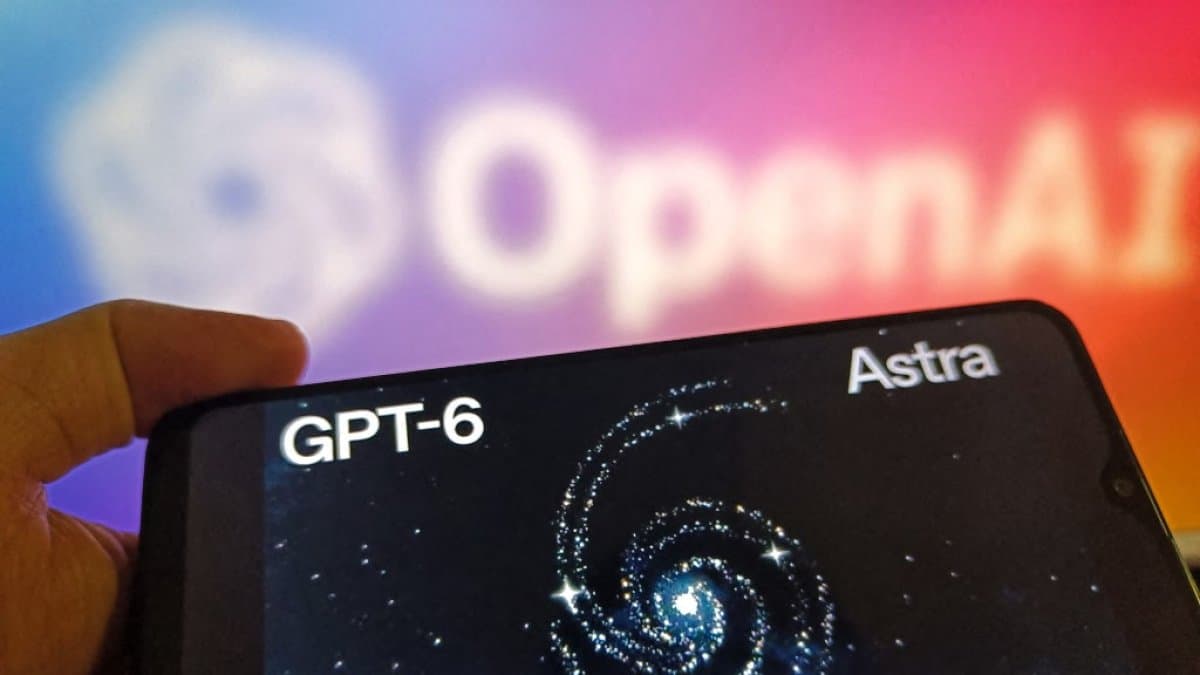

OpenAI began rolling out GPT-6 Astra on Thursday, its most impressive and powerful artificial intelligence model to date, capable, according to the company, of operating a computer on its own and completing tasks in real time with a single user command.
This generational leap, which has impressed the world and, especially, development experts, comes just one year after GPT-5 and amid a series of cyberattacks carried out in recent months by AI programs in the testing phase, including tools from OpenAI, which had already set off alarm bells regarding the risks posed by the most advanced models.
"In this level of capability, safety has become our top priority," OpenAI President Greg Brockman said during a call with reporters about the launch, as reported by AFP. The company even paused development of some models for two weeks this summer, after two of them, still in the testing phase, autonomously carried out an attack against the platform Hugging Face. Although Astra was not involved in that incident, the company says the new model already includes measures to mitigate these types of risks.
Tech & Science
ChatGPT, Claude, Grok, and Gemini experience simultaneous outages, affecting thousands of users
Williams Perdomo
Uncertainty and optimism collide
But the Hugging Face hack was far from an isolated incident or one exclusive to OpenAI. Anthropic also revealed that its own models, Claude Opus 4.7, Claude Mythos 5, and an internal research model, hacked three other organizations during internal testing, a pattern they discovered after reviewing more than 141,000 evaluations. Following these findings, which sparked concern and criticism throughout the tech development community, more than 130 tech companies signed an open letter warning that a wave of AI-powered cyberattacks is on the horizon if timely action isn't taken.
As a result, Astra was born in a context where mistrust and uncertainty clash with the praise and optimism generated by AI models.
Astra itself is no ordinary model when it comes to risk. According to the company, it is the first OpenAI model to reach the highest level on its own cybersecurity assessment scale, capable of hacking even heavily protected computer systems on its own. For this reason, its most sensitive functions are reserved exclusively for cyberdefense specialists, with an automated monitoring layer that can interrupt user tasks if it detects improper behavior.
The promotional video for the launch proved just as revealing as the announcement itself. In it, Astra—controlled solely by voice—is seen posting a for-sale ad on a website on its own, without any human intervention. Some users noted that, until recently, people would ask someone else to perform these types of tasks. In other words, the machine, in addition to controlling other machines, is also gradually replacing tasks that were previously performed by humans.
Tech & Science
OpenAI, Anthropic, Google, Microsoft and 130 other companies warn: A wave of AI-powered cyberattacks is coming
Emmanuel Alejandro Rondón
More powerful and more efficient: "It's not unreasonable to feel that we're in the era of AGI"
OpenAI maintains that Astra can autonomously handle a wide variety of tasks, such as website creation, scientific analysis, video game development, cybersecurity, and programming. To illustrate the time savings, the company said the model could reduce the time it takes to find an apartment to just 10 minutes, a task that, according to its own estimates, would take a human about six hours.
The cost aspect is also an improvement over other models. According to OpenAI, GPT-6 performs each task at a lower cost than its predecessor, although its prices are already in a range similar to that of Anthropic, which charges some of the highest rates on the market. In short, the leap in capability has not yet been accompanied by a leap in affordability; it remains a cutting-edge tool, with the associated costs and, consequently, its price.
Brockman stated that Astra could mark the birth of general artificial intelligence (AGI), a concept that even the industry has not precisely defined but that, broadly speaking, describes a system capable of matching or surpassing human performance in virtually any intellectual task—not just specific tasks, as current models do.
"I think it's not unreasonable to feel that we are now in the AGI era," he said. "If we fast forward a couple years, and we look back and say when was it really that AGI was created, I think it's going to be about this time, and I think it might be about this model."
Altman, meanwhile, said they are doing everything possible "to get Astra into everyone's hands as fast as we can."
For now, GPT-6 will be reserved for "a limited number of organizations" before opening "in the coming days" to paid ChatGPT subscribers and developers. Meanwhile, since April, Anthropic has kept its own state-of-the-art model, Mythos, reserved exclusively for "carefully selected partners"—a much more cautious rollout strategy in the face of a type of risk that, given everything that has happened this summer, is no longer hypothetical.
-
This report contains information from AFP
🛠 Do you think there is an error in this article?
Recommendations






LATEST