ECB raises interest rates due to inflation caused by Middle East war
The main reference rate—the deposit rate—rose by a quarter of a percentage point to 2.5%, its highest level since March 2025, following a monetary policy meeting held exceptionally in Berlin.
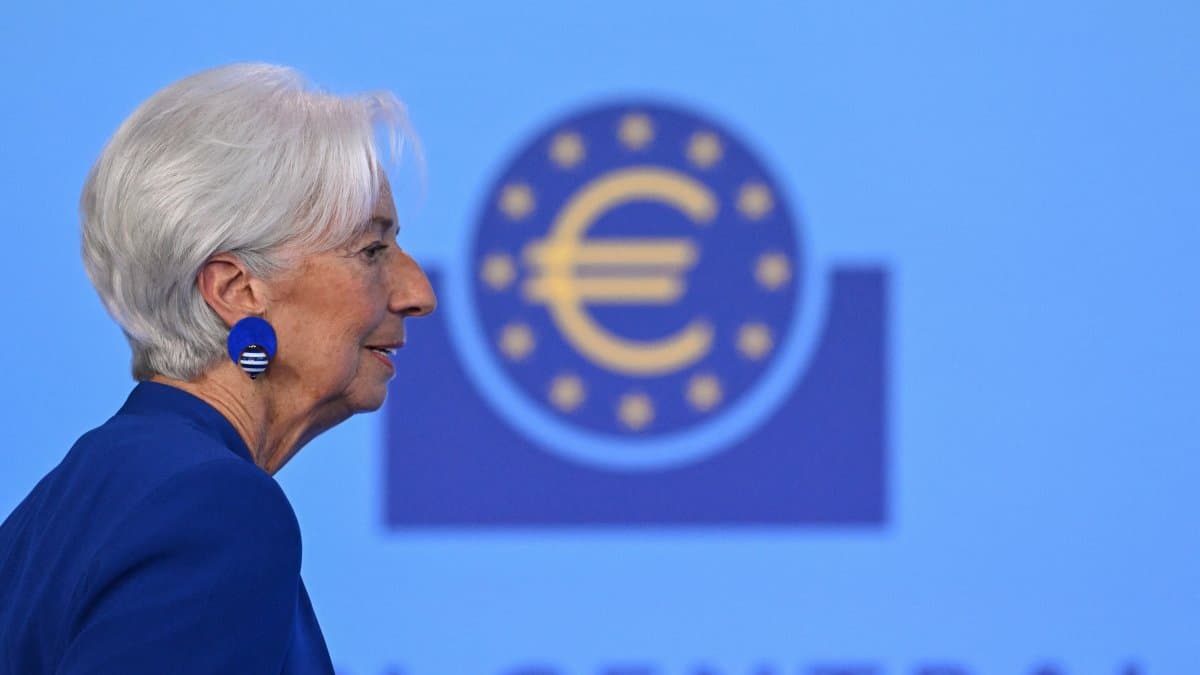

The European Central Bank (ECB) raised its interest rates on Thursday to 2.5% and warned that the outlook remains uncertain, leaving open the possibility of further tightening of its monetary policy.
The main benchmark rate—the deposit rate—rose by a quarter of a percentage point to 2.5%, its highest level since March 2025, following a monetary policy meeting held exceptionally in Berlin.
This is the second rate hike this year.
"The outlook remains highly uncertain, with risks to the upside for inflation and to the downside for economic growth," the institution stated in a press release.
The message suggests that the bank has not ruled out another rate hike in the coming months.
Brent crude exceeds $100
After raising interest rates in June and keeping them unchanged in July, the ECB now faces a spike in inflation linked to rising oil prices caused by tensions between Washington and Tehran and the conflict between Houthi rebels in Yemen and Saudi Arabia.
On Wednesday, Brent crude surpassed $100 per barrel for the first time since late July, amid persistent threats to energy transit through the Bab al-Mandab Strait and the Strait of Hormuz.
In a eurozone heavily dependent on energy imports, inflation reached 3.3% in August, its highest level in three years and well above the 2% target set by the ECB.
Core inflation, which excludes the most volatile prices such as energy and food, moderated slightly to 2.4% year-over-year.
By raising rates, the ECB makes credit more expensive, which curbs consumption and investment. The goal is to slow demand to curb rising prices.
Higher inflation in 2027
For 2026, the ECB maintained its inflation forecast at 3.0%, unchanged from June, and raised its forecast for 2027 to 2.5%, up from the previously estimated 2.3%.
It also slightly improved its growth forecast for this year to 0.9% from the previous 0.8%, after Germany, Europe's largest economy, posted better-than-expected results in the first half of the year.
These forecasts reinforce the view that a further rate hike would not unduly jeopardize economic activity.
"The Governing Council remains open to further monetary tightening, the likelihood of which now appears considerably higher, even if energy prices stabilize relative to the levels seen this week," said Kamil Kovar, an analyst at Moody's Analytics.
🛠 Do you think there is an error in this article?
Recommendations



LATEST