Trump announces that Japan will pay a 15% tariff following a new trade deal
The president also announced that Japan will invest $550 billion in projects within the United States.
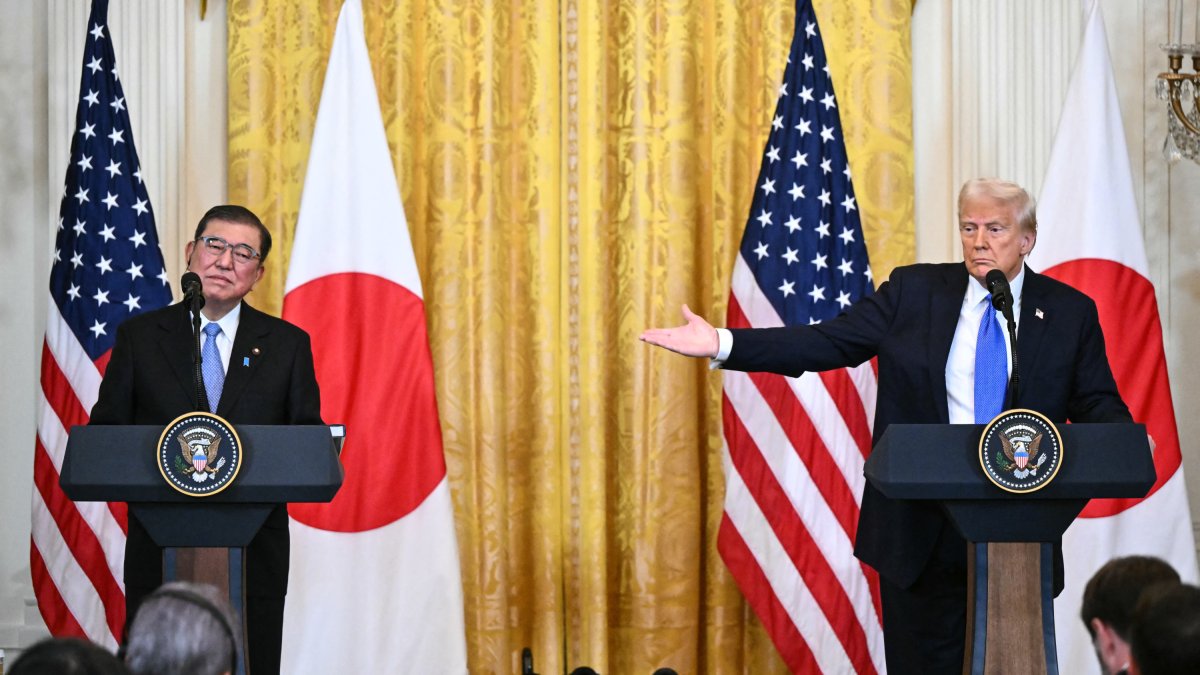
U.S. President Donald Trump and Japanese Prime Minister Shigeru Ishiba.

The Trump administration reported on Tuesday that it reached a new trade agreement with Japan, which establishes a 15% tariff on Japanese products entering the American market. This tariff is lower than the 25% that the president had threatened to apply as of Aug. 1 in case an agreement was not reached.
As part of the deal, Trump announced that Japan will invest $550 billion in projects within the United States. Although no details were offered on the destination of these funds, the president assured in a post on Truth Social that the country would obtain "90% of the Profits" from these investments. He also said Japan would open its market to U.S. products such as cars, trucks, rice and other agricultural goods, an issue that had been central to bilateral talks.
"This is a very exciting time for the United States of America, and especially for the fact that we will continue to always have a great relationship with the Country of Japan," Trump wrote.
Part of a broader trade offensive
The deal is part of a series of agreements the president has pushed in recent weeks, aimed at reducing the U.S. trade deficit and demanding more equitable terms from its major partners. Earlier Tuesday, the White House also announced an understanding with the Philippines following a meeting in the Oval Office. Previously, progress was reported with the United Kingdom, Indonesia, Vietnam and a preliminary framework with China.
Trump's trade strategy, based on tariff pressure combined with bilateral agreements, has been a key piece of his foreign economic agenda, especially in the automotive and agriculture sectors.
Economy
Trump announces trade deals with the Philippines and Indonesia with 19% tariffs
Diane Hernández
Japan has not confirmed terms
So far, the Japanese government has not officially confirmed the terms of the agreement announced by Trump. Nor has it been clarified whether Tokyo will obtain any exemption from the so-called national security tariffs, which apply a tax of 25% on automobiles and 50% on steel and aluminum, points that have been a source of tension during the talks between the two nations.
Japan, a key partner for the United States
With the Aug. 1 deadline looming ever closer, the White House continues to present these agreements as part of its effort to strengthen the domestic economy and renegotiate trade relations that are more favorable to the country.
LATEST