ANALYSIS
From strategic priority to no man's land: How Washington shifted its Latin America policy after 9/11
What had been a source of interest and attention for decades turned into apathy and indifference after the attack on the Twin Towers.
It may be a truism—and even one of the greatest clichés of this century—but the world before September 11, 2001, was completely different from the one we live in today due to the foreign policy embraced by the White House at that time and the consequences it had, directly or indirectly, on the West. Of all the areas and regions that experienced a drastic change in this regard, the case of Latin America is indisputably the most abrupt and dramatic, as it is the main area of U.S. influence.
Washington's vision and approach toward the countries south of the Rio Grande was undergoing a transition that had not yet been consolidated: shifting from nearly four decades of the Cold War—during which the top priority regarding Latin America was to prevent Soviet expansion in the region— to actively promoting free trade and more liberal economic policies through the Washington Consensus and other mechanisms which, although they did not produce significant results during that very brief period, were considered by some experts to be promising enough to bring about the expected changes within a reasonable timeframe. Of course, this was contingent on the U.S. commitment being genuine and not merely a stance or policy that would shift according to the ideological leanings of each new president or in response to geopolitical events.
And yes, this vision for Latin America held true to a greater or lesser extent during the first three administrations following the collapse of the Soviet Union and the (apparent) end of communism. But just eight months after George W. Bush took office, the most devastating and decisive event the United States has experienced this century occurred: the black swan that would change the course of U.S. policy. This event would directly affect Latin America, and its consequences are still being felt today.
For what had been decades of interest and attention, following the attack on the Twin Towers, turned into apathy and indifference: from Operation Condor and the Washington Consensus, the region shifted to a state of utter neglect, resulting in a troubling shift to the left that engulfed much of the region, with some cases more devastating than others.
Chavism and the drift
The most significant and representative example of all is Venezuela, a country that—despite being a founding member of OPEC—was one of the region's most important and reliable allies, only to become, along with Cuba, one of its main enemies following Hugo Chávez's rise to power in 1998. The fate of this oil giant became one of the greatest tragedies ever witnessed in the Western Hemisphere, as it went from being the richest country in all of Latin America—with the greatest potential for development—to eventually becoming a narco-state, the country with the world's worst economic and inflationary crisis, and a pawn and satellite of despicable regimes such as those of Cuba, China, or Russia.
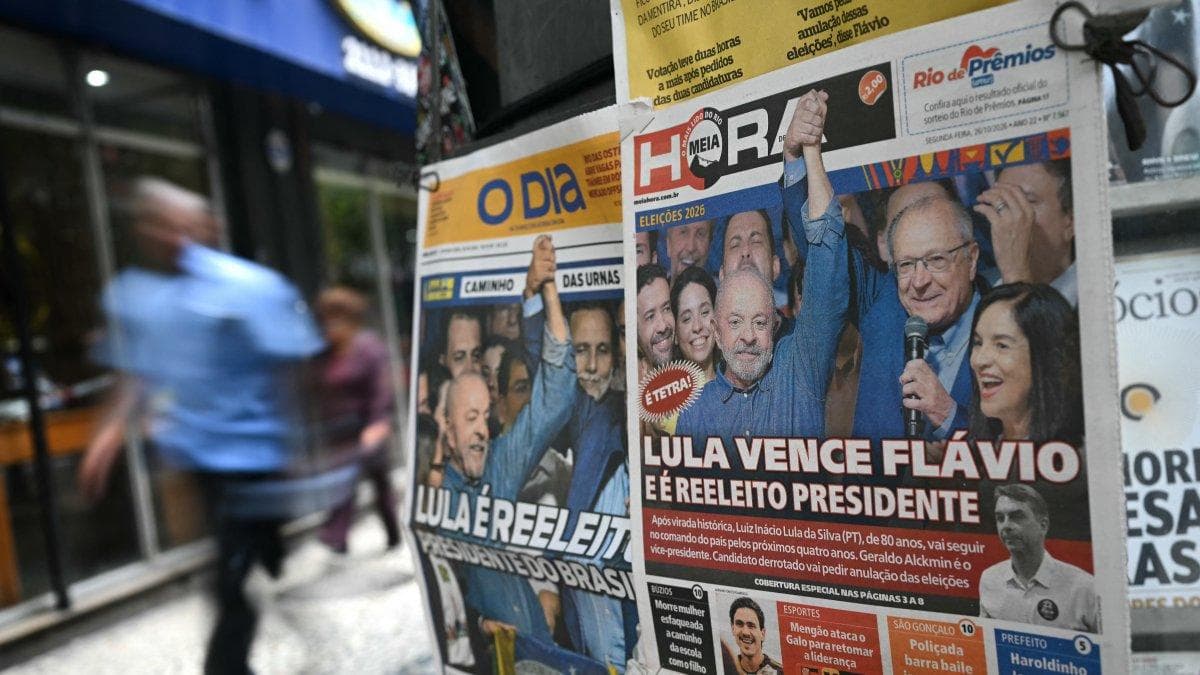
To make matters worse, socialist Venezuela managed to extend its tentacles across the entire continent through massive support and funding for many other regimes of the same ilk. We're talking about the Kirchners in Argentina, Rafael Correa in Ecuador, Evo Morales in Peru, and Lula da Silva in Brazil. Likewise, it solidified the fragile stability of the dictatorships in Cuba and Nicaragua, and even provided support and sanctuary to several of the region's worst terrorist groups and drug traffickers. Chavism became the great corrupter and destroyer of the course that much of Latin America was following after the fall of the USSR and before September 11, but none of this would have been possible without the White House's absolute unwillingness to prevent the collapse of a region that had always been among the top priorities of its foreign policy, and which, from one moment to the next, was subjected to a kind of ostracism that swung between the most absurd incomprehension and the ideologically driven stupidity that it was the White House's moral duty to turn a blind eye to Latin America, since the region was to blame for all its historical ills.
Minimal interest
Since the Bush State Department's decision to focus on the Middle East as its highest and primary priority, the perspective on Latin America centered more on specific national security issues, with migration and drug trafficking being the main concerns. Basically, whatever kind of regime governed some of these countries knew that, if it did not address any of these issues to a degree that might upset Washington, it had the green light to operate as it pleased, regardless of whether it acted against the White House's interests or took positions and made decisions that, during the Cold War, would have been sufficient grounds for overthrow.
However, it would not be entirely far-fetched to assert that not even these issues were taken entirely seriously by the White House, considering that even scourges like drug trafficking could easily be set aside if they interfered with any of its interests in the Middle East. In this case, the clearest example is seen in the Barack Obama administration's decision to obstruct Project Cassandra: an operation led by the DEA, whose sole purpose was to deal a crushing blow to the terrorist organization Hezbollah by dismantling the financial structure it maintained in parts of South America through drug trafficking.
Although some media outlets went so far as to claim that the operation was sufficiently advanced to take action, Obama prevented this from happening because he was negotiating his nuclear deal with the Iranian regime at the time and believed that dealing such a blow to Hezbollah would pose a significant enough setback for the Muslim theocracy to derail the agreement. At the end of the day, Project Cassandra was practically buried, and the controversial agreement was able to move forward, regardless of the fact that numerous investigations have revealed that the terrorist organization generated approximately $1 billion a year through cocaine smuggling, with a significant portion of it destined for the United States.
As expected, in such a scenario and in the face of the vacuum left by the White House, many of its geopolitical enemies seized the opportunity and turned what had historically been the U.S. sphere of influence into a region where they could expand their interests, secure certain resources, develop strategic allies, and even install like-minded regimes. All of this occurred as drug trafficking and migration surged and spiraled completely out of control, while the situation in the Middle East grew increasingly turbulent and complex as the years went by, with the rise of new tyrannies, new wars, new terrorist groups, and new attacks in the West by Muslim psychopaths.
Only time will tell whether the United States' actions in the Middle East following the September 11 attacks were a mistake or a success, even given the fact that the White House was compelled and morally obligated to carry out a forceful response that would serve as both a message and a precedent. However, what is an indisputable fact is that its indifference toward Latin America resulted in a colossal blunder that has directly and indirectly affected the entire continent and has cost Washington trillions of dollars as a result.
Since the arrival of Donald Trump, especially during his second term, the White House seems determined to get back on track toward a United States that views Latin America as a priority region on its foreign policy agenda. However, none of this will amount to anything unless it is part of a bipartisan vision that is sustained over the long term, regardless of who occupies the White House.
Because if there is one region without which the past, present, and future of the United States cannot be understood, it is Latin America. And its decline would, almost inevitably, represent a severe weakening of the West's greatest power.
🛠 Do you think there is an error in this article?
Recommendations




LATEST