ANALYSIS
How would an independent Alberta actually work? A pro-independence group presents a roadmap for an 'orderly' separation from Canada
The Alberta Transition Council has published a 214-page document outlining how a sovereign Alberta would function—from currency to defense—amid an October referendum that could trigger the most serious separatist movement in decades.
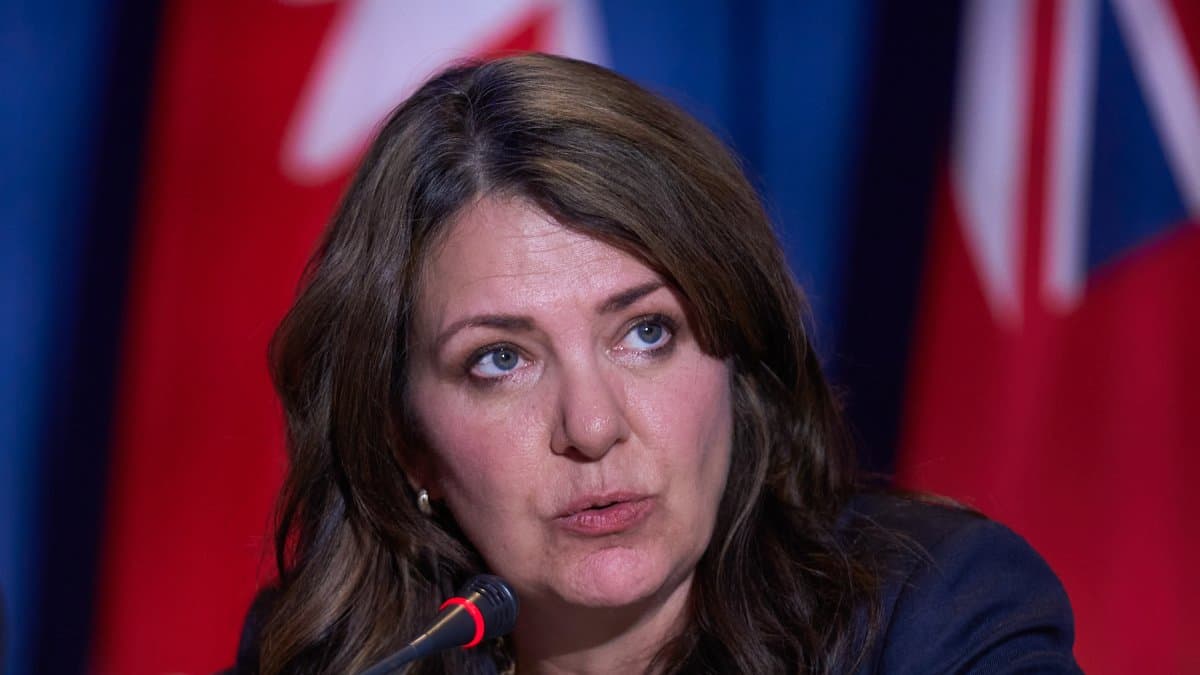

The Alberta Transition Council released its "Transition Plan," a detailed roadmap on how the province could separate in an "orderly" manner and become an independent country if voters approve secession from Canada in a future binding referendum.
The document, drafted by 45 experts in fields such as banking, international trade, law, and relations with First Nations, seeks to answer the question that has dominated public debate: How would an independent Alberta actually function?
Keith Wilson, a lawyer who heads the council and is also a member of the pro-independence group Let Alberta Decide, told CBC that the goal is to outline how Alberta's exit from Canada could proceed smoothly.

The pillars of the transition plan
The Alberta Transition Council's plan is based on one premise: Alberta would not be starting from scratch. It already has a government, legislature, ministries, courts, municipalities, police, healthcare, education, and resource regulators.
What would change, according to the document, is not the services citizens receive, but rather who authorizes, regulates, or funds them. Independence is not envisioned as an abrupt break, but rather as a legal handover negotiated with Canada, First Nations, the United States, and other partners, without disrupting essential services.

Politics
Trade War: Canada's retaliatory tariffs take effect as Trump threatens Bombardier
Carlos Dominguez
Constitutional framework and negotiation
The plan emphasizes that Alberta could not go it alone. Any separation would have to be legal and mutually agreed upon, following the Canadian Supreme Court's ruling on Quebec and the Clarity Act: a referendum with a clear question and a clear majority does not create a country; it triggers the obligation to negotiate with Ottawa.
On the negotiating table would be the division of debt, assets, and liabilities; temporary agreements to ensure services are not disrupted; and the transfer of functions that are currently federal. Meanwhile, public payments, border crossings, pensions, banking, and transportation would have to continue functioning. The document itself acknowledges this limitation. Negotiations can be planned, but it is impossible to guarantee in advance how each chapter will conclude.
Finance, taxes, and currency
In fiscal and financial matters, the plan does not outline the tax system of a sovereign Alberta. It analyzes how to collect, budget, and administer taxes on day one without causing the treasury to collapse.
The working assumption is to continue using the Canadian dollar. That way, there would be no need to suddenly rewrite contracts, prices, paychecks, or mortgages. For bank customers, the document states, their accounts, cards, and mortgage payments should remain the same.
What would change, however, is behind the counter: who regulates the banks, how deposits are insured, who provides emergency liquidity, and how access to payment systems is managed. The plan does not require a separate currency on Day 1. An "Alberta dollar," the use of the U.S. dollar, or another monetary system would be left to a later political decision.
The cost of this transition is not included in this document. The council has announced a separate financial report, scheduled for later in September.

Pensions, health care, and social protection
The plan measures the success of the transition by one concrete measure: that people receive their payments. Public payrolls, pensions, and benefits should continue to be disbursed through tried-and-true systems, ensuring that the change in sovereignty leaves no one without payment on Day 1.
That does not mean permanently copying the federal framework. Negotiations with Ottawa would be needed to transfer or phase out programs currently administered by Canada—pensions, unemployment insurance, family assistance, and other benefits—and, if necessary, maintain temporary arrangements until Alberta can operate them on its own.
The document applies the same logic to personnel. Thousands of federal employees already live, work, and have families in Alberta. Where these functions are to continue, the council proposes not replacing them abruptly, but rather retaining their expertise through negotiated transfers, new hires, or secondments.
The idea is that the knowledge already present in the province should form part of the new state's capacity, rather than having to rebuild it from scratch.
Institutions, justice, and security
On Day 1, Alberta would become a country; the permanent constitution would be drafted and put to a vote later. Until then, there would be no vacuum: the current Legislative Assembly, premier, cabinet, civil service, and courts would continue to operate under an interim framework.
Laws, contracts, licenses, and pending cases would not be nullified. The Government of Alberta would expand its powers; no other government would be established in parallel.
What would need to be created, however, are the functions of state that a province does not have: passports, visas, full customs authority, defense, and foreign relations. Citizenship and immigration would be based, according to the text, on recognizing those who already reside legally, rather than requiring everyone to reapply for documentation.
At the border, the current plan assigns frontline duties to a division of the Alberta Sheriffs. Tariff policy, visas, and health or agricultural inspections would fall under the purview of other agencies. The plan seeks agreements with Canada and the United States to ensure that people and goods can continue to cross while these new systems are being implemented.

Society
Google Maps Renames Lake Ontario "Lake America" in the U.S., but Not in Canada
Carlos Dominguez
Relationship with First Nations
The authors identify Indigenous rights and treaties as one of the central issues of the separation.
Treaties, reserve lands, and Indigenous governance cannot be resolved by decree from Edmonton.
The document treats First Nations as rights holders and treaty partners, not merely as "stakeholders," and provides for tripartite negotiations with Canada. It does not assume a single model for all 48 First Nations: some might maintain their relationship with Ottawa; others might establish a new one with Alberta.

Politics
Bill Maher mocks the left's outrage over 'Lake America' with a dig at political correctness
Carlos Dominguez
Economy and external trade
The document devotes entire chapters to the pillars of Alberta's economy: energy, agriculture, transportation, telecommunications, trade, and international treaties. It does not propose rebuilding those supply chains. It proposes that they remain open.
The priority is market access, especially with the rest of Canada and the United States. To achieve this, customs, export certification, aviation, and the technical arrangements that enable the movement of oil, food, cargo, and data would need to be in place on Day 1. Part of that continuity does not depend solely on Edmonton: it requires external recognition and agreements with Ottawa, Washington, and international organizations.
The plan does not specify what taxes, energy policy, or trade model Alberta should adopt in the long term. That, it states, would be decided later by voters and the government they elect. Its scope is narrower: to ensure that, as sovereignty changes, what already works does not fall apart.
The test proposed by the executive summary is an everyday one. That the government continues to govern, the courts remain open, pensions and payrolls are paid, banks operate, businesses do not lose licenses or contracts, and people and goods can continue to cross the border.

Just the News
Christian leaders urge Trump to create legal pathway for Jewish Canadians facing antisemitism
Just The News
Why now?
Smith has reiterated that she does not support secession and that she will vote for Alberta to remain in Canada. After the courts blocked the citizen petition for a direct independence vote, her government added a different question to the October referendum: whether Alberta should remain in Canada or begin the constitutional process for a binding referendum on separation. The premier has said she will respect that result.
If the option to "initiate the process" wins, the provincial government would call a second, binding referendum in the spring of 2027, according to the timeline proposed by the separatists.
The separatist movement in Alberta has deep roots. It emerged in the 1970s in response to the policies of Prime Minister Pierre Trudeau, particularly federal control over energy resources and fiscal equalization programs that many Albertans perceive as subsidies to the eastern provinces.
The poll most favorable to the independence movement, among established polling firms, is the one conducted by Angus Reid in mid-August: 33% would vote for the government to begin the process of a binding referendum, and 61% would vote for Alberta to remain in Canada. In May, the same firm reported a figure of 35%. Support is higher among UCP voters and in the interior of the province than in Calgary or Edmonton.
🛠 Do you think there is an error in this article?
Recommendations







LATEST