The scandal rocking the IACHR: Its vice president accused of corruption and a conflict of interest
Andrea Pochak, first vice president of the Inter-American Commission on Human Rights (IACHR), has been criminally charged in Argentina for alleged crimes of corruption, abuse of authority, perversion of justice, and fraudulent administration.
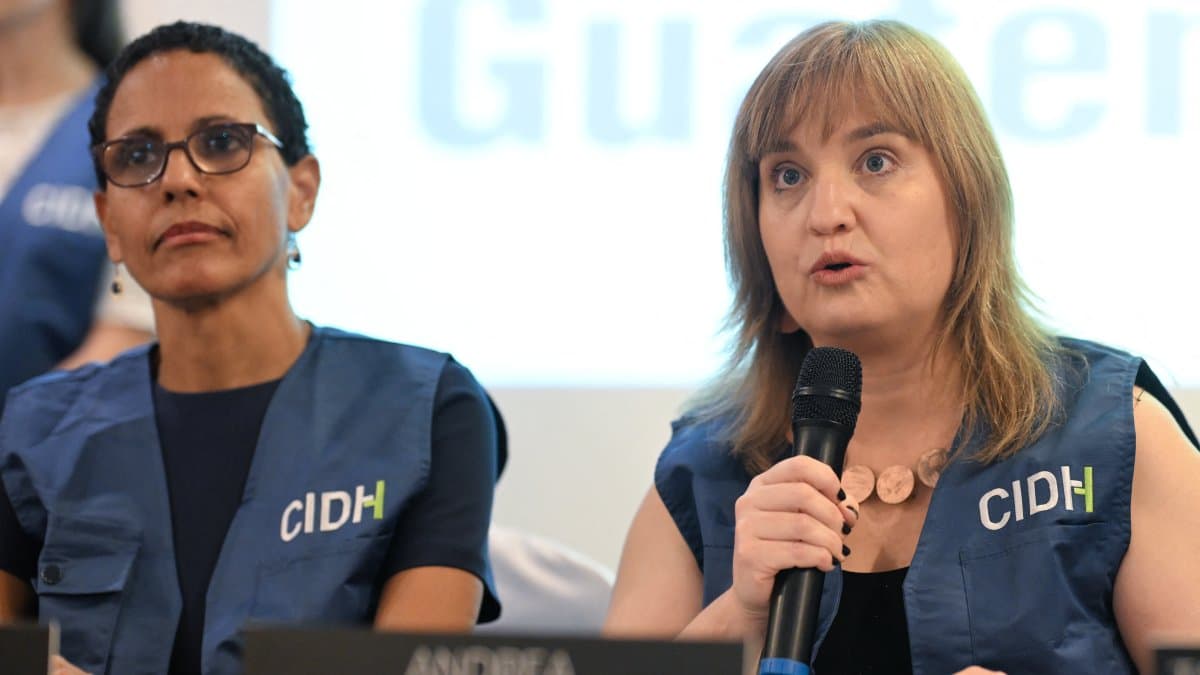

Andrea Pochak, first vice president of the Inter-American Commission on Human Rights (IACHR), has been criminally charged in Argentina for alleged crimes of corruption, abuse of authority, perversion of justice, and fraudulent administration. The complaint questions whether she acted impartially in a case against the Argentine government while holding a position in that government. The IACHR is the Organization of American States (OAS) body responsible for promoting and protecting human rights in the Americas.
Attorney Iván Szoke Urquiza filed the complaint before federal judge Julián Ercolini, alleging crimes committed by Pochak during her tenure in the administration of former Argentine President Alberto Fernández. The complaint calls for an investigation into Pochak for alleged crimes including abuse of authority, breach of duty as a public official, malfeasance, negotiations incompatible with public office, and fraudulent administration.
The case centers on former Argentine judge Marta Susana Catella and a dispute that reached the IACHR. The former judge, removed from office in February 2006 after an impeachment trial in the province of Misiones, maintains that the proceedings leading to her removal violated her rights and did not provide the necessary safeguards for her defense.
The Argentine government rejects these accusations and maintains that Catella mounted her defense and appealed the decisions in court. On March 12, 2026, the IACHR held a hearing on the case, attended by representatives of Catella and the Argentine government.

Why is Pochak being accused?
The complaint alleges that Pochak may have engaged in a conflict of interest during her tenure with the Argentine government. The central argument is that, before becoming a government official, Pochak had served as deputy director of the Center for Legal and Social Studies (CELS), an organization that supported former judge Catella in her complaint before the IACHR.
Years later, between 2019 and 2023, Pochak held a position in the Argentine government under President Fernández, in which she managed the state's defense before international bodies—specifically in cases such as Catella's.
The complainants argue that, because of her prior affiliation with the organization representing Catella, Pochak should have recused herself from the case when she began working for the government. The accusation alleges that, instead of adequately defending the Argentine state's interests against Catella's claim, she omitted information that could have strengthened Argentina's position before the IACHR. The allegations include failing to submit about 65 pounds of case files and related documentation.
Pochak rejects the accusations and maintains that she never intervened in the Catella case as a representative of the State while she was a government official. "I never intervened, as a representative of the Argentine State, in any case in which I had previously intervened as a petitioner. I was very careful to avoid any conflict of interest," she wrote on X after the allegations came to light.
"They refer to several cases in which I never participated as a petitioner. They also allege that I failed to include the 'Catella case' in a recusal filing, but I never participated as a representative of the State in that matter. I did not engage in any conflict of interest," she added.
During a public hearing of the IACHR in March 2026, Argentina's then-Undersecretary for Human Rights, Joaquín Mogaburu, questioned the previous administration's actions in the "Catella case." According to a report by the Argentine newspaper Clarín, he argued that Argentina had remained in a state of "utter defenselessness" for years in the face of the former judge's claim, casting doubt on Pochak's work.
What could happen to Pochak?
If the Argentine courts find Pochak guilty of the crimes, she could face criminal consequences.
In turn, within the IACHR, questions could arise about her impartiality and the performance of her duties, as her term extends through December 2027.
🛠 Do you think there is an error in this article?
Recommendations





LATEST