9/11: The moment that changed the 'security vs. freedom' debate forever
Public opinion has gradually shifted since the attack on the Twin Towers. After an initial consensus on the need to restrict even civil liberties in the interest of greater protection, a growing number of citizens have come to advocate for personal freedom and leadership accountability.
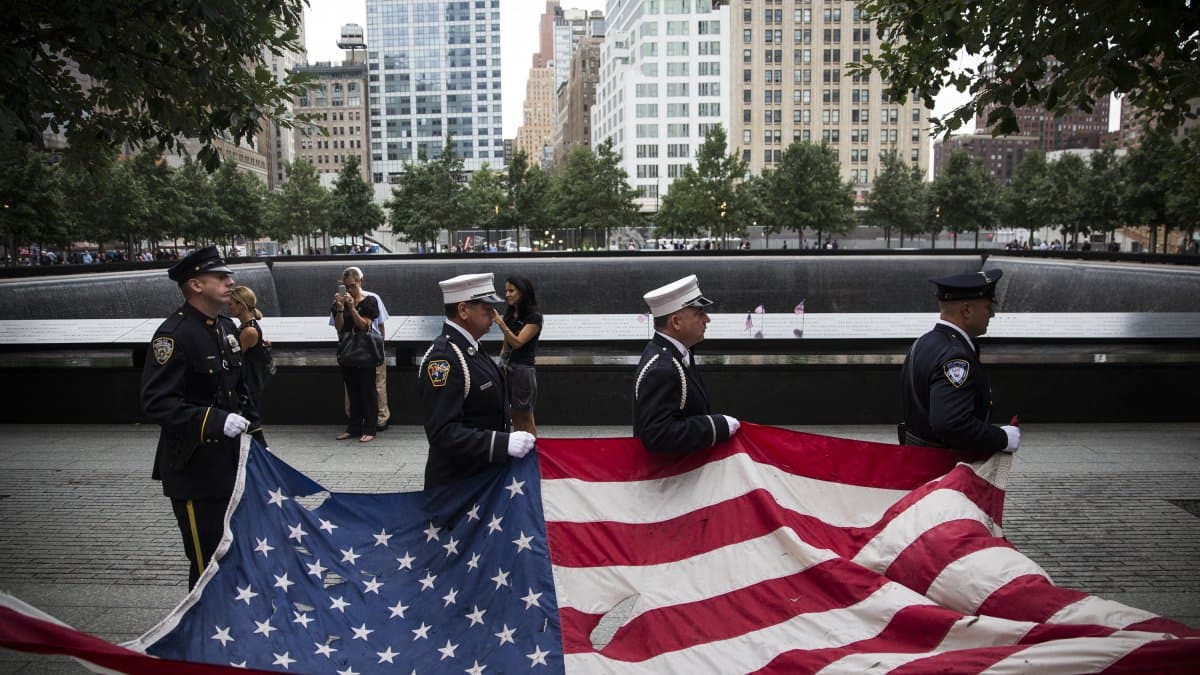

9/11 changed the world forever. Among these changes, once the initial shock had passed, was a new approach to the debate over the limits of security and personal freedom in the face of new terrorist threats. A debate that, 25 years later, remains relevant and has generated reams of literature on the subject. Even the most famous superheroes had to take sides, as seen in Marvel's famous "Civil War" saga.
The shock, naturally, hit the U.S. first, but soon reached governments around the world, which expanded their powers, created new institutions and surveillance tools, measures that often clashed with civil liberties, upending that fragile and delicate balance in the name of protection against a potential threat.
From initial consensus to protests
The Bush Jr. administration quickly passed the USA PATRIOT Act in October 2001, which rapidly and drastically expanded federal powers regarding surveillance and investigation (traveling wiretaps, greater access to records, less judicial oversight in certain national security cases and greater information sharing).
It was a time when the shock of the events gave way to a broad consensus on the need to prioritize national security above all else. In fact, subsequent reforms, including the USA Freedom Act, narrowed the scope of certain provisions, particularly following revelations about the mass collection of individuals' data, which even led to protests.
Creation of the Department of Homeland Security
The attack also led to the creation of the Department of Homeland Security and the Transportation Security Administration. These new agencies transformed security at airports and borders, with measures that were adopted worldwide such as reinforced cabin doors, universal baggage screening, federal security screening personnel and watchlist checks.
The new measures meant that flying lost much of its appeal for short- and medium-haul flights, since the time spent at security checkpoints meant, and still means, that passengers lose the time they would have gained from the plane's speed compared to ground transportation, which involves far fewer checks.
Furthermore, the impact of these events led to a reorganization of intelligence services, the initiation of legal proceedings for material support, detention practices (including Guantanamo), and an expansion of domestic surveillance.
Early polls showed a majority willing to accept restrictions
Initially, public opinion leaned toward security: early polls showed that a majority was willing to accept certain restrictions on freedoms to prevent another attack. Subsequent changes led many to become more concerned about privacy and abuses of power.
A similar dynamic unfolded on the international stage. More than 140 countries passed or strengthened counterterrorism laws, often with broad definitions of terrorism, expanded detention powers and weaker due process protections. Authoritarian governments sometimes used the argument of the "war on terror" to justify the repression of domestic opposition.
Evolution of the debate
Based on polls and citizens' views, we can identify several moments when public opinion shifted most strongly toward one of the two sides:
- 2001–2004/05: Security takes center stage. Broad public and bipartisan support.
- 2005–2025: The emergence of several scandals covered by the media (Abu Ghraib, Guantanamo, warrantless surveillance), the Snowden leaks and the loss of that perception of an immediate threat brought about a shift that gradually led public opinion to show greater concern for civil liberties and leadership accountability.
- Today (25 years later): The institutional framework (DHS, TSA, reformed but still-in-effect surveillance powers) remains in place. The debate has expanded to include encryption, biometrics, data retention, and the use of counterterrorism tools in other contexts.
In fact, there is an ongoing assessment of whether the imperfect balance created by the legislative reforms immediately following the attack has prevented greater catastrophes or whether we have experienced a cumulative erosion of privacy and democratic norms over the past 25 years.
Marvel's "Civil War": The debate reaches popular culture
The case of Marvel is particularly notable; in the wake of post-9/11 measures, the company portrayed this debate through its best-known and most powerful superheroes. The depth of the rift between the defenders of each of these positions is represented by Iron Man (security) and Captain America (freedom).
The conflict is so intense that the entire superhero universe is forced to take sides and ends up fighting among themselves, regardless of everything they've experienced as a team up to that point.
🛠 Do you think there is an error in this article?
Recommendations


LATEST