Guyana welcomes its first group of deportees from the US under the 'third-country' program
The Trump administration defends the practice as an effective tool to deter illegal immigration into the country.
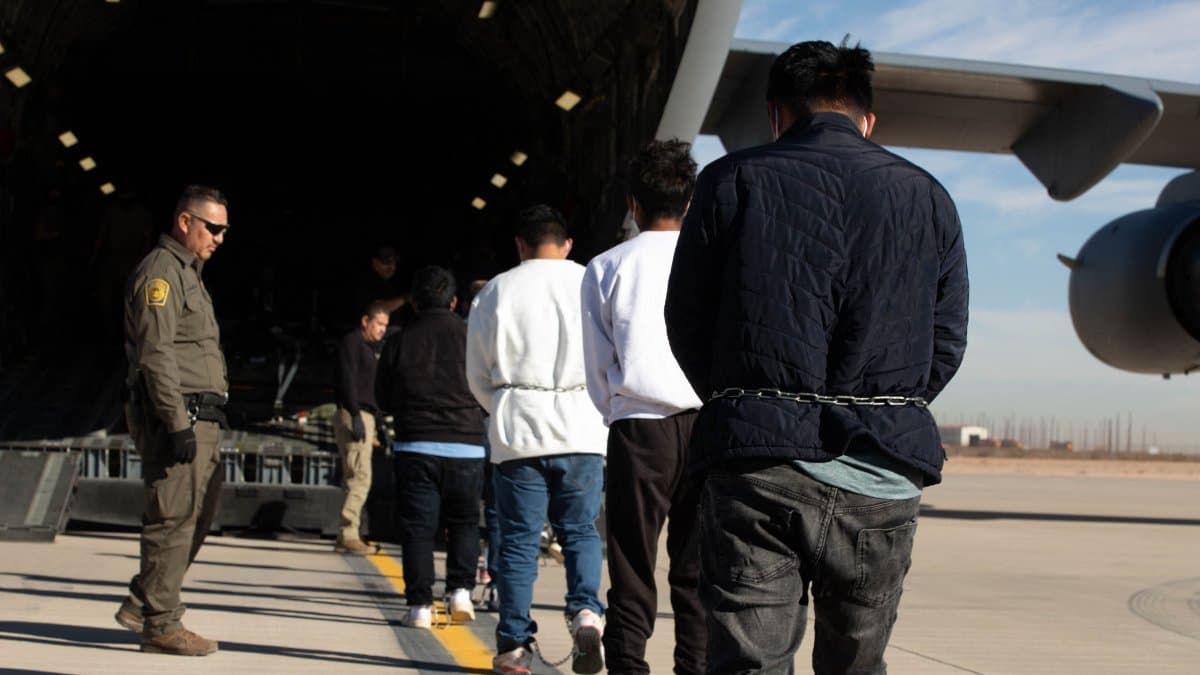

Guyana became the latest country to join the Trump administration's "third-country" deportation program, after receiving a small group of Afghan and Cuban migrants expelled from the United States, as confirmed by a U.S. official to CBS News.
The South American country is part of a group of more than 30 nations that have already signed agreements with Washington to receive deportees who are not its own citizens. The Guyanese government explained in a statement that those arriving under the so-called "Assisted Voluntary Return Program" will wait in Guyana for their immigration cases to be resolved, with the possibility of returning to their country of origin or being relocated to another destination.

The International Organization for Migration of the UN will be responsible for implementing the program, local authorities specified, who emphasized that the government will not cover the migrants' housing or living expenses.
Guyana's Minister of Foreign Affairs Robert Persaud, confirmed to the Associated Press that six citizens of Cuba and Afghanistan arrived on Friday, after undergoing a verification process that revealed no criminal records. According to Persaud, the agreement was finalized after months of negotiations, will last for one year, and does not constitute permanent resettlement.
Guyana, a founding member of the Caribbean Community, thus joins other countries in the region that have already received small groups of deportees, including St. Kitts and Nevis, Belize and St. Lucia, which, according to U.S. officials, expected to receive its first contingent this very week.
Human rights organizations have questioned these types of deportations, calling them contrary to international law and warning that some migrants end up being sent to countries close to those from which they fled due to persecution. The Trump administration, on the other hand, defends the practice as an effective tool to deter illegal immigration into the country.
🛠 Do you think there is an error in this article?
Recommendations







LATEST