






Iranian regime threatens ‘faster, more intense and more painful response’ if Washington attacks again
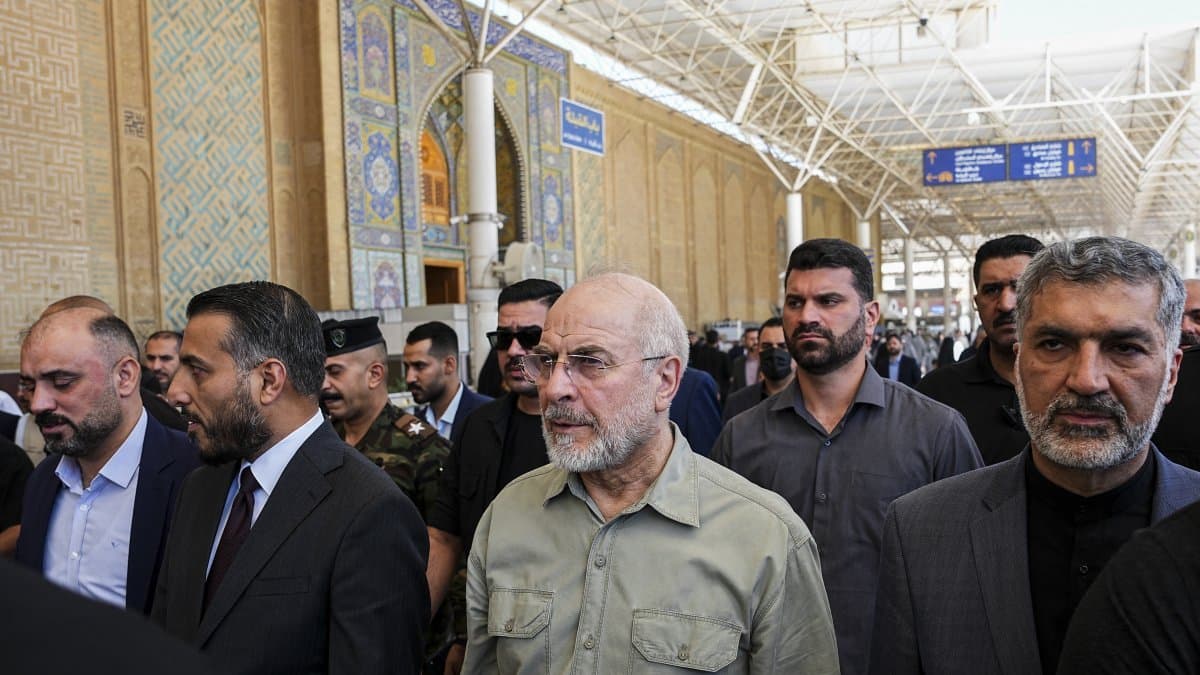
The warning was issued by the speaker of the Iranian regime's parliament, Mohammad Bagher Ghalibaf, Iran's chief negotiator. "The Americans must have understood that the era of proportional responses has come to an end," he said.

Tehran warned on Sunday that it will not limit its retaliation to a scale similar to that of the U.S., following a new exchange of strikes in the Gulf and the Strait of Hormuz.
The warning was issued by the speaker of the Iranian regime's parliament, Mohammad Bagher Ghalibaf, Iran's chief negotiator in talks to end a conflict that has already lasted six months.
"The Americans must have understood that the era of proportional responses has come to an end," Ghalibaf said in a speech broadcast by state-sponsored media. "Any aggression against Iran's interests and security will receive a faster, more intense and more painful response."

Missiles fired at aircraft carrier and destroyer
The latest round of violence began on Saturday. According to AFP, U.S. Central Command (CENTCOM) reported that Iran unsuccessfully fired at a U.S. aircraft carrier and a destroyer. The Revolutionary Guard Corps, however, claimed that both ships "suffered damage" and were "forced to retreat." Washington insists that the ships evaded the attack and that there were no casualties.
The U.S. response was not directed against combat units, but rather against oil tankers linked to the Revolutionary Guard. Centcom said it had permanently disabled the oil tankers M/T Downy, off the island of Jarg, and M/T Stark 1, near Yask, and had destroyed the empty M/T Kylo, in the Gulf of Oman, after ordering the crew to abandon ship.
Images released by the military command show explosions and fires on board. According to the United States, the three vessels were part of a "shadow network" worth billions of dollars that finances the Guard and its regional allies.
Admiral Brad Cooper, head of CENTCOM, summed up Washington's logic: "Let the message to the IRGC be clear: If you shoot at two of our ships, we will impose an even higher economic cost—taking out three of yours."
Iranian state media reported that one of the oil tankers struck by the United States was empty and another was carrying crude oil; the crews reached shore in lifeboats. A correspondent in Kharg said the attack there caused no casualties. The Iranian Foreign Ministry claimed the U.S. actions were "illegal and aggressive."
Iran strikes back in the Strait of Hormuz and claims to have attacked a naval drone
Iran retaliated immediately. The Revolutionary Guard Corps claimed to have attacked "three oil tankers on an unauthorized route through the Strait of Hormuz and three U.S.-affiliated vessels in other areas," and warned merchant ships not to attempt to cross the strait via routes not approved by Tehran.
Early Sunday morning, according to the regime's state-run media, it also attacked a U.S. naval drone attempting to enter the strait.
🛠 Do you think there is an error in this article?
Recommendations






LATEST