Anti-immigration party AfD scores its biggest electoral win in Germany, one step away from power in Saxony-Anhalt
"This isn't just about Saxony-Anhalt. It's a signal to all of Germany, a sign of self-confidence," Ulrich Siegmund, the AfD's candidate for state leader, said.
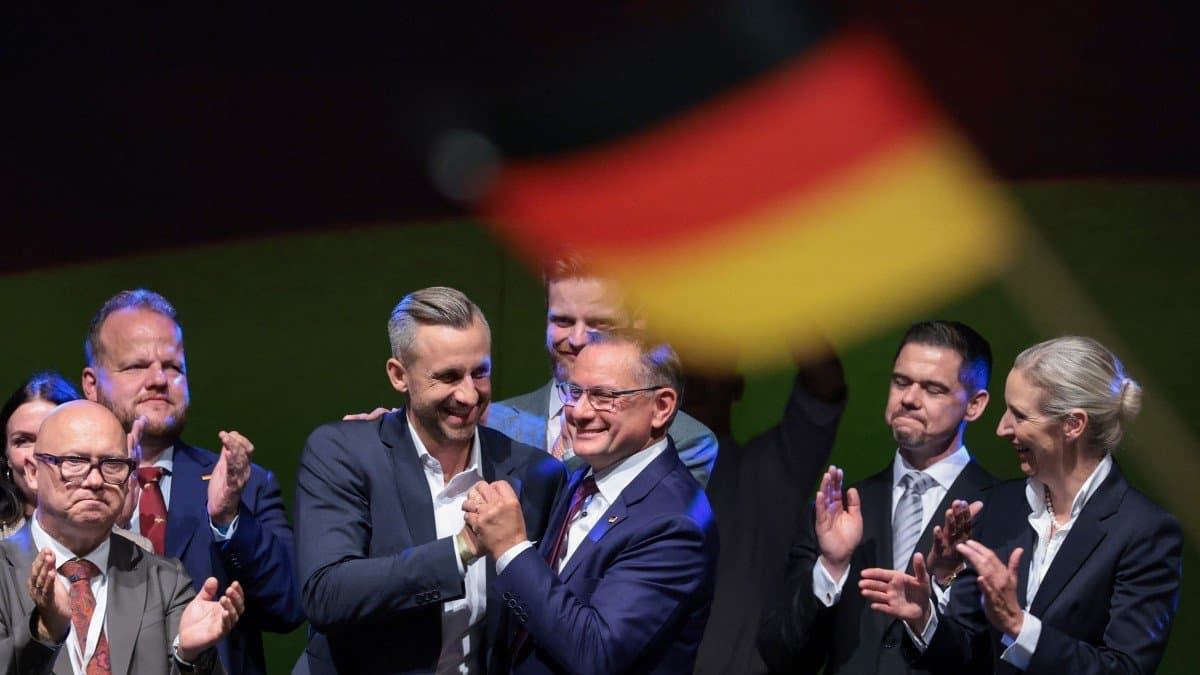

The anti-immigration party Alternative for Germany (AfD) achieved its best election result since its founding in 2013 on Sunday, winning nearly 44% of the vote in the state election in Saxony-Anhalt, a region in eastern Germany with 2.1 million residents.
The figure is more than double what the party had in the same region in 2021, leaving it approximately three seats short of an absolute majority in the local parliament.
With these results, the AfD is on track to win 39 of the 83 seats in the state parliament, just shy of the 42 needed to govern alone. To do so, it will need the backing of other lawmakers, either through a formal coalition or ad hoc support from representatives of other parties. The AfD candidate to lead the state, Ulrich Siegmund, hailed the result as "sensational" and said he would begin governing as soon as possible.
"This isn't just about Saxony-Anhalt. It's a signal to all of Germany, a signal of self-confidence," Siegmund told his supporters, who chanted his name during the celebrations in the state capital, Magdeburg.

Saxony-Anhalt was part of East Germany during the Cold War, and it remains one of the states with the lowest average net income in the country. This economic reality, coupled with fears among a large portion of the electorate about losing purchasing power, largely explains support for the AfD, whose main platform is an immigration policy much more restrictive than current German law and that of the rest of Europe.
Just as Siegmund was the big winner of the day, another key takeaway from the election is the magnitude of the defeat suffered by Chancellor Friedrich Merz and his party, the Christian Democratic Union (CDU), which had governed the region for 24 years. Support for the Christian Democrats plummeted to just 17%, a far cry from the 37.1% they had achieved in 2021. Sven Schulze, the current CDU state premier, acknowledged the defeat and admitted that his party "will have to deal with this result." Merz himself, for his part, avoided making public statements about what had happened for much of election night—a sign that the AfD dealt a near-knockout blow to the CDU in general and to Merz in particular, whose government is becoming increasingly unpopular.
Although various European political and media sectors frequently label the AfD as a "far-right" party, both its national leaders and state-level figures, including Siegmund, reject that characterization. In fact, one of the key details of this election is that the AfD could end up depending on the support of the BSW, a left-wing populist party founded by a former member of the Communist Party of the former East Germany, a development that completely defies the traditional framework that typically pits the left against parties like the AfD in the rest of Europe.
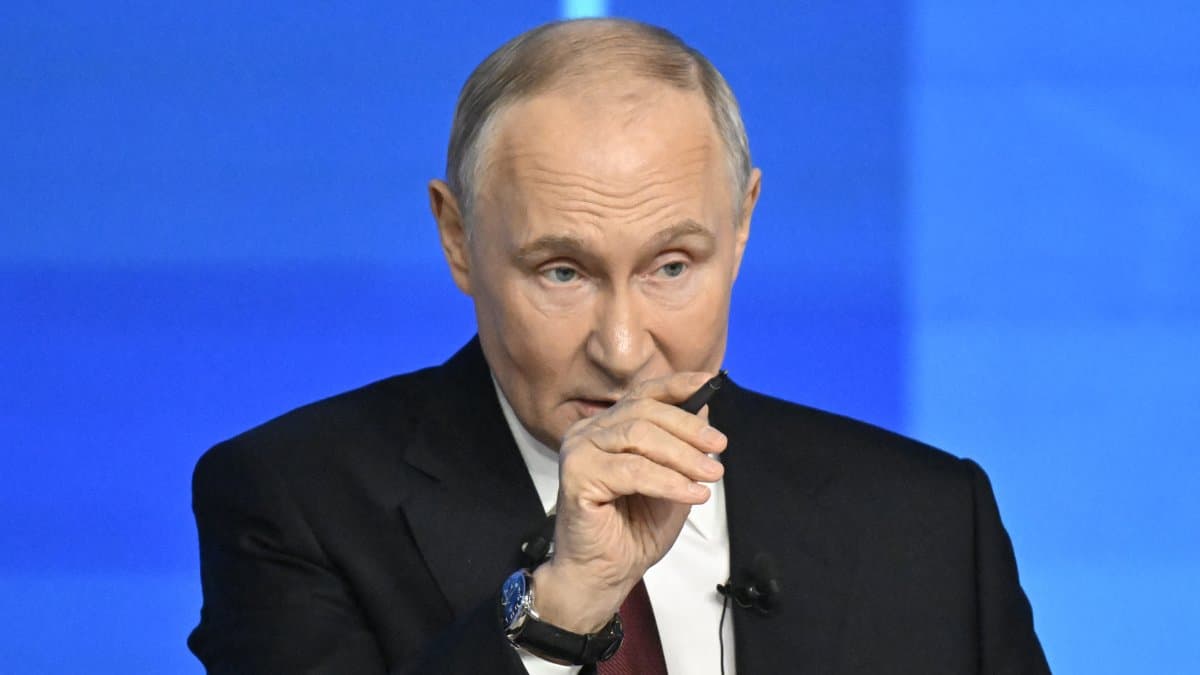
The result, which surprised many, had immediate international repercussions, reaching the U.S. and Russia. President Donald Trump shared a screenshot of the German television projections on his social media platform, Truth Social, while the Kremlin's special envoy, Kirill Dmitriev, celebrated on social media what he called a "historic victory for the pragmatic AfD," a party that also supports closer ties with Russia.
Vice President JD Vance backed the AfD last year during his trip to Germany, in a speech that German authorities considered a clear interference in domestic politics.
Looking ahead to the immediate future of the German political landscape, the result in Saxony-Anhalt raises the AfD's expectations for other regional elections scheduled for this month, such as the one in Mecklenburg-Western Pomerania, and strengthens its position as the most popular political force nationwide in the polls, ahead of both the Merz bloc and the Social Democrats.
🛠 Do you think there is an error in this article?
Recommendations








LATEST