






ANALYSIS
Iceland votes 'No' to resuming EU entry talks: The triumph of the countryside over Reykjavík's globalism
In the three inland and coastal constituencies, the rejection of Brussels was overwhelming: in the southern constituency, the "no" vote reached nearly 60% of the total.
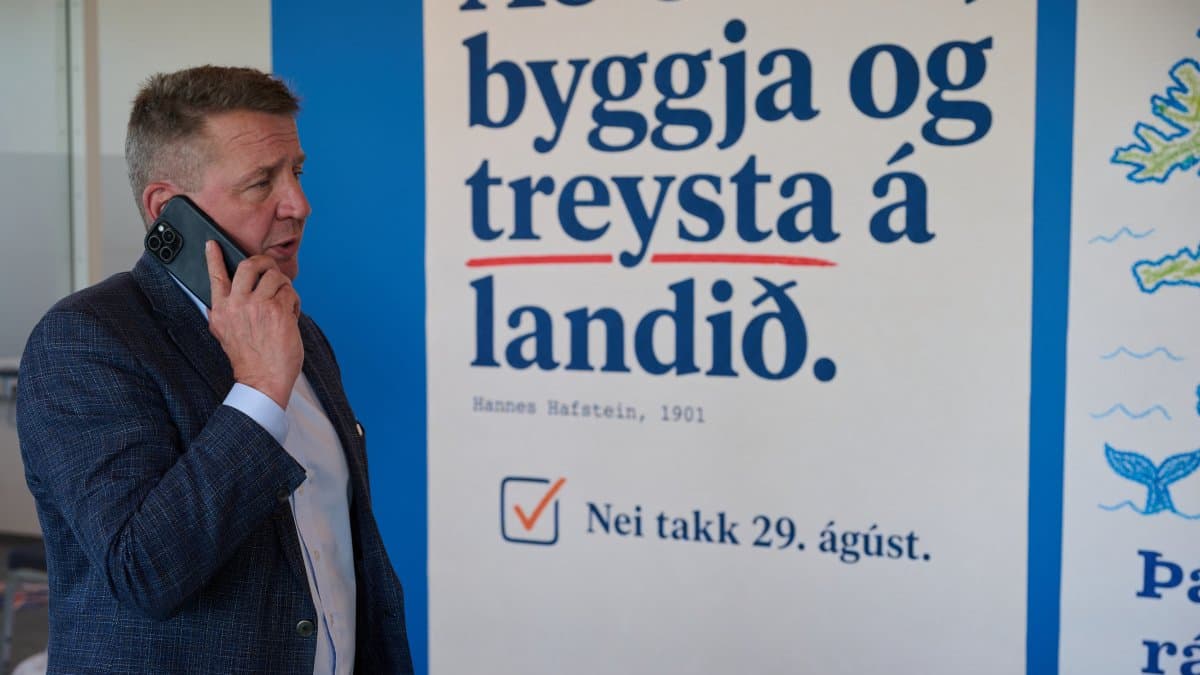

The people of Iceland have rejected resuming negotiations for accession to the European Union, a setback for Brussels, which had been looking with interest at the prospect of the prosperous island joining the union.
In a referendum held on Saturday, the "no" vote prevailed with approximately 52.8%, compared to about 47.2% for "yes," according to the official tally released by the public broadcaster RUV after all votes had been counted. With this result, the Nordic nation has, for now, ruled out moving closer to Brussels and retains control over its natural resources and fishing waters.
The capital vs. The real Iceland
Iceland, with a population of about 400,000, applied to join the E.U. in 2009, following the 2008 financial crisis. Negotiations stalled in 2013. On Saturday, some 273,000 voters were called to the polls to decide whether the talks should resume.
The vote has laid bare a social and geographic divide that defines the country's political landscape. The capital, Reykjavík, threw its weight behind the "yes" vote: the option favoring the reopening of negotiations won in both constituencies into which Iceland's largest city is divided, where European integration was presented as a step toward modernity.
However, rural Iceland stood its ground. In the three constituencies in the interior and along the coast, the rejection of Brussels was resounding: in the southern constituency, the "no" vote reached nearly 60%. Farmers and, most notably, the fishing industry, the country's historic economic engine, understood the risk of submitting to the quotas and regulations of the E.U. Common Fisheries Policy, which would have placed Icelandic waters under the control of foreign bureaucrats.
Fishing key to the verdict
The fear of ceding sovereignty over fishing waters was one of the central issues of the debate. Supporters of the "no" vote argued that Iceland's marine resources were too valuable to risk in an integration process whose control would be beyond national decision-making.
This argument resonated with rural and fishing communities, which served as the anchor of self-determination in the face of promises of prosperity from globalization.
The result of the EU referendum in Iceland is a "victory for democracy"
"I want to be absolutely clear: this government will not resume accession negotiations during this legislative term," which runs through 2028, said the Social Democrat at a press conference, who had previously advocated for resuming them.
🛠 Do you think there is an error in this article?
Recommendations





LATEST