







Number of people missing in Nepal-Tibet floods surpasses 2,400 as death toll reaches 586
The new figures were released after Nepal's disaster management authority added 933 hydroelectric plant workers to a list of missing persons that already included hikers and pilgrims heading to the sacred Tibetan mountain of Kailash.
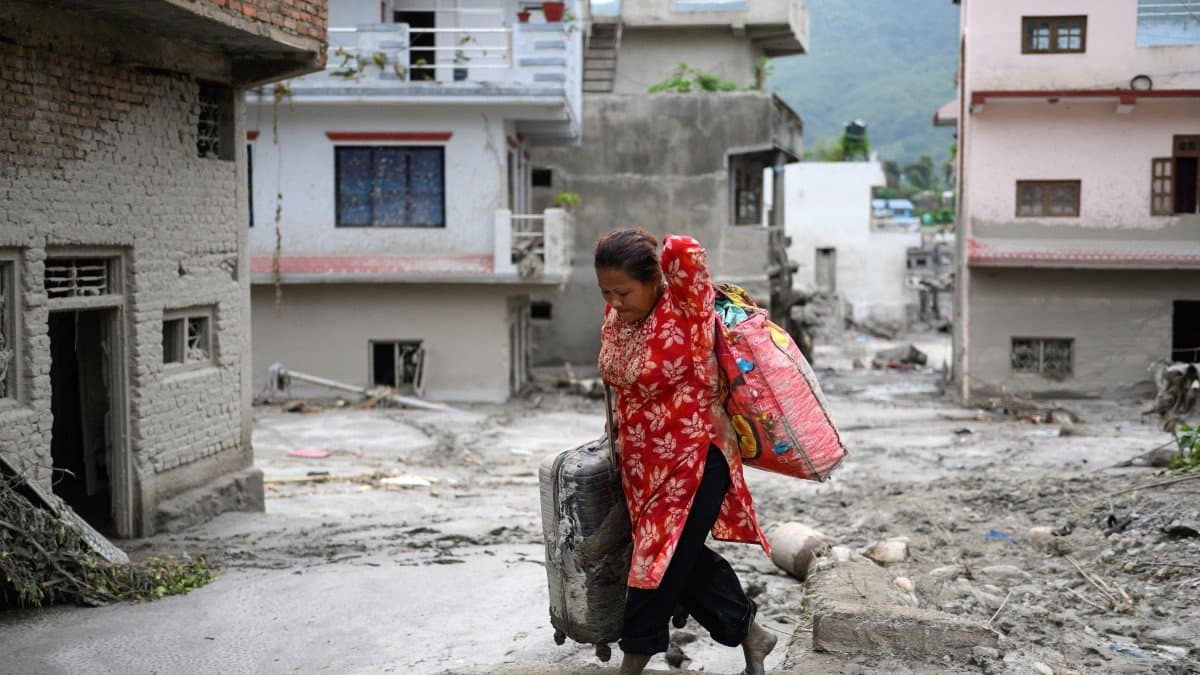

The number of people missing in Nepal and Tibet exceeded 2,400 on Friday, a figure that reflects the magnitude of the disaster days after a devastating mudslide swept away entire villages and left hundreds dead.
So far, emergency teams have recovered 586 bodies—579 in Nepal and seven in Tibet—some of which were swept downstream as far as India.
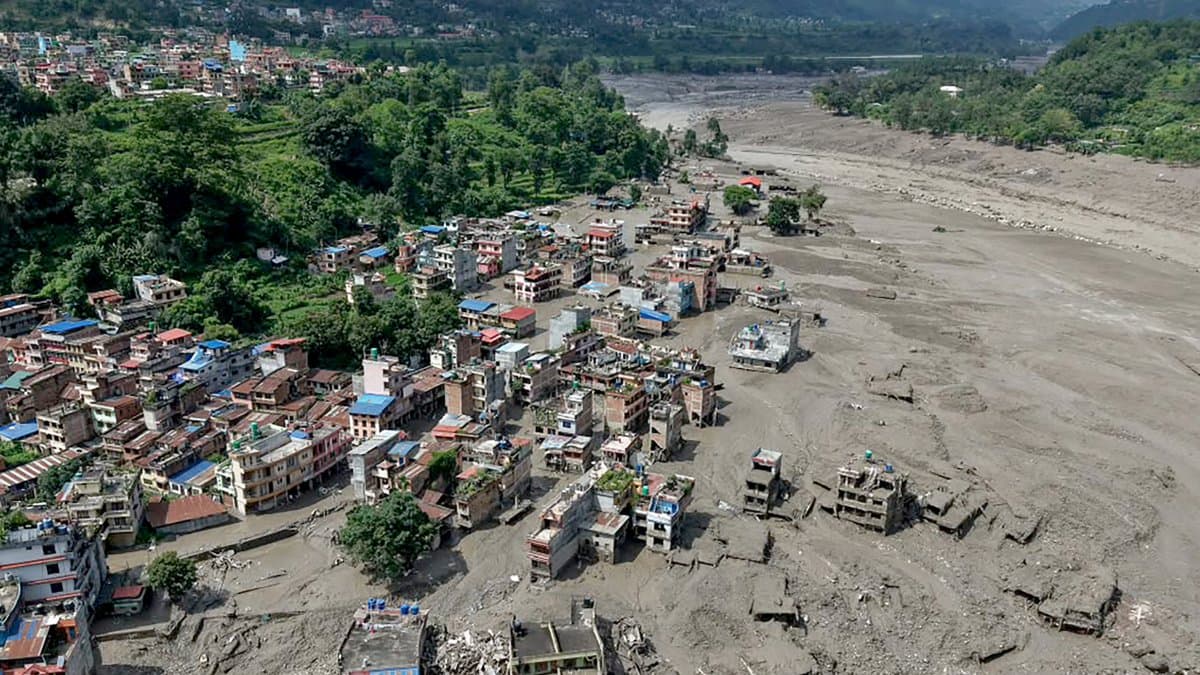
Rescuers were still working Friday amid the rubble and water, two days after a massive mudslide buried homes, toppled bridges and swept away vehicles in both Nepal and the Chinese autonomous region of Tibet.
The new figures were released after Nepal's disaster management authority added 933 hydroelectric plant workers to a list of missing persons that already included hikers and pilgrims en route to the sacred Tibetan mountain of Kailash.
The U.S. Geological Survey (USGS) attributed the disaster to a glacial collapse that triggered a massive flow of icy water and sediment.
That torrential mass of ice and mud also formed large pools of water. One of them burst on Friday in Tibet, putting the teams searching the area at risk. Nepalese police therefore urged all rescue workers to "get to safety immediately," although the alert was lifted in the early afternoon with no reports of further flooding.
World
US Embassy mobilizes assistance while searching for dozens of its citizens following devastating floods in Nepal
Andrés Ignacio Henríquez
Aid from Tibet
On the Tibetan side, Chinese state media reported that the flood risk associated with this lake is "gradually decreasing" and that rescue efforts "are proceeding in an orderly manner."
A first group of 21 Chinese rescue workers managed to reach the Gyirong border post area—in the heart of the devastated region—on Friday afternoon, according to Chinese state media.
Chinese President Xi Jinping chaired a meeting on Friday to discuss the situation and offered aid to Nepal.
Emergency services are working tirelessly to locate survivors in the devastated areas, where food and drinking water are already in short supply.
The Nepalese military located about 100 people trapped in a tunnel at a hydroelectric project.
"I haven't heard from him since I spoke with him that day at 7 a.m.," Sita Adhikari, whose husband is among those trapped, told the press. "We also don't know how the rescue efforts are progressing."
Military spokesman Raja Ram Basnet told AFP that two helicopters were dispatched to the site and that some 350 workers and residents at that same facility were brought to safety.
"Everything was gone"
"I was at the hydroelectric plant on Wednesday when I heard a deafening noise," Ananay Sharma, a 29-year-old Indian engineer who worked there, told AFP. "When I went outside, everything was gone except for the river," he added.
Dozens of Hindu devotees from around the world are among the hundreds of people missing near the border, as many were on a pilgrimage to the Mount Kailash on the Tibetan side.
An Indian woman participating in the pilgrimage told AFP that two of the three buses carrying her group of 57 pilgrims were swept away Wednesday by the mudslide.
"Suddenly we were engulfed in a kind of fog, or smoke, that covered everything," said Sivaranjani Muthunathan, 46. "We were able to get out of the bus, one by one, through the driver's door," she explained. She and the rest of the passengers on her bus managed to take refuge on higher ground above the road, but the occupants of the other two buses went missing.
This tragedy is the deadliest Nepal has faced since the 2015 earthquake that left nearly 9,000 dead. In 1993, historic floods had already claimed the lives of more than 1,300 people in the country.
"Current estimates suggest that some 93,000 people may have been affected," said David Fisher, the International Federation of Red Cross and Red Crescent Societies' (IFRC) country director in Nepal. "The trauma will be enormous."
For now, Nepal has rejected foreign assistance for rescue operations. The European Union, however, announced emergency aid of 2 million euros ($2.3 million), while Canada pledged $3.6 million in "humanitarian aid."
Floods and landslides are common occurrences during the summer monsoon season, between June and September, in Nepal, Tibet and the rest of southern Asia.
This article was published with information from AFP
🛠 Do you think there is an error in this article?
Recommendations






LATEST