ANALYSIS
21st century socialism: 94% of Cuba's population lives in extreme poverty
Eight out of 10 Cubans skip meals due to a lack of money or food. Power outages top the list of problems, and disapproval of the regime exceeds 95%. A new report from the Cuban Human Rights Observatory paints a picture of a country on the brink, where extreme poverty, hunger and the deterioration of basic services have become the norm.
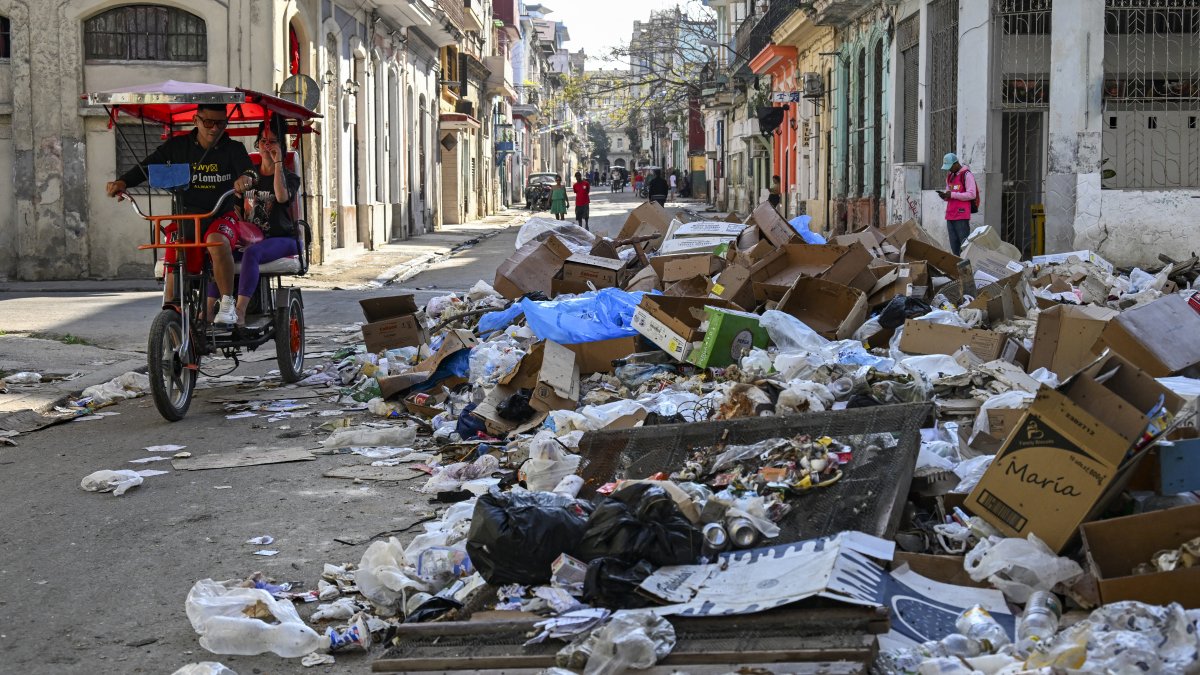
Cuba is undergoing one of the worst crises in its modern history

The Cuban Human Rights Observatory (OCDH) published its "9th Report on the State of Social Rights in Cuba" (2026), based on 1,318 interviews conducted between June 27 and July 29 in the country's 15 provinces and 79 municipalities.
The results paint a picture of widespread collapse, marked by massive extreme poverty, a food crisis, the deterioration of housing and infrastructure, and an almost unanimous rejection of the regimes's management. According to the authors, the data underscores the need for urgent political, economic and social transformation.
94% in extreme poverty and a food crisis
According to the document, 94% of Cubans live in extreme poverty. The calculation is based on an exchange rate of 510 Cuban pesos (CUP) per dollar (median from October 2025 to June 2026) and the World Bank's international poverty line of $1.90 per day.
Sixty-eight percent of households report monthly incomes below 20,001 CUP. Eight out of 10 of these households say they have difficulty even purchasing basic necessities. Among people over 60, 47% live on incomes below the official minimum pension (3,056 CUP).
The food crisis has worsened: eight out of 10 Cubans have had to skip at least one meal a day in the last six months due to lack of money or food shortages (a year ago, it was seven out of 10). Among those over 61, the figure rises to nine out of 10.
Politics
Rubio makes his strongest prediction yet about Cuba: "It will have a very different future"
Diane Hernández
Dilapidated housing and vulnerability among older adults
Only 57% of respondents report living in their own homes (compared to 62% in 2019). Twenty-one percent live in situations of housing insecurity: occupying homes without title, in shelters, camps or on the street.
The condition of the housing is critical: 47% of homes need repairs, 25% need urgent repairs and 7% are in danger of collapsing. Only 18% are in good condition. People over 70 have the worst indicators: they account for 26% of those living in homes at risk of collapse and just 8% of those living in homes in good condition.

Most urgent problems, per the population
- Power outages: 70%
- Food crisis: 52%
- Cost of living / inflation: 45%
- Healthcare and medicine: 34%
- Wages: 27%
- Insecurity and violence: 24%

Public infrastructure collapse
The assessment of public services is devastating. Ninety-five percent consider the state of the electricity grid to be poor. This is followed by garbage collection and landfills (87%), internet and telephone service (86%), water supply and sewer systems (84%), hospitals and health centers (82%), and roads (80%). Schools receive the least negative rating, although 56% consider them to be in poor condition.
Overall, 95% of respondents rate infrastructure as fair or poor.
Massive rejection of the regime’s performance
Ninety-five percent of Cubans disapprove of the economic and social management of the government led by Miguel Díaz-Canel and Manuel Marrero Cruz. Only 3% view it positively. Negative opinions remain consistent across all age groups (between 92% and 96%).
Eighty-four percent do not believe that the government's recent economic measures will improve the country's situation. Only 6% expect a favorable outcome.
Expectations for change and desired model
Regarding the desired type of change, 77% call for both political and economic reforms. Only 9% call for economic changes alone, 7% demand an end to the U.S. embargo and 4% prefer political changes only. The option to maintain the current situation is practically nonexistent (0%).
On health care and education, 66% prefer a mixed model (public and private). Twenty-one percent opt for an exclusively public system, and only 6% for an exclusively private one. Support for the mixed model is particularly high among young people (78% in the 18- to 30-year-old age group).
LATEST