First international rescue teams and humanitarian aid arrive in Venezuela: Dominican Republic, El Salvador, Mexico, and the U.S. lead the way
The arrival of foreign teams comes at a critical moment: faced with a shortage of heavy machinery and criticism of the government’s response, Venezuelan civil society—both within the country and in the diaspora—organized as best it could to rescue victims trapped under the rubble.
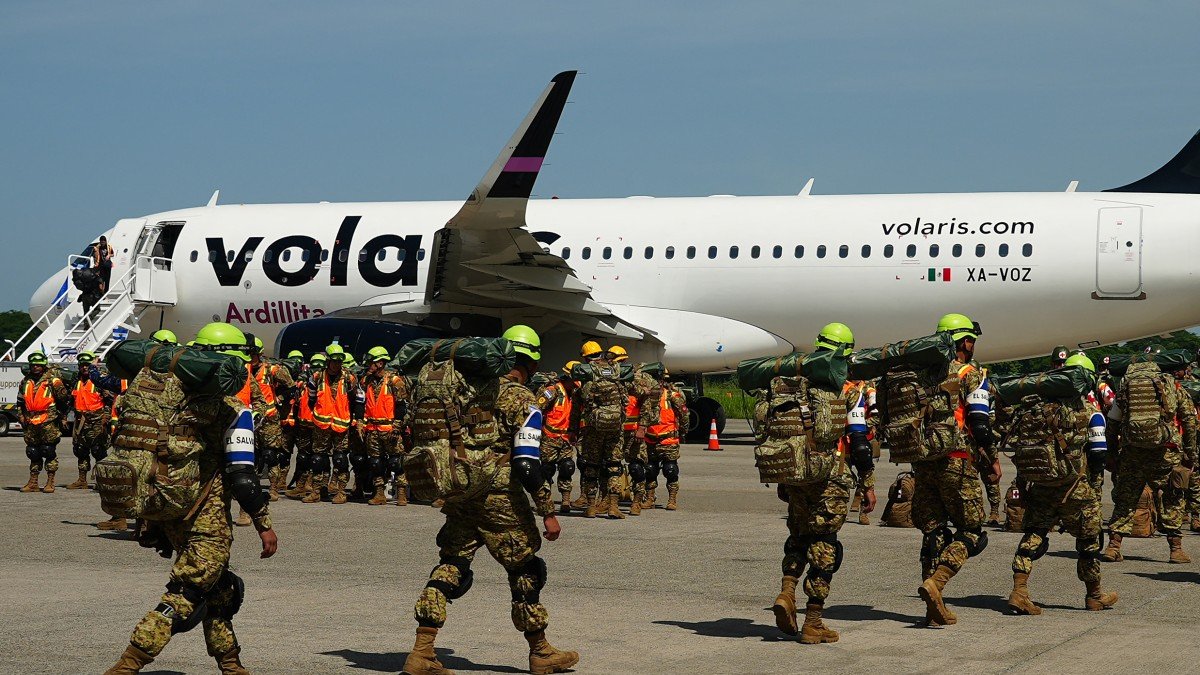
Salvadoran soldiers before boarding a plane bound for Venezuela

The first international rescue teams and the first shipments of humanitarian aid began arriving in Venezuela more than 24 hours after thetwo earthquakes measuring 7.2 and 7.5 that devastated the country’s central and northern coastal regions, with La Guaira being the hardest-hit area. Among the first contingents to arrive were those from the Dominican Republic and El Salvador, which joined the search efforts while dozens of people remain trapped in the rubble. Next to land were the Mexican delegation and part of the U.S. leadership, who will organize their rescue teams and troops on the ground.
According to footage from Venezuelan state television, the first of the three planes sent by El Salvador arrived Thursday night carrying rescue workers, paramedics, and supplies. Salvadoran President Nayib Bukele had offered to deploy 300 rescue workers and 50 metric tons of equipment, medications, and supplies. The contingent was received by the regime’s defense minister, General Gustavo González López. For his part, Dominican President Luis Abinader announced the dispatch of specialized search, rescue, and emergency response teams from the Armed Forces, which arrived in La Guaira with state-of-the-art equipment.
The foreign aid arrived at a critical moment. While awaiting the foreign teams, Venezuelans both within the country and in the diaspora organized on a massive scale to assist the victims and the injured. Through private donations—both large and small—helmets, gloves, protective goggles, ropes, beds, water, and food were purchased to support the rescue efforts, in which firefighters and some government officials also participated. VOZ learned of at least two groups of Venezuelans who, in an impromptu joint effort, purchased hundreds of items of rescue equipment. There were also reports on social media of numerous donations across all the affected cities.
Although heavy machinery has been deployed at various locations, shortages are widespread. In La Guaira and in parts of Caracas, residents worked with picks, shovels, and sledgehammers and, in many cases, cleared the debris with their bare hands. Correspondents in the area reported that in entire neighborhoods, emergency responders arrived late, in insufficient numbers, and without heavy equipment, leaving many of the victims to fend for themselves during the first few hours.
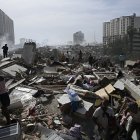
The response by the Chavista authorities has drawn heavy criticism. The opposition organization Vente Venezuela reported that the Valencia Police, in Carabobo state, had allegedly ordered the dismantling of the relief collection centers that were being set up in the state. “We don’t have to ask the PSUV for permission to help our Venezuelan brothers and sisters who are in critical condition”, stated the organization, which released a video of the operation and described the harassment of those trying to help during these critical hours as outrageous.
The international response expanded throughout Thursday. The United States, which had already announced a $150 million emergency response, the deployment of a Disaster Assistance Response Team (DART), and two urban search and rescue teams, began deploying its military personnel on the ground. Marine Corps Major General Kevin J. Jarrard arrived in Caracas as the highest-ranking officer from U.S. Southern Command (SOUTHCOM) in the country, tasked with planning, coordinating, and directing the Department of Defense's logistical and operational support for relief efforts. According to Southern Command, U.S. forces will use fixed-wing and rotary-wing aircraft to transport response personnel, search-and-rescue teams, and humanitarian aid to the affected areas, in an operation led at the U.S. government level by the Department of State. The deployment came after Venezuela's interim government formally requested assistance from Washington following the June 24 earthquakes, and is part of a waiver from the Department of the Treasury that temporarily suspends certain sanctions to facilitate the operations.
A Mexican contingent of 261 personnel also arrived, including doctors, orderlies, nurses, and personnel specialized in search and rescue. Among them was the "Los Topos" brigade, the renowned Mexican civilian rescue group, which joined the efforts to locate survivors. They were joined by other regional contributions: Ecuador deployed 47 rescue workers and two dogs; Canada pledged $3.5 million in initial aid; France sent 85 rescue workers and Chile, 37, in an unusual wave of cooperation coordinated in part by the United Nations. Several of these teams were still en route as of Thursday night.
Despite the lack of support in the early hours, rescue efforts did not stop. More than 24 hours after the earthquakes, teams managed to pull a woman alive from the rubble of a building in Caracas, and 23 people were rescued from the collapsed Petunia building in the municipality of Chacao. On Thursday night, the government raised the official death toll to 235, with 4,300 injured, 157 missing, and some 200 people still trapped, according to Health Minister Carlos Alvarado on VTV. Authorities warned that the numbers could continue to rise.
LATEST