LIVE | Trump threatens again if Iran doesn't reach an agreement: 'I could take out Iran in one day'
“We've had a number of substantive discussions with the Iranians, that's the good news. The bad news is that we have not reached an agreement and I think that's bad news for Iran much more than it's bad news for the United States of America,” Vance said from Islamabad.
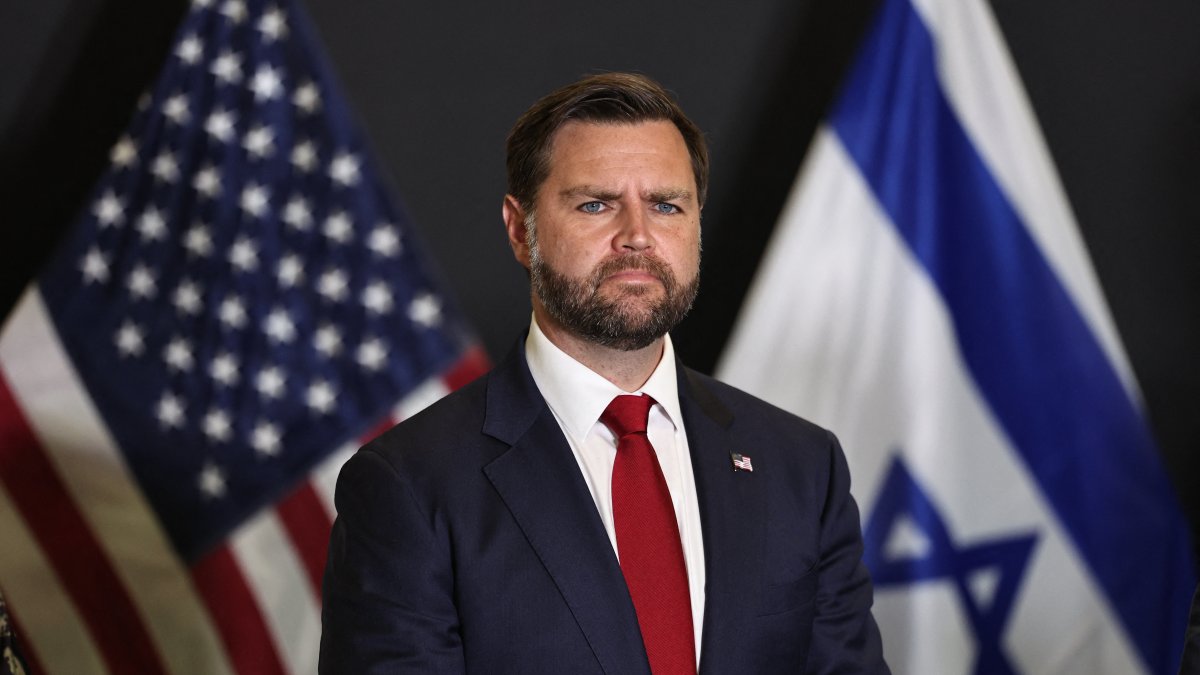
U.S. Vice President J.D. Vance in southern Israel

Vice President J.D. Vance announced that the United States and Iran did not reach an agreement to end the war. After many hours of negotiations, Vance confirmed that the negotiations did not come to fruition.
“We’ve had a number of substantive discussions with the Iranians. That’s the good news. The bad news is that we have not reached an agreement, and I think that’s bad news for Iran much more than it's bad news for the United States of America,” Vance said from Islamabad.
Meanwhile, the pipeline running east-west through Saudi Arabia, crucial infrastructure for exporting crude oil while the Strait of Hormuz is blocked, was back in operation after coming under attack, officials announced Sunday.
This Sunday, the Saudi Energy Ministry said that, following the work, the east-west pipeline's capacity had been "fully restored" to "about 7 million barrels per day."
All times are Eastern Standard Time (EST).
Iranian president says U.S. must change its stance to reach a deal
ranian President Masoud Pezeshkian said Sunday that while an agreement with the United States remains possible, it would require a shift in the approach of President Donald Trump’s administration toward the Islamic republic. “If the American government abandons its totalitarianism and respects the rights of the Iranian nation, ways to reach an agreement will certainly be found,” Pezeshkian said in a post on X.
“I commend the members of the negotiating team, especially my dear brother Dr. Mohammad Bagher Qalibaf, and say, ‘God gives you strength,’” he added.
Trump weighs executing a forceful military response against Iran
The newspaper The Wall Street Journal reported Sunday that President Donald Trump is considering a renewed, limited military response against Iran, along with potential measures involving the Strait of Hormuz, after the first round of peace negotiations with the Islamic theocracy failed to produce results.
The outlet noted that, according to several officials from the Republican administration who spoke on condition of anonymity, these military options are being evaluated as a way to break the current deadlock in peace talks. The Journal’s report also highlighted that one of the scenarios the Trump administration is seriously considering involves a temporary blockade of the Strait of Hormuz, while simultaneously pressuring U.S. allies to take on a more active role in maintaining a long-term maritime escort operation.
Other administration officials who spoke anonymously indicated that, while such actions would represent an escalation, a large-scale bombing campaign is unlikely due to concerns that it could further destabilize the region and the president’s reluctance to commit to a prolonged military conflict.
Iranian regime lashes out at Trump administration over collapse of negotiations
Iran’s top diplomat on Sunday accused the administration of President Donald Trump of derailing recent peace talks in Pakistan, saying the Islamic republic faced unreasonable demands during high-level discussions aimed at ending the war.
In a post on X, Iranian Foreign Minister Seyed Abbas Araghchi said, “In intensive talks at the highest level in 47 years, Iran engaged with the U.S. in good faith to end the war.” He also noted that progress stalled at a critical moment, explaining: “But when just inches away from the ‘Islamabad MoU,’ we encountered maximalism, shifting goalposts, and blockade. Zero lessons learned. Goodwill begets goodwill. Enmity begets enmity,” he said.
Trump again threatens to destroy Iran's energy infrastructure if a deal is not reached
U.S. President Donald Trump on Sunday reiterated his threat to destroy Iran's power plants and other civilian energy infrastructure if no deal is reached to end the conflict in the Middle East.
"I could take out Iran in one day," Trump told Fox News show "Sunday Morning Futures with Maria Bartiromo." "I could have their entire energy everything, every one of their plants, their electric generating plants, which is a big deal."
Threat from the Iranian Revolutionary Guard Corps
Following Trump's announcement, the Iranian Revolutionary Guard Corps claimed that Iranian security forces were in full control of the Strait of Hormuz and warned that enemies would be caught in a "deadly vortex" in the event of any "false moves."
Trump threatens China with 50% tariffs if it gives Iran military aid
Donald Trump on Sunday threatened China with "staggering" new tariffs if it provides military support to Iran.
Trump announces blockade of navigation through the Strait of Hormuz
Donald Trump on Sunday ordered a U.S. naval blockade of the Strait of Hormuz in response to Iran's "unyielding" refusal to give up its nuclear ambitions during peace talks held in Islamabad.
E.U. says diplomacy is "essential to resolve the outstanding issues"
The E.U. insists that diplomacy is "essential to resolve the outstanding issues" in the Middle East conflict, Anouar El Anouni, E.U. spokesman for foreign affairs, told AFP on Sunday.
Oman calls on U.S. and Iran to make "painful concessions"
Oman's foreign minister on Sunday urged Iran and the United States to make "painful concessions" to bring their negotiations to a successful conclusion, while calling for "a prolonged ceasefire."
Pope condemns warmongers
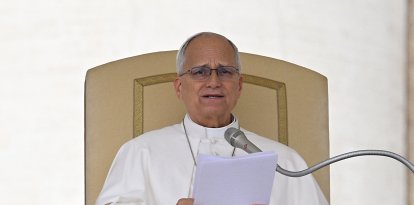
Pope Leo lashed out against warmongers while calling on billions of people around the globe to embrace peace and "believe once again in love, moderation and good politics."
In one of his most passionate entreaties yet to end the raging conflict in the Middle East, the American pope said faith was needed "in order to face this dramatic hour in history together."
Kuwait arrests 24 people suspected of "terrorist" financial entities
Twenty-four people were arrested in Kuwait for "terrorist" financial entities, according to the Ministry of the Interior of this Gulf monarchy, while a security source specified that among those implicated are five former parliamentarians.
Since Iran targeted the U.S.-allied Gulf petro-monarchies in retaliation for the U.S.-Israeli attack launched on Feb. 28, the authorities of these states have multiplied operations against individuals or organizations suspected of being linked to the Islamic republic or of supporting it.
Starmer and the Sultan of Oman urged the U.S. and Iran to continue negotiations.
British Prime Minister Keir Starmer and Sultan of Oman Haitham bin Tariq "discussed the peace talks held in Pakistan over the weekend and urged both sides to find a way through," according to a statement released by the British leader's office.
Tehran downplays importance of closing first session without deal
Iran's Foreign Ministry said no one expected that talks with the United States could reach an agreement in a single session after negotiations in Islamabad stalled.
"Naturally, from the beginning we should not have expected to reach an agreement in a single session. No one had such an expectation," ministry spokesperson Esmaeil Baghaei said, according to state broadcaster IRIB.
End of talks proves "disappointing" for Australia
"The priority now must be to continue the ceasefire and return to negotiations," Australian Foreign Minister Penny Wong said in a statement, adding it was "disappointing that the Islamabad talks between the United States and Iran have ended without agreement."
Pakistan urges U.S. and Iran
Pakistan's foreign minister insisted that Washington and Tehran must respect the ceasefire agreement, after marathon talks between the two sides to end the war in the Middle East ended without agreement.
"It is imperative that the parties continue to uphold their commitment to ceasefire," said Ishaq Dar, whose government hosted the talks and acted as a mediator.
Vance departs without agreement
U.S. Vice President J.D. Vance departed Pakistan aboard Air Force Two shortly after declaring that talks with Iran had failed to reach an agreement, after he presented a "final and better offer."
"The simple fact is that we need to see an affirmative commitment that they will not seek a nuclear weapon and they will not seek the tools that would enable them to quickly achieve a nuclear weapon," he told reporters in Islamabad, on the main sticking point for talks moving ahead.
Iran says talks hinged on avoiding "excessive demands"
The success of the U.S.-Iran peace talks depended on Washington avoiding "excessive" and "illegal" demands, the Iranian Foreign Ministry spokesman said early Sunday after marathon talks held in Islamabad.
"The success of this diplomatic process depends on the seriousness and good faith of the opposing side, refraining from excessive demands and unlawful requests, and the acceptance of Iran's legitimate rights and interests," Esmaeil Baghaei wrote on X.
Trump says Iran deal "makes no difference"
President Donald Trump Trump assured reporters Saturday that it makes "no difference" if a peace deal is reached at trilateral talks between the United States and Iran in Pakistan, and insisted that the United States has already won the war.
The 79-year-old Republican's remarks came as Vice President J.D. Vance led the U.S. delegation to Islamabad for a second day of talks.
LATEST