






Trump announces big meeting over Greenland and EU pledges 'firm' response in Davos
The U.S. president will deliver a speech on Wednesday in Davos and participate in several events on Thursday. Meanwhile, E.U. leaders will meet in Brussels to decide how to respond to what is already seen as one of the most serious crises in years between Europe and the United States.
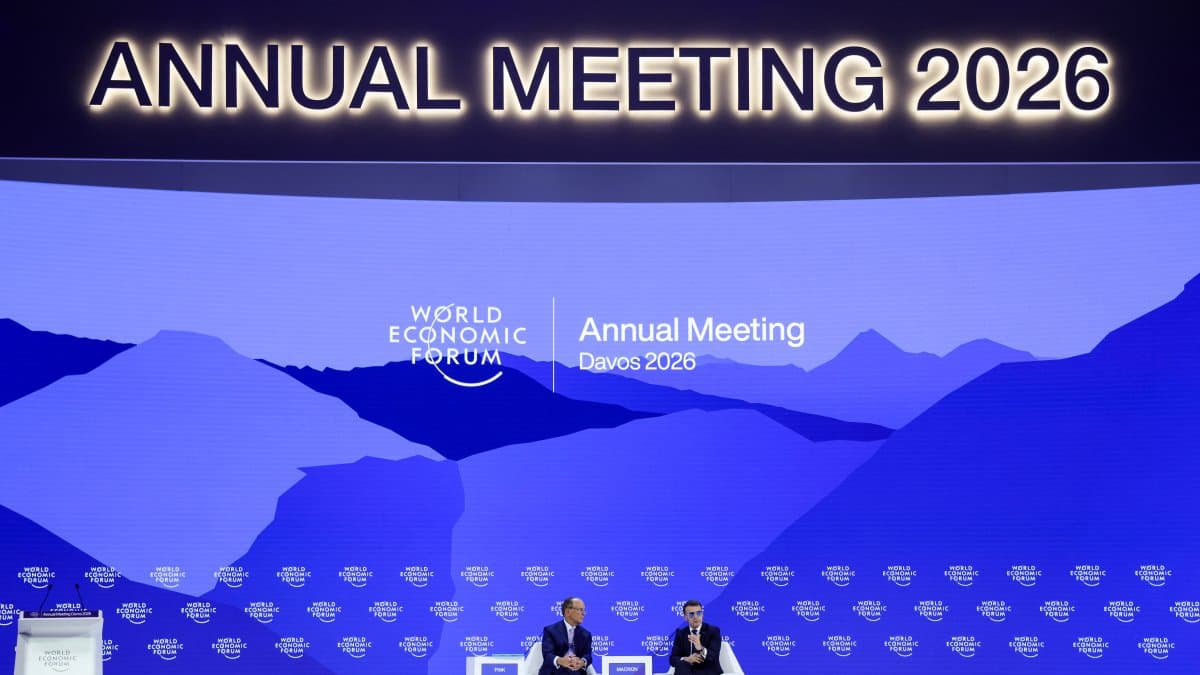

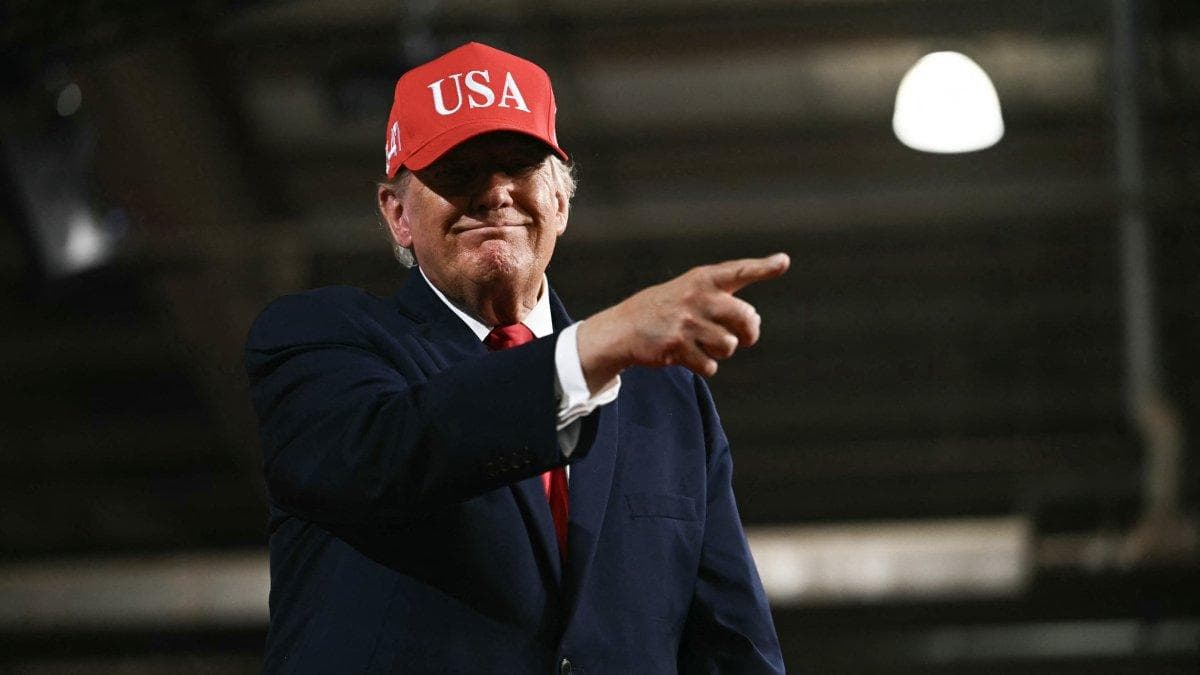
President Donald Trump assured that he expects "little resistance" from European leaders to his intention to take over Greenland, a semi-autonomous territory of Denmark, and confirmed that the issue will be discussed at a high-level meeting during the World Economic Forum in Davos, Switzerland.
"I don't think they will object too much. We have to get it done. They have to get it done," Trump told reporters in Florida, before reinforcing his stance on the social network Truth Social, where he asserted that Greenland is "imperative to national and global security" and that "there can be no going back."
According to the president, a meeting "of the various parties" in Davos, a forum that opens this Tuesday and which he will attend from Wednesday, has already been agreed. Trump also revealed having had a "very good phone conversation" with NATO secretary general, Mark Rutte, about the future of the Arctic island, rich in mineral resources and strategically key in the Arctic.
Threat of tariffs and transatlantic tension
Over the weekend, Trump threatened to impose a 10% tariff starting Feb. 1 on goods from Denmark, Norway, Sweden, France, Germany, the United Kingdom, the Netherlands and Finland if they do not agree to his claims on Greenland. The warnings reignited fears of a new trade war between the United States and Europe.
Germany and France called the threats "blackmail," while Paris warned that Europe must prepare to respond. In this context, the European Union announced an emergency summit on Thursday to define its common position.
What is the Davos Forum?
The forum was founded in 1971 by German economist Klaus Schwab, with the aim of promoting cooperation between the public and private sectors to "improve the state of the world." Since then, it has established itself as one of the most influential meetings on the global political and economic calendar.
Regular participants include heads of state and government, senior executives of major companies, heads of institutions such as the U.N., the International Monetary Fund, the World Bank, the European Union and NATO, as well as experts in economics, science, technology and representatives of civil society.
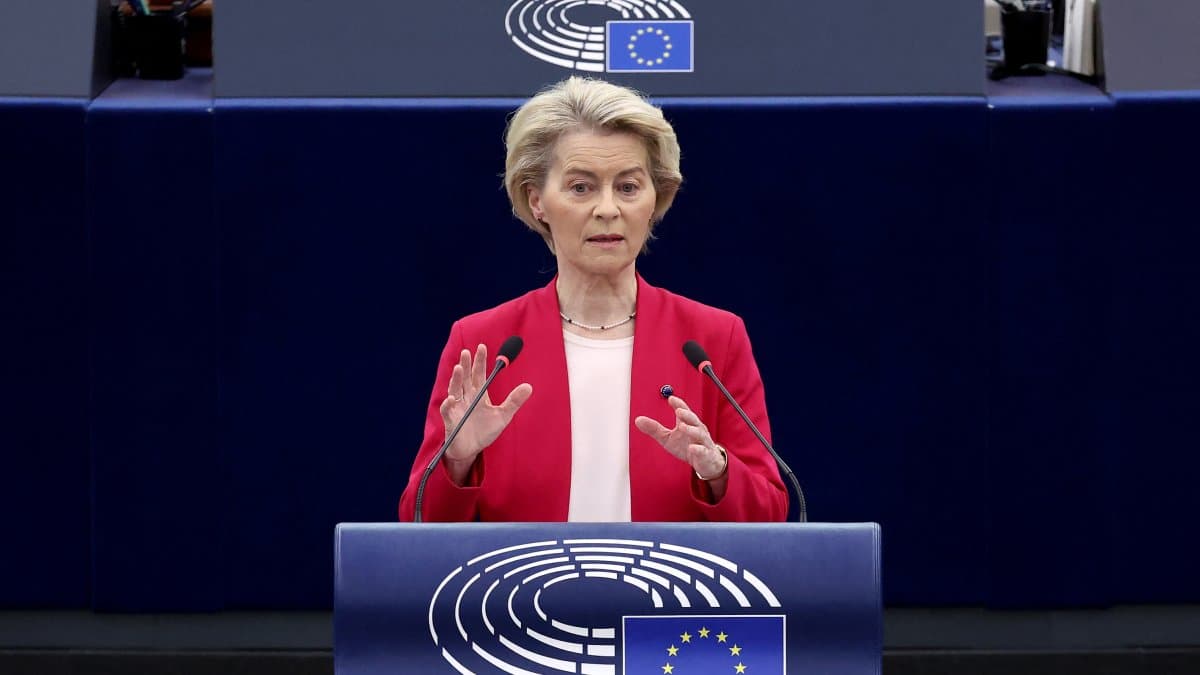
Von der Leyen: "Our response will be firm, united and proportionate"
From Davos, the president of the European Commission, Ursula von der Leyen, promised on Tuesday a "firm" response to pressure from Washington. In his speech, he warned that Trump's proposed tariffs could push transatlantic relations into a "downward spiral."
"The proposed tariffs are a mistake, especially between long-standing allies. Plunging us into a downward spiral will only help our adversaries," Von der Leyen said, stressing that the E.U. prioritizes dialogue, but is prepared to act, cited the AFP.
Trump further stoked the controversy by posting a photo montage showing him planting a U.S. flag in Greenland next to a sign reading, "Greenland - U.S. Territory. Est. 2026."
Key meetings and open fronts
In parallel, German Chancellor Friedrich Merz expressed his intention to meet Trump in Davos and asked to avoid "any escalation" of the conflict.
China criticizes "jungle law"
The Greenland debate came at a forum also marked by other international crises. Chinese Vice Premier He Lifeng criticized in Davos the logic of "the strong taking advantage of the weak," in a veiled reference to trade tensions with the United States.
In addition to Greenland, the forum addresses conflicts in Gaza, Ukraine, Iran and Venezuela. U.N. Secretary General, António Guterres, cancelled his participation due to health reasons.
From Latin America, the presidents of Argentina, Javier Milei; Panama, José Raúl Mulino; and Ecuador, Daniel Noboa, are participating in Davos, in a meeting that is shaping up to be a new scenario of global diplomatic and economic clash.
🛠 Do you think there is an error in this article?
Recommendations
LATEST