ANALYSIS
China: birth rate plummeted to a record low in 2025
In 2025, 7.92 million births were counted, equivalent to 5.63 births per 1,000 population, the lowest figure since this indicator began to be collected in 1949, according to the National Bureau of Statistics (NSO).
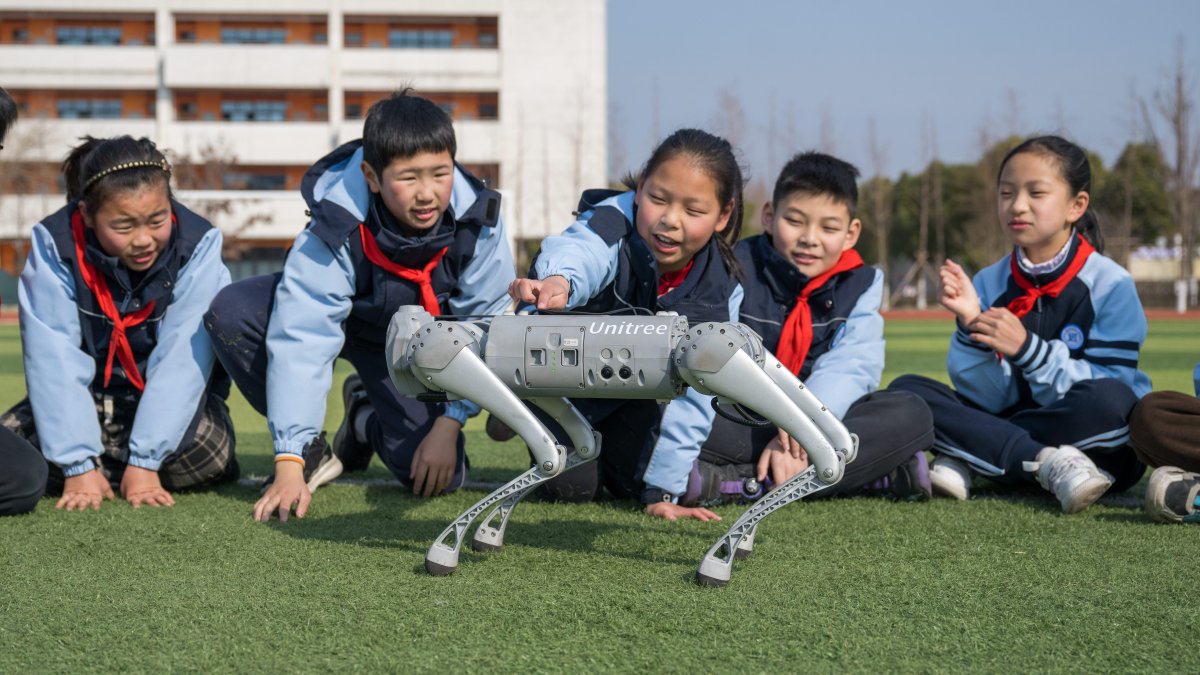
Students interact with a robot dog during a class break at Xinyi Elementary School.

China recorded its lowest birth rate on record in 2025, according to official figures released Monday, after four straight years of population decline and despite initiatives by the communist regime aimed at stemming that drop.
Chinese authorities have sought to raise marriage and birth figures through incentives such as childcare subsidies and levies on condoms.
In 2025 there were 7.92 million births, equivalent to 5.63 births per 1.000 inhabitants, the lowest figure since this indicator began to be compiled in 1949, according to the National Bureau of Statistics (ONE). That year coincided with the proclamation of the People's Republic of China by communist leader Mao Zedong.
Birth rate plummets
Over the past decade, the birth rate in the Asian giant has continued to decline, even after the strict one-child policy was eliminated. Only in 2024 was a slight upturn observed, with 6.77 births per 1,000 of population.
The previous record fall had been recorded in 2023, when the rate was 6.39 births per 1,000 people.
China's one-child policy
In the late 1970s, the communist regime considered that population growth threatened economic development and the availability of resources. In that context, the government of Deng Xiaoping promoted the one-child policy, which aimed to curb population growth and accelerate the country's modernization.
The rule limited most urban couples to having only one child. In rural areas, ethnic minorities and families whose first child was a girl could have exceptions.
Although the policy significantly reduced the birth rate—it is estimated to have prevented between 300 million and 400 million births—it also generated controversy because of coercive practices, such as forced abortions and sterilizations.
China's one-child policy was officially eliminated in 2015, when the government announced its end and allowed all couples to have two children.
Marriages plummeting
Marriages also remain at historic lows. According to ONE, factors include the high cost of raising children and the increasing priority many Chinese now place on career development.
On the other hand, 11.31 million deaths were counted in 2025, equivalent to a mortality of 8.04 per 1,000 population and resulting in a population decline of 2.41 per 1,000, according to data from the National Bureau of Statistics.
Professional life over family life
A study cited by Stanford University also reveals that while the one-child policy significantly reduced fertility, it only explains about 38% of the total population decline, while the remaining 62% is likely due to broader social and economic changes.
According to the report, factors behind this trend include improved educational attainment, rapid urbanization—which made it more difficult to support large families in increasingly dense cities—and the rising cost of child-rearing in an increasingly market-oriented economy.
The study explains that even without strict birth quotas, many families were already inclined to have fewer children. The results indicate that simply removing birth restrictions may not be enough to reverse the fertility decline, as background social and economic pressures continue to push families toward smaller sizes.
LATEST