ANALYSIS
Carved in stone: Donald Trump and the art of rebranding power
While other presidents had to wait decades, or posterity, to be commemorated, Trump decided the time was now. Barely a year into his second term, the U.S. dawned with a quiet but eloquent novelty: the power structure began to defer to the sitting president.
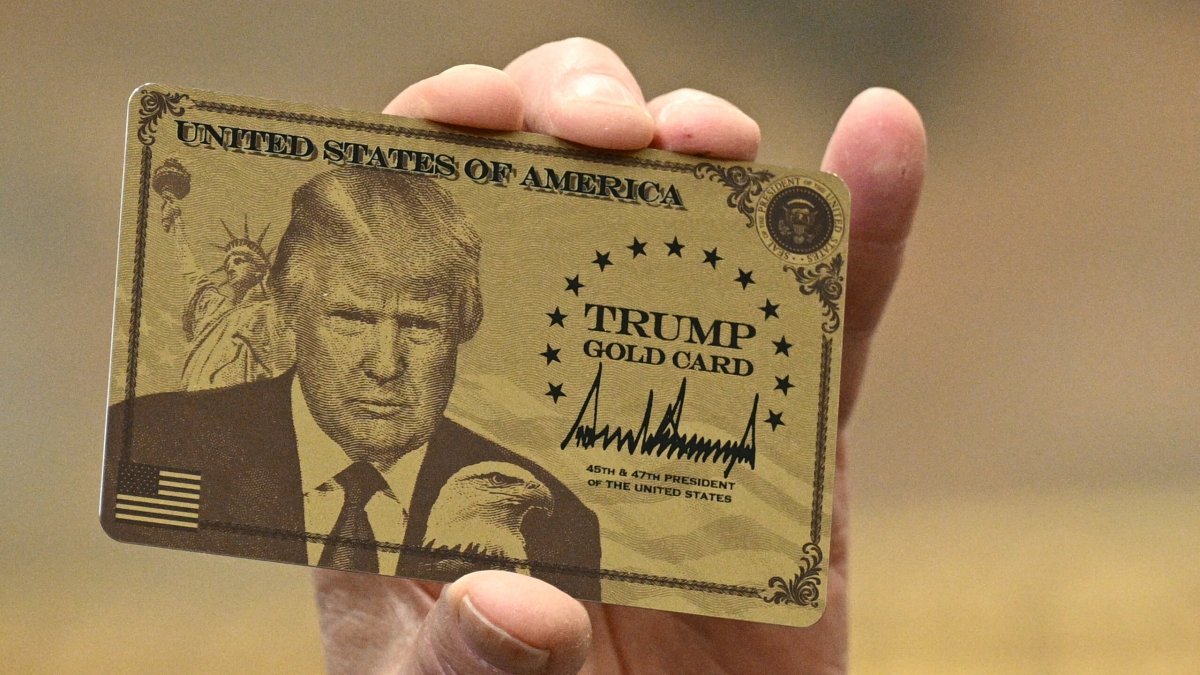
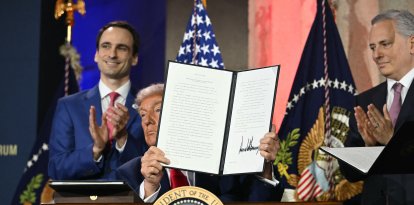
U.S. President Donald Trump raises a "Trump Gold Card."

There are presidents who pass through the White House and leave laws, others leave wars, and some leave phrases. Donald J. Trump, on the other hand, is leaving everything upside down... and his name. Carved, gilded, printed, coined. A name that appears on facades, coins, warships, national park passes and even baby savings accounts.
While other presidents had to wait decades, or posterity, to be commemorated, Trump decided the time was now. Barely a year into his second term, America dawned with a quiet but telling development: the power structure began to defer to the sitting president.
The John F. Kennedy Center for the Performing Arts, a symbol of the liberal cultural ideal of the 20th century, is now officially called Donald J. Trump and John F. Kennedy Memorial Center. Two surnames united as no one would have imagined only a few years ago. On the facade of the United States Institute of Peace, between litigation and controversy, the name of the current president also appears. The oceans are also awaiting the ship USS Defiant, the first battleship of the Trump class.
All this, it is worth insisting, is happening during, not after Trump or when history has passed sentence.
As New York Times Jeffrey Engel, a historian at Southern Methodist University, reminded the New York Times, "throughout Western history, the idea of commemorating and flattering oneself has been considered distasteful. Not illegal, not impossible: distasteful. A soft, but powerful, category that for generations functioned as an invisible brake.
It has ceased to do so.
Politics
The iconic Kennedy Center in Washington will be renamed the 'Trump-Kennedy Center'
Carlos Dominguez
The numbers tell the story with an almost cruel coldness. Harry Truman waited 47 years for a federal building to bear his name. Jimmy Carter, 42. Eisenhower, 38. Reagan, six. Kennedy was the tragic exception: less than a year, accelerated by national mourning. Trump, however, waited for nothing. Two federal buildings already bear his name as he continues to sign executive orders.
On U.S. currency, the contrast is even more striking. Washington took 135 years to get to the dollar. Lincoln, 44 years to the penny. Roosevelt, one year to the dime, again death as a condition. The law of 2005 is explicit: no president alive on a dime. There are always loopholes, however. The one-dollar Trump coin, part of a series for the 250th anniversary of independence, has already been proposed. The last time something similar happened was in 1926, when Calvin Coolidge shared metal with George Washington. An exceptional gesture for an exceptional anniversary.
The pattern repeats itself. The Trump accounts for newborns, included in the last major tax bill. TrumpRx.gov, the official site for buying discounted drugs. Trump's Gold Card. The America The Beautiful pass for national parks, now in his image, defying environmental rules and demands. Even a still more ambitious proposal to add his face to Mount Rushmore, that stone Olympus inhabited only by the illustrious, departed figures and to erect an area of historic statues.
The name: a mark of origin
From the White House, the explanation is simple. According to spokeswoman Liz Huston, it is not vanity but "historic initiatives that would not have been possible without President Trump's bold leadership." The name, then, would not be a tribute: it would be a mark of origin.
Trump is not the most named president in history. George Washington still wins by a landslide if you count ships, cities, avenues, schools. There's a key difference: Washington never put "Washington" on himself. Not in marble, not in gold, not in life.
Trump does, and does it while he governs.
American history has known exceptions. Washington allowed the capital to bear his surname, although he insisted on calling it Federal City. Hoover had a dam. Even there, the gesture was disputed, resisted, reversed and restored.
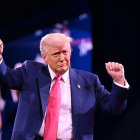
Trump, on the other hand, seems comfortable center stage, under capital letters, no curtains.
An actor who forces everyone else to take a stand, even when he is silent
To reduce this proliferation of names to a mere narcissistic gesture would be an understatement. The Trump surname does not circulate only on bronze plaques or coins yet to be minted: it circulates in the markets, in chancelleries, in barracks and on maps. Every announcement, a tariff, a threat, a promise, has the capacity to alter trade routes, move troops, shake alliances or reconfigure diplomatic silences.
In the Western Hemisphere, few leaders today wield comparable influence. In Europe, he is viewed with caution; in Asia, with calculation; in Latin America, with a mixture of fear, expectation and hope. He is not only the president of the United States: he is an actor who forces all the others to take a position, even when he is silent.
Maybe that's why his name comes up so much. Not as a mirror of ego, but as a sign of a time. A time when the title is no longer retired to be remembered later.
And this time, just this time, the president does not wait to be invited. He sends himself to write his name on the stone, and, with each letter, he renames power.
LATEST