As Venezuela’s repression deepens, U.S. warns Diosdado Cabello: cooperate or face military action
A War Department source confirmed to VOZ that the Chavista Interior Minister will be considered a target of US attack if he does not cooperate with US interests.
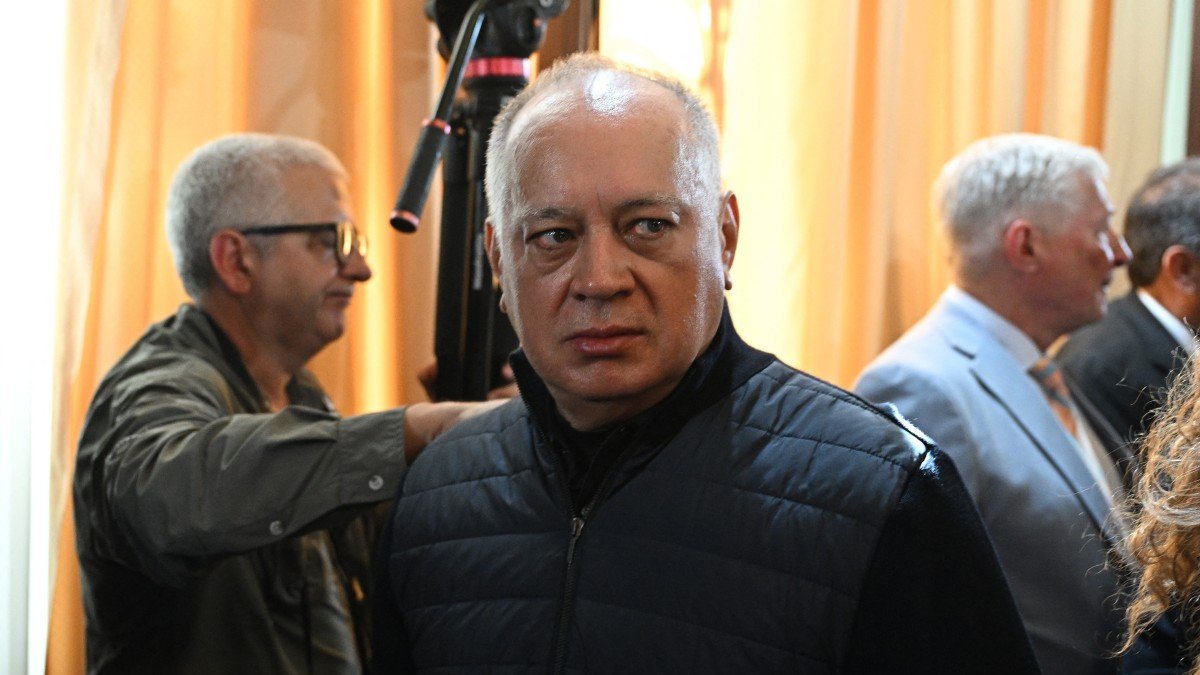
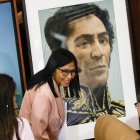
Diosdado Cabello, chavista Interior Minister, at the swearing-in ceremony of Delcy Rodriguez

Amid reports exposing a deepening repression in Venezuela after the fall of dictator Nicolás Maduro, captured by US special forces, the Trump Administration sent a clear message to Chavista Interior Minister, Diosdado Cabello, indicted for drug trafficking in the US:cooperate with the transition or you will become a military target.
A source from the Department of War confirmed to VOZ that Cabello, one of the regime’s top power brokers and the man in charge of the Chavista repression apparatus, will be a potential U.S. military target if he fails to cooperate with Washington’s directives, as the United States is forcing the Chavista regime to carry out an orderly transition over the coming months by demanding specific economic and security commitments.
The news agency Reuters reported the news for the first time and added that Washington has already sent the ultimatum to Cabello through intermediaries.
World
El régimen de Venezuela ordena el arresto de todo aquel que haya celebrado la captura de Nicolás Maduro
Emmanuel Alejandro Rondón
U.S. intelligence agencies consider Cabello, one of the most fundamentalist members of the regime, the biggest threat to the transition. Previously, Reuters had already reported that Washington is planning amnesty incentives for top regime hierarchs to collaborate with U.S. interests.
Likewise, Washington also considers Vladimir Padrino López, Venezuela's defense minister, as a threat, albeit to a lesser extent. Both Cabello and Padrino Lopez have drug trafficking indictments in the US and both have million-dollar bounties hanging over their shoulders. The White House believes that Padrino Lopez is more malleable and controllable than Cabello.
Repression in Venezuela continues to deepen
Despite the US capture of Maduro, repression in Venezuela has not stopped and freedoms continue to be suppressed.
Through a decree, the Venezuelan regime, now commanded by Nicolas Maduro's replacement, Delcy Rodriguez, ordered the arrest of anyone who celebrated in any way the capture of the Chavista dictator.
"The national, state and municipal police bodies must immediately undertake the search and capture throughout the national territory of any person involved in the promotion or support of the armed attack of the United States of America against the territory of the Republic for the purpose of placing them at the order of the Public Ministry and the criminal justice system," reads the decree, which is signed by Maduro, although he is being detained in New York after his first hearing before a Manhattan judge.
A source in the Venezuelan prosecutor's office, who requested anonymity for security reasons, confirmed to VOZ that Cabello himself gave the order to apprehend those who celebrated on social networks the capture of Maduro.
Since Sunday, January 4, in Venezuela's main cities such as Caracas and Valencia, the repressive forces of the Maduro regime began to show up in the main avenues to intimidate citizens and journalists.
Already by January 5, the main streets of Caracas were clogged with presence of Chavista collectives, SEBIN intelligence officers, hooded men without identification and members of the Bolivarian National Police, three different Venezuelan citizens confirmed to VOZ.
"La Cota Mil is taken in both channels," said on January 6 a Venezuelan citizen who reported, in addition, "the presence in Altamira of repressive Chavista forces. Videos of the colectivos and security officers of the regime monitoring the streets could also be seen on social networks.
Some reports also denounced that the repressive forces went to the popular zones of Caracas to intimidate and search houses and cell phones. Even in the housing complexes of the Housing Mission, a Venezuelan state program, residents were forced to put up banners reflecting claims against the U.S. for the arrest of dictator Maduro.
The New York Post and Fox News echoed the wave of repression in Venezuela, pointing directly against the colectivos chavistas, armed paramilitary forces that generally answer to Cabello.
Opinion
Stability Without Legitimacy in Venezuela: Why the Current Transition Plan Won’t Hold
Luis Henrique Ball
These groups were setting up irregular checkpoints, also known as alcabalas, to randomly search civilians' bags and cell phones for any sign of criticism of the Chavista regime.
Military counterintelligence officers and police officers of the regime were also detaining and checking cell phones of Venezuelan citizens.
At least 30 people were detained in Valencia, human rights activists reported on social networks. Also, 14 journalists were detained in Caracas the same day Delcy Rodriguez was sworn in as "president in charge" of Venezuela. 13 of the 14 journalists were released hours after their detention and one was deported.
In a publication on the regime's social networks, Cabello was shown among a crowd of armed militiamen shouting his famous proclamation: "Loyal always, traitors never."
Diosdado's role in the transition is still uncertain, but with the repressive machinery in place, Venezuelans still do not perceive, for the better, the departure of Maduro, taking as standard practice the elimination of conversations and photos every time they go out to the streets to avoid unjust detention. For now, Washington has also not explicitly called for the release of political prisoners, however, this Tuesday President Donald Trump said that the Chavista regime was "closing" one of the torture centers in Caracas, although he did not elaborate on the matter.
LATEST