Delcy Rodríguez Cannot Cooperate in an Orderly Transition Without Further U.S. Military Operations Inside Venezuela
This Monday, the regime —now in the hands of Delcy Rodríguez— launched a fierce crackdown aimed at arresting any Venezuelan who celebrated or supported the U.S. operation inside Venezuela.
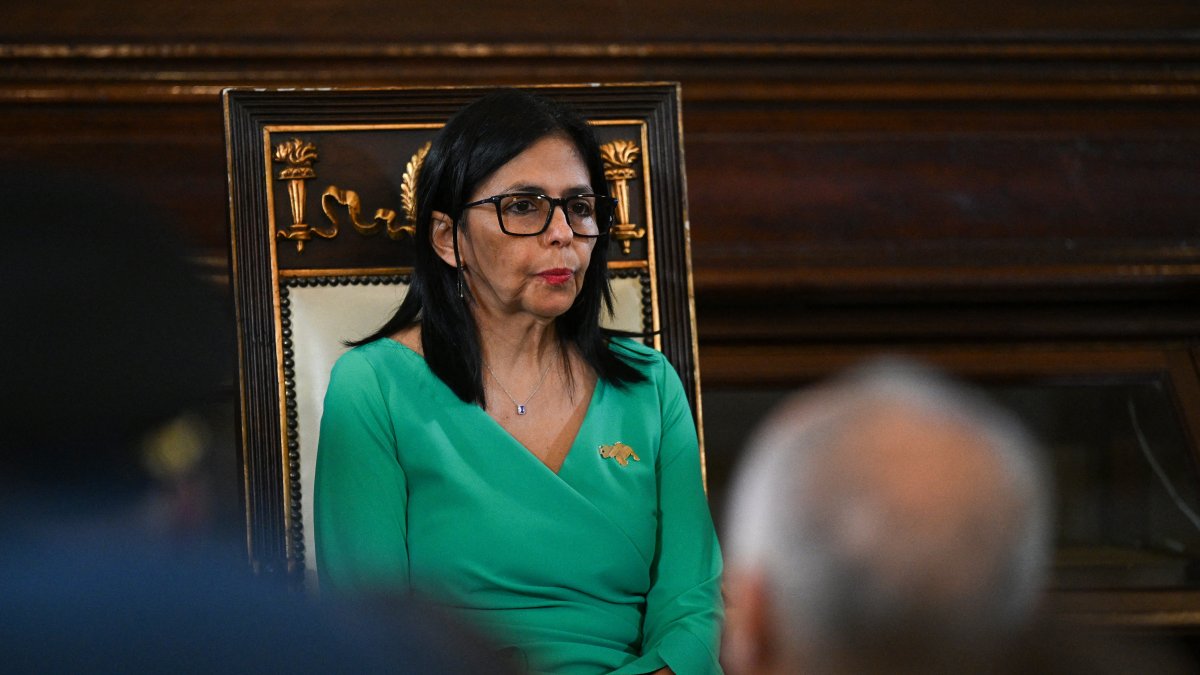
Delcy Rodríguez was sworn in this January 5.
Donald Trump announced that the United States will “administer” Venezuela following Maduro’s capture, and that Delcy Rodríguez — who assumed the role of “acting president” of the chavista regime on January 5 — would cooperate with his administration to advance an orderly transition to democracy.
When Trump speaks of “administering” Venezuela, he is referring, in practical terms, to exerting pressure so that the Venezuelan regime, now led by Rodríguez, complies with U.S. demands. And the greatest form of pressure is undoubtedly military —pressure that has reached unprecedented levels following Maduro’s capture in an operation that was swift, precise, and overwhelmingly forceful.
Although this is a bold gamble, in theory, it could work and align with U.S. interests. If there are to be no American boots on the ground, the only way Trump can engineer a transition in Venezuela —one that cleans up the country, dismantles the mafias, allows U.S. investment to return, and restores democracy— is by working through the very forces that currently hold power. But there is a major problem, and its name is Diosdado Cabello.
One must understand something fundamental: Maduro, as head of the chavista regime, served as the arbiter who maintained a fragile balance among the different factions. The hierarchy of Venezuela’s tyranny is not vertical.
In that sense, without Maduro, Delcy Rodríguez’s greatest challenge is proving that she, too, can keep the various mafias, factions, and criminal groups coexisting —while simultaneously, at Washington’s demand, “putting the house in order.” The challenge is enormous. And she may fail.
Rodríguez may be fully willing to cooperate, as Trump and Rubio have suggested. But what happens if one faction —such as Diosdado Cabello’s, which controls the repressive apparatus— is unwilling to comply? There will be chaos. There will be contradictions.
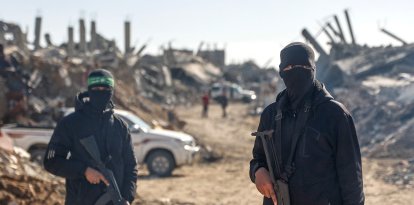
On Monday, January 5, the regime under Delcy Rodríguez initiated a brutal campaign to detain anyone who celebrated or supported the U.S. operation in Venezuela. As of now, reports indicate at least 40 detainees and more than 14 journalists have been forcibly disappeared.
This hardly looks like the United States is “administering” Venezuela, does it?
Diosdado Cabello is uncontrollable —a perception that already existed even when Maduro led the regime. With Delcy in charge, it is even less likely that she can keep him in check. And a figure like Cabello is the ideal saboteur of any transitional process. He will ensure that Venezuela’s criminal dynamics do not fade, that repression intensifies, that terror reigns, and that law and order never take hold —precisely the opposite of what the president expects for Venezuela, as he told the New York Post.
So yes, Delcy Rodríguez may be willing to cooperate. But she will never be able to deliver what the administration demands if she cannot control the competing factions within the country.
Unfortunately, without overwhelming military pressure —pressure that applies to all factions— Delcy Rodríguez will never be a guarantee of an orderly transition. Everyone must be brought to heel, especially Diosdado Cabello, and in the most decisive manner possible. Or perhaps the United States will have to expand its operations further and, in doing so, neutralize the leadership of those factions that clearly have no intention of submitting.
LATEST