Russia begins evacuating diplomats’ families in Venezuela as tensions rise between White House and Maduro
The evacuations began on Friday and initially included women and children, a European intelligence official confirmed.

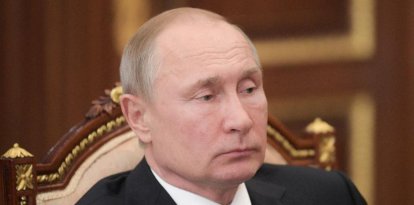
Vladimir Putin and Nicolas Maduro in a file image

The escalation of tensions between the Trump Administration and the regime of Nicolás Maduro is already generating diplomatic moves in Caracas that would have been considered unthinkable months ago.
In recent days, according to information from Associated Press, Russia initiated the evacuation of family members of its diplomats in Venezuela, an unprecedented and unusual signal that reflects Moscow's concern about the political and military scenario in the Caribbean.
According to AP, citing a European intelligence official who spoke on condition of anonymity, the evacuations began Friday and initially included women and children. According to that source, Russian Foreign Ministry officials are assessing the situation in Venezuela, which is surrounded by U.S. sea and air power, in "very somber tones."
The decision by Russian authorities comes against the backdrop of increasing pressure from the White House against the Maduro regime, recently designated as a terrorist organization by the United States. For the Venezuelan dictator, whom Washington and dozens of countries do not recognize as a legitimate leader, there is a reward of $50,000,000 and also an indictment for drug trafficking in the Southern District Court.
In recent days, after months of attacks against narco-terrorist vessels linked to the Cartel de los Soles, the Tren de Aragua gang and other regional cartels, the U.S. has stepped up maritime interdiction operations in the Caribbean against oil tankers linked to the Venezuelan regime. The U.S. Coast Guard has pursued and seized several vessels which, according to Washington, are part of a "shadow fleet" used to evade international sanctions and finance global terrorism.

Politics
Trump declares fentanyl a "weapon of mass destruction" in historic executive order
Emmanuel Alejandro Rondón
Among the most relevant cases is the seizure of the tanker Skipper last December 10, as well as the Centuries, the latter with a Panamanian flag linked to China. Skipper, on the other hand, was registered in Panama and is sanctioned for its links to Iran. The Guyanese government issued a statement accusing the tanker of fraudulently flying its flag to favor the Maduro regime's logistical scheme.
Meanwhile, a third tanker continues to be pursued by U.S. forces under a seizure warrant, accused of sailing under a false flag.

JNS
Treasury sanctions 29 vessels in Iran’s ‘shadow fleet’ used to transport illicit petroleum
JNS (Jewish News Syndicate)
Following these operations, Trump stated that the United States would apply a "blockade" against Venezuela and reiterated that Maduro's days in power "are numbered." Last week, moreover, Trump demanded the return of assets seized years ago by the late Hugo Chávez and his successor - Maduro - to U.S. oil companies, reinforcing the argument of a broader economic and strategic offensive against Chavismo.
In parallel, this Monday Trump will headline an event at his Mar-a-Lago residence alongside Secretary of State Marco Rubio and Defense Secretary Pete Hegseth, in what the White House described as a "major announcement." The meeting came amid heightened regional tensions and as the Pentagon maintains its campaign of attacks against smaller vessels in the Caribbean and eastern Pacific, as part of the so-called war against drug trafficking and transnational cartels, including the TdA and the Cartel de los Soles, both groups directly linked to Maduro and his regime.


From Caracas, the Chavista foreign minister, Yván Gil, denounced what he described as "aggressions" and "violations of international law," and confirmed contacts with Moscow to coordinate positions in the face of U.S. pressure. So far, Russia's support for Maduro has only been rhetorical.
The evacuation of Russian diplomatic families, added to the seizures of ships and the intensification of Washington's security strategy, reinforces the perception that the pressure against Maduro has entered a new phase, with implications that go beyond the fight against narcoterrorism.
LATEST