ANALYSIS
South Africa: The plight of Afrikaners, caught between massacre and exile
This community of white farmers has been engaged for centuries in agricultural development but has also been subjected to systematic persecution and killings since the end of apartheid in the 1990s. Now, the Trump administration wants to give them asylum on the grounds that they are victims of "government-sponsored race-based discrimination" and "genocide."

Afrikaners at a memorial service for Charlie Kirk.

The Trump administration announced last week that it will reduce the number of refugees that United States will admit in 2026 to 7,500 and that it will give priority to, among other groups, white South Africans (mainly Afrikaners) in the admissions process, considering them victims of discrimination and violence in South Africa. It also claimed that accepting them responds to "humanitarian concerns or is otherwise in the national interest."
The Afrikaners are part of a Calvinist community of Dutch origin that arrived to the Cape of Good Hope in 1652, followed by the French and Germans. Over the years, this group developed customs and a language of its own, Afrikaans. This community has dedicated itself for centuries to the development of agriculture in South Africa, but has also been systematically persecuted since the end of apartheid, and many of its members have been killed over their land.
In January, socialist South African President Cyril Ramaphosa signed a land expropriation bill that allows the government to confiscate private property for public purposes, without compensation, if it deems it to be "just and equitable and in the public interest."
The political and administrative tensions related to the new land reform and possible expropriation without compensation are perceived by the white landowners as a form of oppression that exacerbates the insecurity of their community.
Now, after years of persecution, Afrikaners fear losing the agricultural legacy they have protected for so many generations.
Ernst Roets claims genocide
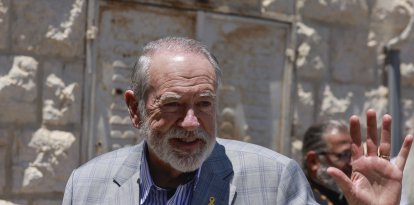
South African writer, filmmaker and activist Ernst Roets has toured different podcasts this year with the aim of shining the spotlight on the brutal reality Afrikaners are living through in his country. His opinions are based on his legal training and his work defending the rights of minorities, in particular in AfriForum and on Lex Libertas.
In 2018, Roets published "Kill the Boer," in which he argues that the government and police in South Africa have been complicit in the killings of white farmers, either through negligence or instigation.
Likewise, the activist believes that the more than 140 South African race-based laws, in which whites are discriminated against because of their skin color, have turned the once prosperous nation into a Third World country, where not a single government department functions properly.
Known for his critical stance against the African National Congress (ANC), in power since 1994, Roets says the situation in South Africa is more complex than it appears, as the country is made up of many black tribes, Indian immigrants, Asians, Jews and whites. According to him, it is not just about black people asking for reparations, as progressive radicals tend to think.
The ideological anatomy of the ANC: Between Frantz Fanon and Karl Marx
The ANC is the oldest political organization in South Africa, founded in 1912 as a supposed liberation movement opposing apartheid. However, especially since it has been in power, it has been accused of being linked to acts of violence, as well as persecution and assassinations against members of the Afrikaner community.
During apartheid, the ANC operated from exile and was heavily supported by the Soviet Union and East Germany, with the these two countries being the ones that provided it with military training, weapons and ideological support. Moreover, China also supported this organization with funding for a political leadership school that follows the Chinese Communist Party educational model.

Politics
Trump threatens possible military intervention in Nigeria to combat Christian persecution
Joaquín Núñez
In July, on Ayaan Hirsi Ali's podcast, Roets described the ANC's ideology as "a mixture of racial nationalism and socialism." According to the activist, "the organization prides itself on being Marxist-Leninist, and the best way to describe its ideology is as a mix between the ideas of radical activist Frantz Fanon and Karl Marx."
The beginning of the massacre
After the dismantling of apartheid in 1990, President Frederik de Klerk legalized the ANC and it was Cyril Ramaphosa, current president of South Africa, who was the main negotiator for this organization during the transition. According to Roets, despite Nelson Mandela’s efforts for reconciliation, the mid-1990s saw the killings of white farmers intensified in the country.
According to the activist, the ANC had a clear policy of targeting white farmers. "They held a conference and decided, in what they called 'military operations,' that they would not distinguish between hard and soft targets. In other words, this implied that they might target innocent people."
"They explicitly explained that farmers were considered targets and should be treated as such," Roets told Ayaan Hirsi Ali during the podcast.
In March, in conversation with Jordan Peterson, Roets recounted that an M.P. who was a member of the opposition and part of the transition negotiations asked Ramaphosa what his plan was for dealing with the whites, to which he replied, “Well, that’s easy. You deal with them like boiling a frog alive.” i.e. put the frog in the water and gradually raise the temperature to boil it without it noticing.
"Kill the Boer": Protected speech
In Peterson's podcast, Roets also spoke out against the rallies currently being held in South Africa against white farmers in which, once the event is over, the audience chants, "Kill the Boer, kill the farmer."
According to the activist, "It’s not just a few extremists on the fringes. These are mainstream political events where this rhetoric is being used."
Although there have been attempts to challenge it legally, Roets says that "so far the courts have ruled it as protected speech. The argument is that it’s part of struggle songs from the anti-apartheid era."
However, the activist argues that the context has clearly changed. For him, it is no longer about resisting an oppressive system, but about attacking a minority group, since "the historical context doesn’t justify its use today when it’s clearly inciting violence against a specific group."
Culture, the enemy of the communist project
Roets assured Peterson that one of the things the ANC did very well after taking power was convincing the population that South Africa's main problem was a triangle made up of unemployment, poverty and inequality.
"Unfortunately, they don’t seem to know how to encourage production. They don’t know how to fix the unemployment problem because they think the solution is socialism. Ironically, they’ve gotten to a point where they can only think about inequality," Roets said.

On the other hand, for years, the ANC has also waged war on the notion of culture. Roets told Ayaan Hirsi Ali that this is typical of communist projects, where culture has to be destroyed because it represents "a barrier to this ideological goal" that they want to achieve.
Roets explained that, from the beginning, the ANC described culture as "backwardness" and that, ironically, to combat colonialism they promoted that everyone should speak English, with the aim of running in the elections as a unified black people, without distinction of tribes.
Decentralization as a solution
Roets claims that in South Africa there are numerous nations and tribes that cannot make decisions about their own affairs, since everything is controlled by the central government. According to him, the country despises cultural identity, considering it as something tribal and backwards. An example of this is a government slogan that says: "For the nation to prosper, the tribe must die."
The activist says that for South Africans, the nation is something different from what many Westerners think of the nation: "The nation in our context is an artificial thing. It’s a construct. It’s putting all these people together, lumping," Roets says.

For the activist, the solution is not simply proposing a different president or a new party to take control of parliament, as there are fundamental structural problems in the political system.
"It could be a federation, it could be some form of cultural autonomy, it could be territorial autonomy, it could take different forms, it could be Balkanization," Roets says.
Donald Trump reaches out to Afrikaners
In response to South Africa's land expropriation law, Trump in January signed an executive order to create a refugee program for the purpose of granting asylum to Afrikaners who have been victims of "genocide" and "government-sponsored race-based discrimination," and ended U.S. aid to South Africa.
In May, South African President Cyril Ramaphosa visited the United States to meet with the president. During the meeting, there was a tense moment when videos showing mass graves and communist politician Julius Malema's call to "shoot the Boer" were shown in the Oval Office.
Trump suggested that the attacks were part of a "genocide" against white South Africans. However, Ramaphosa categorically denied those claims and assured that most of the victims of violence in South Africa are black.
Thanks to the Trump administration's actions, dozens of Afrikaners began arriving in May in the U.S. Some 49 people, including entire families with children, were picked up by a plane chartered by the U.S. government to be flown into the country.
The genocide in South Africa
This classification indicates serious risks and identifies African immigrants and white farmers as the main groups under threat.
According to the 10 stages of genocide described by the organization, polarization occurs when extremist groups create divisions among different social factions.
The impunity is evident in the killings of white farmers, and Genocide Watch says many of these killings are hate crimes, with perpetrators often targeting farmers with brutal methods.
"The Marxist, racist Economic Freedom Front party of Julius Malema encourages these murders, which are meant to terrorize farmers into emigrating from South Africa. Many of the murders are hate crimes. The perpetrators torture, rape, and disembowel their victims. They leave Afrikaans Bibles on dead bodies. White farmers are defenseless because South Africa outlawed private gun possession and disbanded the mutual protection cooperatives organized by farmers in the past," the organization states.
On the other hand, a State Department report was released during the Biden administration on human rights conditions in South Africa using data from a civil society organization. It stated that between 2021 and 2022, there were a total of 748 farm attacks and more than 100 assassinations targeting white South Africans.
LATEST