






ANALYSIS
Sudan: The El Fasher massacre, anatomy of a catastrophe foretold
According to the Sudan Doctors' Union, "An estimated 2,000 civilians were killed within the first few hours of the militia’s entry into El Fasher. Innocent people were executed by being burned alive, while 177,000 civilians remain trapped, with most believed to have been subjected to mass killings."
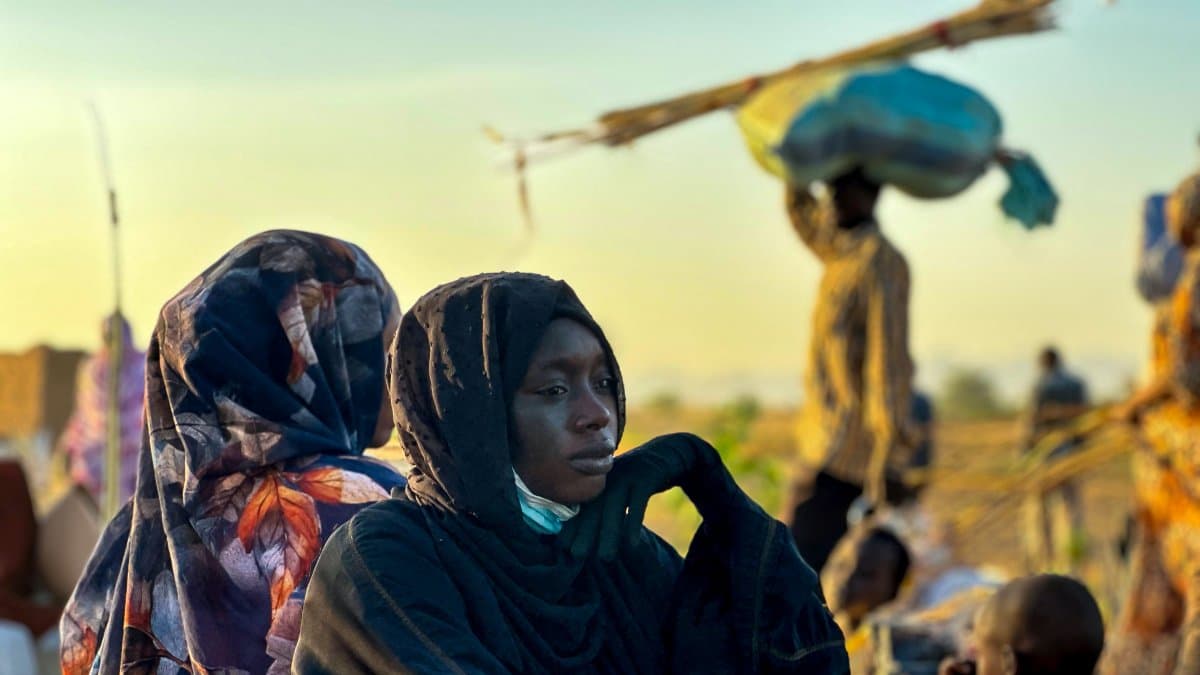

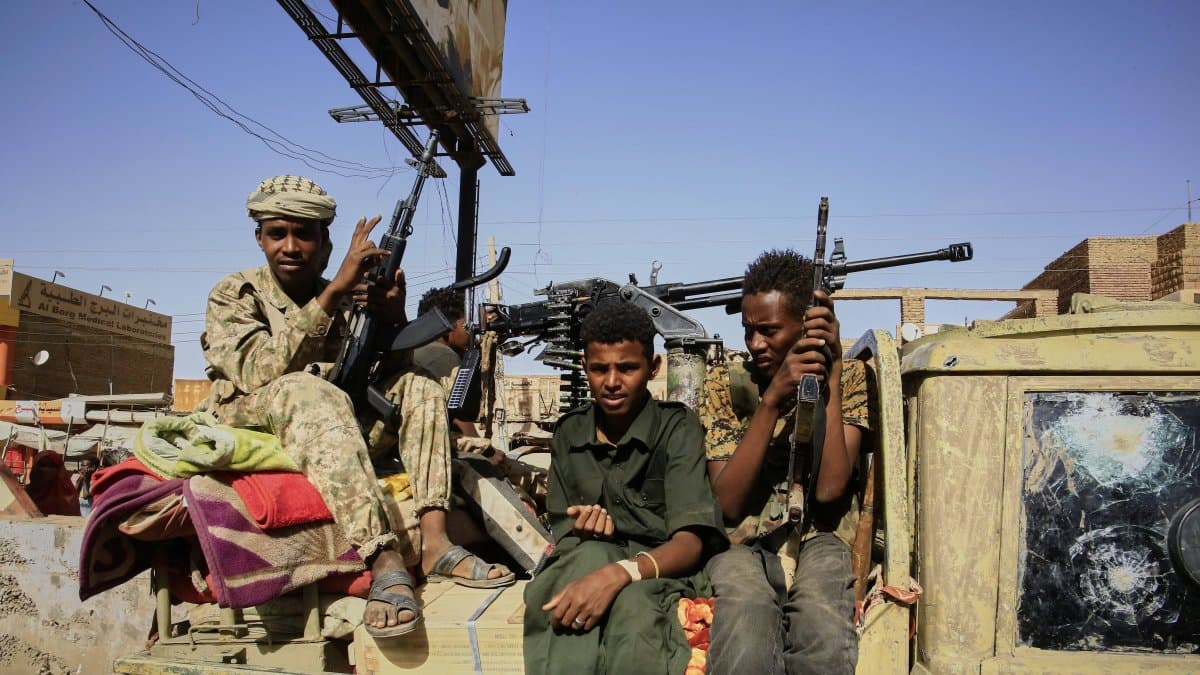
Last Sunday, Rapid Support Forces (RSF) paramilitaries seized the town of El Fasher, the capital of Northern Darfur, after an 18-month siege, triggering the massacre of some 2,000 civilians, marking a new critical point in the civil war that has been raging Sudan since April 2023.
For more than two years, the African country has been the scene of a brutal war for power between General Abdel Fatah al Burhan, commander of the Sudanese Armed Forces (SAF) and de facto leader of the country since the 2021 coup d'état, and Mohamed Dagalo, AKA Hemedti, commander of the RSF paramilitary group.
Both factions are composed mostly of Sunni Muslims, but do not act as religious forces. Their identity is more linked to military, tribal and political structures than to organized religious doctrines.
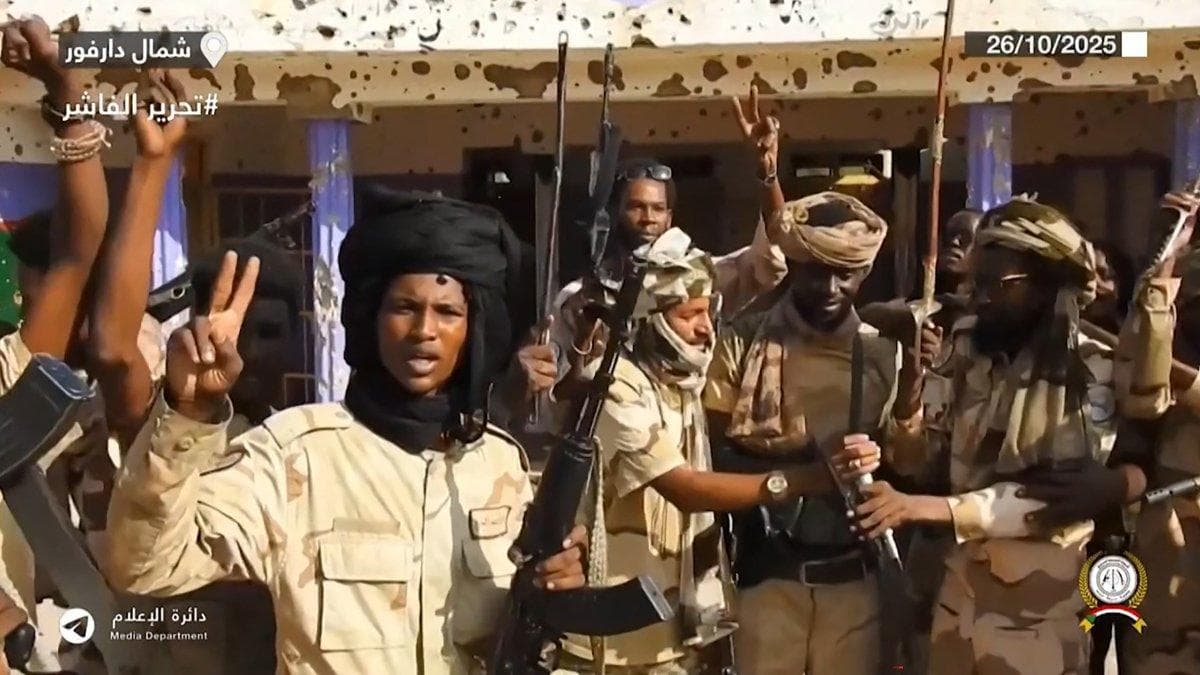
The RSF after the seizure of El Fasher.AFP/RSF Telegram.
Breakdown of the massacre
On Wednesday, the Preliminary Committee of the Sudan Doctors' Union reported that at least 2,000 civilians were killed during the seizure of El Fasher, while thousands remain trapped in the city amid heavy fighting.
"An estimated 2,000 civilians were killed within the first few hours of the militia’s entry into El Fasher. Innocent people were executed by being burned alive, while 177,000 civilians remain trapped, with most believed to have been subjected to mass killings," read a statement from the organization.
The allegations were confirmed by a report from the Yale Humanitarian Research Laboratory at the university's School of Public Health (YSPH). According to the report, there is evidence of continued mass killings during the 48 hours following the paramilitary takeover of the city.
Also, the YSPH confirmed that the killings in El Fasher continued on Wednesday at a former children's hospital, controlled by RSF, the Saudi Hospital and along the berm surrounding those locations.
El Fasher witnessed the summary execution of more than 450 patients and wounded who were inside the Saudi Hospital, along with about 1,200 people, wounded and patients who were in field medical facilities.
According to the Sudan Doctors' Union, the violence also triggered a new wave of displacement, with an estimated 28,000 people having fled in just 48 hours amid attacks on escape routes.
The union confirmed that more than 1,000 injured and starving people have arrived seeking refuge in the nearby Tawila area.
SAF accuses United Arab Emirates
The Sudanese Armed Forces have formally accused the United Arab Emirates (UAE) of providing weapons, drones, financing and mercenaries (African and Colombian) to the RSF, facilitating its most recent offensives, including the seizure of El Fasher.
Nathaniel Raymond, executive director of the YSPH, declared Wednesday to Fox News Digital that his lab "identified a CH-95 drone" visible in its satellite imagery, and which according to its characteristics "was provided by the United Arab Emirates to the RSF."
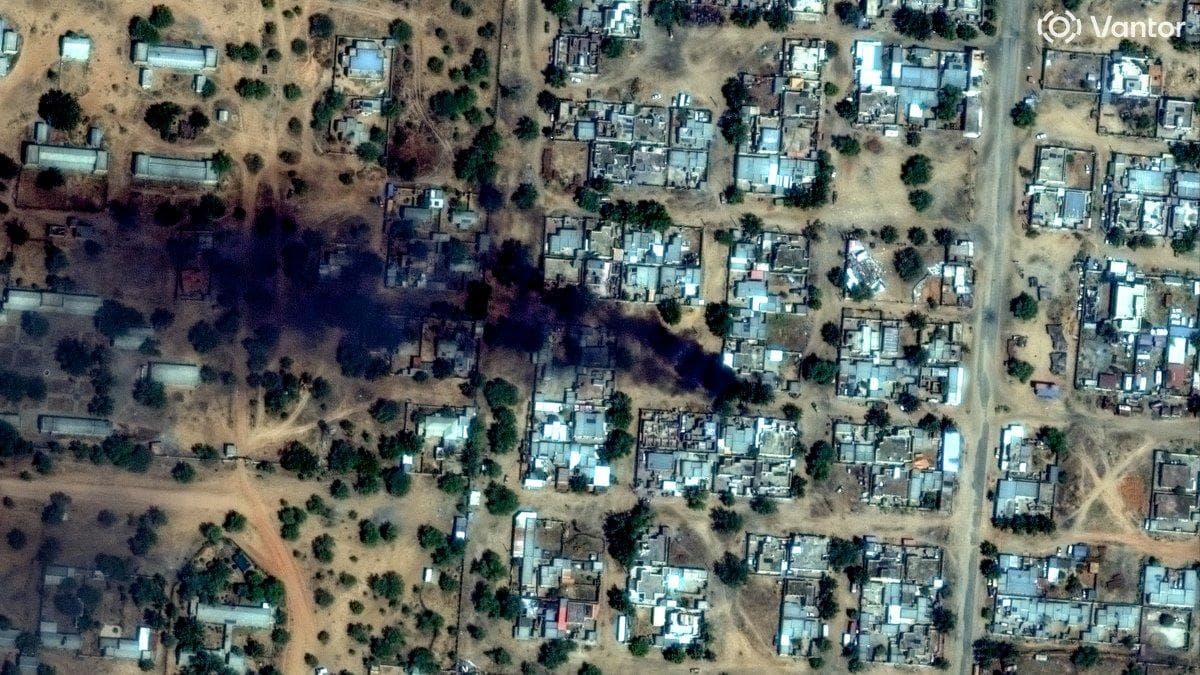
Smoke after attack in El FasherAFP/Vantor satellite image 2025.
The Wall Street Journal had already reported on Tuesday that assessments by U.S. intelligence services confirmed that the United Arab Emirates has increased weapons transfers to the RSF, including the drones identified by Yale researchers.
In March, the Sudanese military junta filed a lawsuit with the International Court of Justice, accusing the UAE of violating the Genocide Convention for its alleged role in the conflict. Abu Dhabi, for its part, has strongly denied the allegations.
Two months later, Sudan broke diplomatic relations with the UAE, declaring it a "national enemy" over its support of the RSF.
Dagalo admits massacre in El Fasher
Commander Mohamed Hamdan Dagalo publicly acknowledged that his troops "committed abuses" during the recent takeover of the North Darfur capital.
In a speech broadcast Wednesday on social media, Dagalo announced the immediate creation of military and legal committees to investigate the crimes, promising swift public trials against those responsible.
Dagalo's admission follows allegations that the RSF committed atrocities in El Fasher, including mass killings and the destruction of infrastructure such as hospitals and markets.
Una publicación compartida por AnewZ (@anewz.tv)
Once the city is secured, he explained in his remarks, a Federal Police force will assume sole responsibility for internal security, while military troops will remain outside the city.
The Federal Police is a security force created by RSF deputy commander Abdel Rahim Dagalo from former police elements, and is active in other paramilitary-controlled cities.
In his statement, the RSF leader also reiterated his vision for Sudan's future, stating that his demands include a full democratic transition and the establishment of a new military under a civilian president. The mission of this new military, he said, would be to "protect the country's borders, not the Constitution, to prevent future military coups."
In 2024, after the seizure of Al Jazirah, the paramilitary leader made a similar announcement, with promises that did not translate into concrete improvements. The humanitarian situation in that region progressively deteriorated until the SAF took control in early 2025.
Peace in Sudan: A mission for Trump
President Donald Trump activated peace efforts for Sudan in July, which included a ministerial-level meeting with what's called the Sudan Quartet, a diplomatic alliance made up of United Arab Emirates, Saudi Arabia, Egypt and United States, which aims to promote peace, security and political transition in Sudan.
The plan was presented as part of a strategic pivot by the U.S. toward Sudan, amid the stalemate in other conflicts such as those in Ukraine and Gaza. However, the absence of key players in the negotiations and accusations against the United Arab Emirates weakened the legitimacy of the process.
"It is time for Trump to build on the legacy of Republican leadership in Darfur and call Mohamed bin Zayed Al Nahyan in Abu Dhabi and tell him to stop," Yale's Nathaniel Raymond told Fox News Digital on Wednesday.
"President Trump has unique leverage to stop the killing now by calling the United Arab Emirates and pressuring them to do what the Biden administration refused to do to stop arming the RSF," he added.
A critical time in the war
At the same time, fighting between the RSF and SAF has intensified in the western regions of Darfur and Kordofan, and so far this year more than 5,300 civilians have been killed, many of them by airstrikes and summary executions.
The SAF controls the north, east and center of the country, including the capital Khartoum, and Port Sudan, a strategic port on the Red Sea. It is there that the transitional government formed under the authority of General Abdel Fattah al Burhan is located.
On the other hand, the RSF paramilitaries, under the command of Hemedti, dominate the south of the country and almost the entire Darfur region in the west, where they formed a parallel administration in the city of Nyala.
According to analysts, the great risk of this territorial fracture lies in the fact that if the current territorial divisions are stabilized, the country may become permanently fragmented, with rival administrations controlling each zone, as is the case today in Libya.
🛠 Do you think there is an error in this article?
Recommendations





LATEST