US warns UK against building Chinese wind factory
The pressure from the U.S. coincides with a new controversy in London over alleged Chinese espionage in the British Parliament.
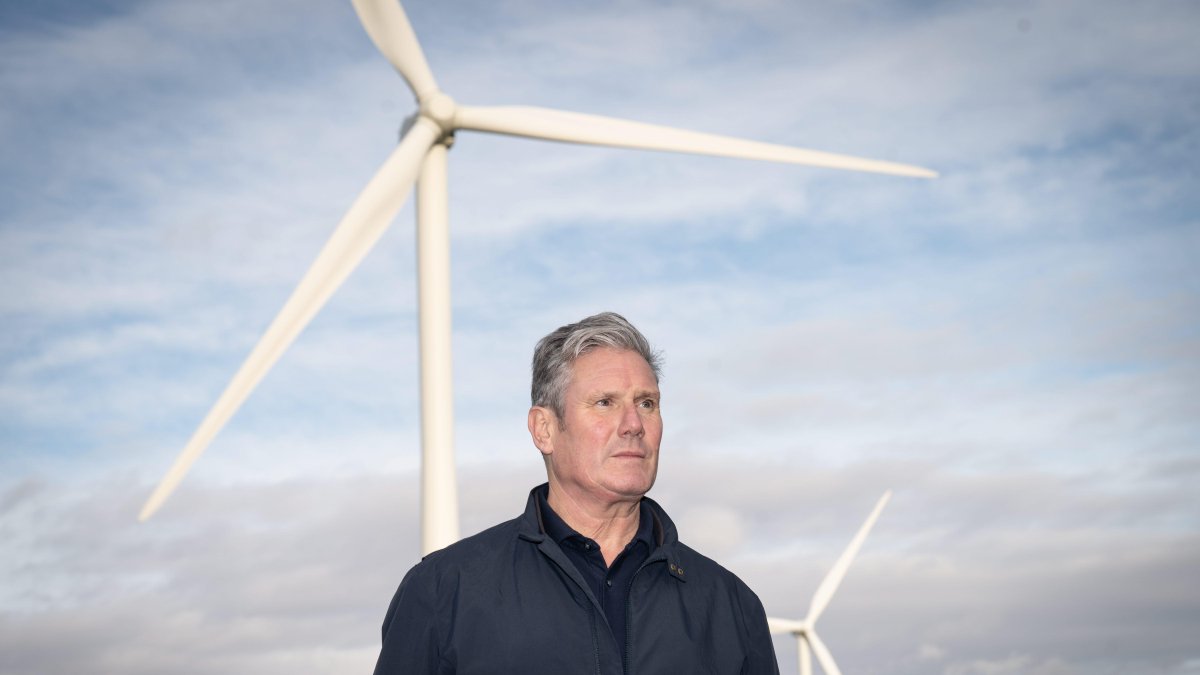
Keir Starmer visiting a wind farm in 2022

Senator John Moolenaar, chairman of the Special Committee on the Chinese Communist Party, urged the U.K. to block the construction of a Chinese wind turbine factory in Scotland, citing national security risks.
Chinese company Ming Yang last week announced plans for a factory on British soil. The facility would build nacelles and blades for turbines used in windmills. To move forward, it needs London's permission.
"It would defy common sense for U.K. officials to allow a Chinese company to build this project and gain even more leverage over their country," Senator Moolenaar told British media outlet The Telegraph.
"China is a foreign adversary that has spied on Parliament, interfered in elections in Britain and the Commonwealth and fuelled Russia’s war on Ukraine," he said, adding that passing the bill "would create greater dependency and vulnerability in the U.K.’s energy supply chain."
The warning from Donald Trump's ally, who in recent hours endorsed his bid for reelection to the Senate, is not the first to reach the U.K. from the United States. The GOP conveyed its concern to the British government months ago, according to what a U.S. official acknowledged to The Financial Times.
Within British borders there are also doubts about the multimillion-dollar Chinese project, which would start producing turbines in 2028. Claire Coutinho, minister in charge of opposition energy policy, argued in words reported by The Telegraph, that "giving China an access-all-areas pass to our energy supply is reckless and naive."
Controversy over two alleged Chinese spies
Last week, the Crown Prosecution Service (CPS) announced that a case against two alleged Chinese spies had fallen before reaching trial because the government of Keir Starmer had not provided sufficient information to show that China was a threat to national security.
Christopher Cash and Christopher Berry, a researcher and a professor, respectively, had been accused of passing confidential parliamentary information to the Communist Party of China. Both denied the allegations.
CPS chief Stephen Parkinson said his agency needed, in order to proceed with the prosecution, information from the government that China was a threat. "By late August 2025 it was realized that this evidence would not be forthcoming," he argued in a letter to committees of Parliament.
That is just where the prime minister went on Wednesday to address the allegations. The Labour leader promised to make public the testimonies delivered to the Crown Prosecution Service.
LATEST