Morocco: At least 286 injured and more than 400 arrested after violent escalation of youth protests
Ministry spokesman Rachid Jalfi detailed to EFE that authorities carried out "regulatory operations and interventions aimed at preserving public security and order."

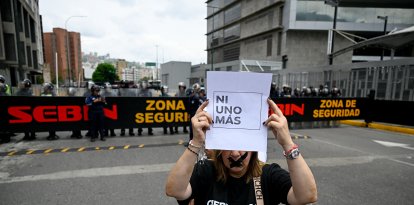
Young people in Morocco are arrested in protests (Photo by Abdel Majid BZIOUAT / AFP)

Youth-led protests in Morocco, demanding more justice, job opportunities and reforms in education and healthcare, escalated into violent riots on their fourth day. According to EFE, citing the Moroccan Ministry of Interior, at least 263 officers and 23 civilians were injured of varying severity, while 409 people were arrested in at least 17 provinces of the Maghreb country.
One of the injured civilians required a medical follow-up in Oujda (east), and 142 law enforcement vehicles and 20 private cars were reported damaged, many vandalized and set on fire.
The Ministry spokesman, Rachid Jalfi, detailed to EFE that the authorities carried out "regulatory operations and interventions aimed at preserving public security and order." "Some of these demonstrations experienced a dangerous escalation that undermined public safety and order by turning into violent rallies in which a group of people used bladed weapons, Molotov cocktails and stones," Jalfi explained, according to the agency.
Hotspots of major violence
The riots were mainly in locations such as Ait Amira, Chtouka Ait Baha, Inezgan, Ait Melul, Agadir and Tiznit (south), and Uchda (east), where protesters broke into administrations, bank agencies and stores, committing "acts of looting and vandalism."
In Inezgan, the epicenter of the damage, 69 officers were injured, seven vehicles (police and private) were vandalized, and three bank branches, an insurance agency, a pharmacy and several stores were vandalized. In Uchda, 51 police officers were injured, 40 vehicles were affected and two businesses were damaged. In Temara (south of Rabat), 44 officers were injured and 47 patrol cars and 13 private cars were damaged, according to EFE's balance sheet.

From peaceful demonstrations to violence
The protests began peacefully on Saturday in Rabat, Casablanca, Marrakech, Agadir and Tangier, then spreading to urban and rural areas, but were banned by the authorities.
EFE also reports dozens of initial arrests, with most protesters released after being identified. However, the Casablanca prosecutor's office is prosecuting 24 for blocking a highway on Sunday, and the Rabat prosecutor's office is prosecuting 37 for involvement in the first three days, with three in custody, according to the Moroccan Association for Human Rights (AMDH).
Jalfi defended the police saying that interventions were "proportional," with "appropriate and limited means without resorting to excessive measures," preceded by "multiple attempts to avoid confrontation, including legal warnings and warnings." "Resorting to intervention in some cases was the last option, after exhausting all other means, in the face of a small group of instigators and rioters," he added.
The role of 'GENZ212' and openness to dialogue
LATEST