Concerns about the growing presence of Iran and Hezbollah in Brazil
A report revealing the case of Haissam Houssim Diab, a Lebanese man accused of planning terrorist attacks against Jewish targets in Brazil, exposes how international networks are operating in South American territory.
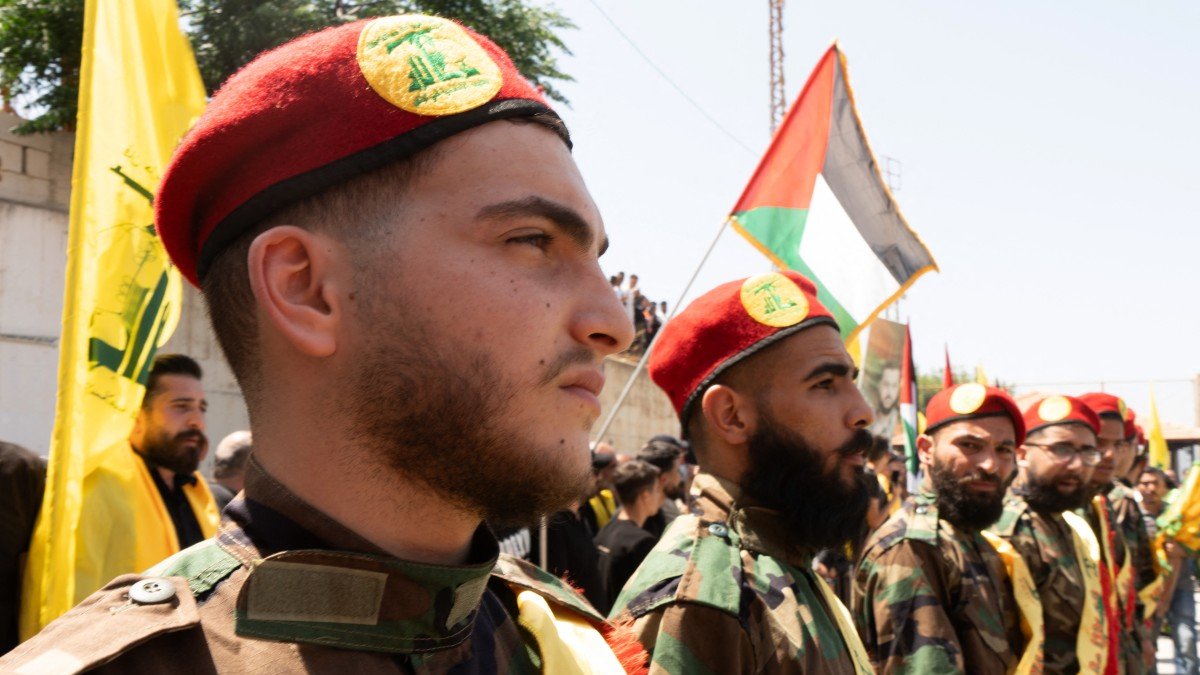
Hezbollah Terrorists

In a disturbing development, Brazil has become a focal point for the activities of Hezbollah, a Lebanese terrorist group backed by Iran, recent investigations reveal.
The case of Haissam Houssim Diab, a Lebanese man accused of planning terrorist attacks against Jewish targets in Brazil, exposes how international networks are operating on South American soil, according to an exclusive report shared with Argentine newspaper Infobae by Emanuele Ottolenghi, an expert with the 240 Analytics platform.
Diab, one of the ringleaders of 'Operation Trapiche'
Diab, who had already been indicted in 2005 by Germany on narco-trafficking charges, managed to avoid extradition thanks to a decision by Brazil's Federal Supreme Court in 2006. At the time, the use of multiple false identities made it difficult to identify him. Years later, in 2023, Diab was identified as one of the ringleaders of Operation Trapiche, a Hezbollah plot to perpetrate attacks in Brazil, foiled by the Federal Police with support from U.S. and Israeli intelligence. Along with him, Mohamad Khir Abdulmajid, a Syrian-Brazilian, is also in the sights of Interpol for his role in this plot.

JNS
US should designate Muslim Brotherhood a terror org, White House adviser says
JNS (Jewish News Syndicate)
Diab's links to drug trafficking
Infobae pointed out that Ottolenghi's report, titled Hezbollah's Terrorist Plot in Brazil, details how Diab was not only involved in terrorist activities, but also in money laundering and drug trafficking operations. In 2017, he was arrested in Paraguay at the home of a known Lebanese drug trafficker linked to Hezbollah, and his contacts included US-sanctioned currency exchange companies, such as Chams Exchange. In addition, documents reveal that Diab maintained communication with key Hezbollah figures, such as Sobhi Fayad, sanctioned by the U.S. Treasury Department in 2006.
The dangerous influence of Al-Mustafa International University
An alarming aspect is Iran's influence in Brazil through the Al-Mustafa International University, an institution sanctioned by the United States in 2020 for its role in the recruitment and indoctrination of Shiite militias. According to Ottolenghi, this university, which operates in Latin America with centers in Colombia, Venezuela and Brazil, has intensified its activities in the South American country, especially after the change of government in Argentina, which has adopted a tougher stance against Iran. In Brazil, Al-Mustafa collaborates with institutions such as the Salam Institute and the Imam al-Mahdi Islamic Center in São Paulo, which promote Iranian ideology and organize events in support of figures such as Hassan Nasrallah, the late leader of Hezbollah.
Khamenei: Nuclear deadlock with US ‘unsolvable’
“They want Iran to be obedient to America. The Iranian nation will stand with all of its power against those who have such erroneous expectations,” Reuters cited Khamenei as saying.
“People who ask us not to issue slogans against the U.S., … to have direct negotiations with the U.S., only see appearances. … This issue is unsolvable,” he added.
Iran and the United States have held several rounds of talks on restarting economic relations, with the Trump administration insisting that Tehran dismantle its nuclear program.
LATEST