Australia to recognize ‘Palestine’ at UN in September
New Zealand Foreign Minister Winston Peters said his country would consider whether to do the same.

Australian Prime Minister Anthony Albanese speaks during a press conference

Australia will recognize a Palestinian state at the U.N. General Assembly annual general debate in September, Prime Minister Anthony Albanese announced on Monday.
“Australia will recognize the right of the Palestinian people to a state of their own. We will work with the international community to make this right a reality,” Albanese told reporters in Canberra.
Albanese claimed that a two-state solution for the Arab-Israeli conflict is “humanity’s best hope to break the cycle of violence in the Middle East and to bring an end to the conflict, suffering and starvation in Gaza,” AFP reported.
The premier said that Australia received guarantees from the Palestinian Authority, which rules parts of Judea and Samaria, that there would be “no role for the terrorists of Hamas in any future Palestinian state.”
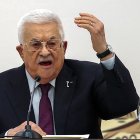
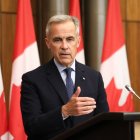
Canberra’s announcement follows similar initiatives by the U.K., France and Canada to recognize “Palestine,” a move Hamas has hailed as “the fruits” of its Oct. 7, 2023, mass slaughter of civilians in Israel.
Speaking at a press conference hours earlier, Israeli Prime Minister Benjamin Netanyahu told reporters that “the Palestinians are not about creating a state—they’re about destroying a state.
“It defies imagination or understanding how intelligent people around the world, including seasoned diplomats, government leaders and journalists fall for this absurdity,” the prime minister continued.
Netanyahu said that while Hamas terrorists seek to destroy the Jewish state through “forcefully and direct military and terrorist moves,” the P.A. is working to reduce Israel to “indefensible boundaries” at the United Nations and the International Criminal Court in The Hague.
“The real reason that this conflict persists is not because of the absence of a Palestinian state, but the persistent Palestinian refusal to recognize a Jewish state in any in any boundary,” he said.
“To have European countries and Australia march into that—march into that rabbit hole just like that, fall right into it and buy this this canard—is disappointing and I think it’s it’s actually shameful,” Netanyahu said.
Following Albanese’s announcement, New Zealand Foreign Minister Winston Peters said his country would consider whether to do the same at the U.N. General Assembly annual debate.
Peters added that Wellington’s recognition of “Palestine” was a “matter of when, not if,” though it was “not a straightforward, clear-cut issue.
The administration of New Zealand Prime Minister Christopher Luxon would canvass the “broad range of strongly held views within our government, parliament and indeed New Zealand society” before the issue of recognition would be brought to a Cabinet vote, Peters said.
Senior Hamas official Ghazi Hamad told Al Jazeera on Aug. 2 that “the initiative by several countries to recognize a Palestinian state is one of the fruits of October 7,” 2023, when the terrorist group invaded Israel, slaughtered some 1,200 people, mainly civilians, and took 251 hostages.
“We proved that victory over Israel is not impossible, and our weapons are a symbol of Palestinian dignity,” declared Hamad in the interview.

JNS
UK plans to recognize Palestinian state absent ‘substantive’ Israeli steps
JNS (Jewish News Syndicate)
U.S. Secretary of State Marco Rubio revealed on Friday that talks to secure a hostages-for-ceasefire deal between Israel and Hamas broke down when France announced it would recognize a Palestinian state.
“Talks with Hamas fell apart on the day [French President Emmanuel] Macron made the unilateral decision that he’s going to recognize the Palestinian state. And then you have other people come forward, other countries say, ‘Well, if there’s not a ceasefire by September, we’re [also] going to recognize a Palestinian state,'” Rubio revealed in an interview.
Rubio noted that as a consequence, Hamas concluded, “let’s not do a ceasefire because we can be rewarded. We can claim it as a victory.
“So those messages [about statehood] … actually have made it harder to get peace and harder to achieve a deal with Hamas,” the secretary said.
© JNS
LATEST