Cristina Fernández de Kirchner, sentenced to six years in prison in Argentina: A review of corruption cases
The former president and vice-president also received a life disqualification from holding public office. The ruling, expected by many and feared by her supporters, comes after a long judicial process that has put her administration under the spotlight.
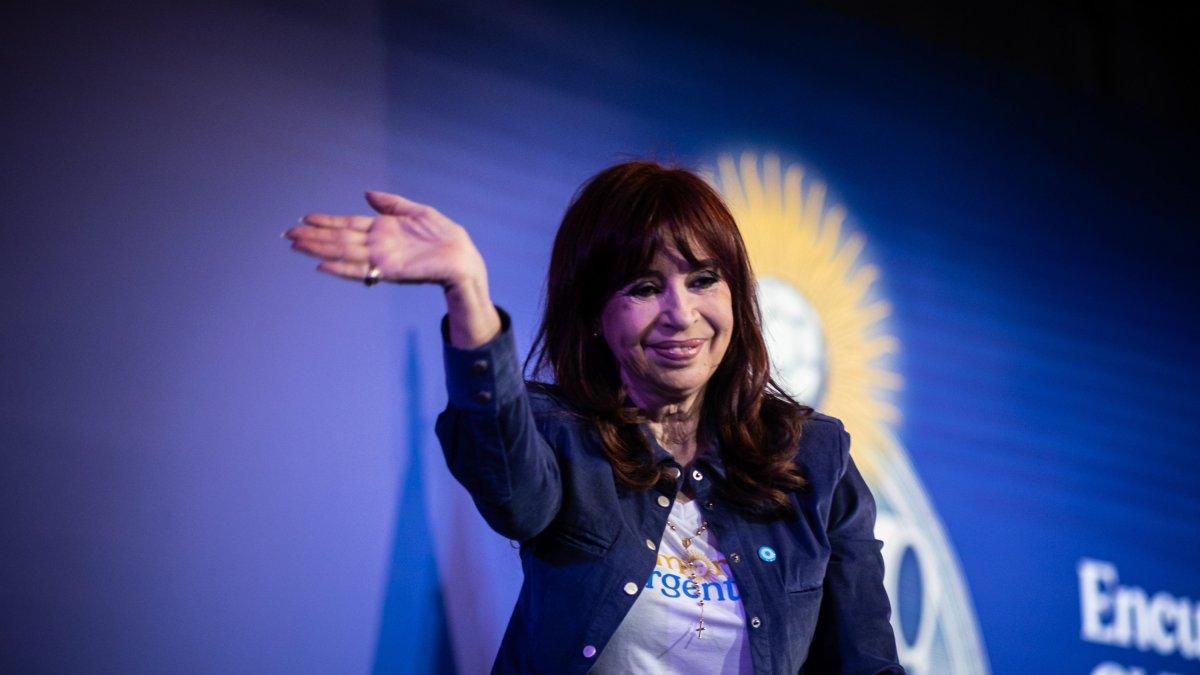
Argentina's former President Cristina Fernandez de Kirchner.

The former president and former vice president of Argentina, Cristina Fernández de Kirchner (72), has been sentenced to six years in prison and perpetual disqualification from holding public office by the Supreme Court in the case known as Vialidad, a ruling that marks a milestone in the country's political and judicial history. This outcome, expected by many and feared by her supporters, comes after a long judicial process that has put under the spotlight her management during the presidential terms from 2007 to 2015 and her role as vice-president from 2019 to 2023.
The ruling was ratified by three votes in favor and none against.
Due to her age, Fernández de Kirchner will serve house arrest.
How did Fernández de Kirchner reach this stage? These are the corruption cases in which she has been involved and the political context surrounding this crucial moment.

The 'Vialidad' case: the epicenter of the conviction
The Vialidad case, which began to be investigated in 2016, focuses on alleged irregularities in the awarding of contracts for public works in the province of Santa Cruz during the governments of her late husband Néstor Kirchner (2003-2007) and Cristina Fernández de Kirchner herself (2007-2015).
According to the courts, Fernández de Kirchner was responsible for a systematic maneuver to benefit businessman Lázaro Báez, a close associate of the Kirchner family, through the assignment of 51 road contracts worth millions of dollars. In December 2022, the Federal Oral Court N°2 convicted her for fraudulent administration to the detriment of the State, imposing a prison sentence and perpetual disqualification from holding public office. The sentence was ratified in 2024 by the Federal Chamber of Criminal Cassation, and now, in 2025, the Supreme Court has confirmed the conviction, according to Argentine media reports.
Despite attempts by her defense to recuse Judge Ricardo Lorenzetti and point out legal inconsistencies, the ruling stood. Fernández de Kirchner has always rejected the accusations, calling them political persecution orchestrated by the "judicial party" and opposition sectors. At a recent event at the headquarters of the Justicialist Party (PJ), she stated, "Being imprisoned is a certificate of dignity," and described herself as "a living executioner," according to reports by Argentine news portal Infobae.
Other corruption cases under investigation
The Vialidad case is not the only one that has marked Fernandez de Kirchner's judicial trajectory. Over the years, she has faced multiple investigations for alleged corruption, some of which are still open.
Hotesur and Los Sauces: these cases investigate alleged money laundering through the Kirchner family's hotel companies. According to the accusations, businessmen close to Kirchnerism paid exorbitant sums for property rentals to cover up bribes. Although Fernández de Kirchner was acquitted in 2021 in these cases, the initial investigations generated a strong impact on her public image.
World
Opposition on the prowl in Argentina: Milei fighting on several internal fronts
Leandro Fleischer
La ruta del dinero K: this case focuses on alleged money laundering by Lázaro Báez, who allegedly channeled funds obtained from public contracts to offshore accounts. Although Fernández de Kirchner was not directly convicted in this case, her name was linked due to her relationship with Báez, who was sentenced.
Cuadernos de las coimas (bribes): this investigation, based on the notebooks of the driver Oscar Centeno, uncovered an alleged bribery network in public works during the Kirchner governments. Fernández de Kirchner was accused of leading an illicit association, but the case has not yet come to trial. The accusations point to a system of collecting bribes from businessmen in exchange for state contracts.
Future dollar: in this case, the sale of future dollar contracts at below-market prices during the end of her presidency in 2015 was investigated, which would have generated million-dollar losses to the Central Bank of the Argentine Republic (BCRA). Fernández de Kirchner was acquitted in 2021, but the case fueled criticism of her economic management.
These investigations, although not all culminated in convictions, have consolidated a narrative of corruption that has dogged Fernandez de Kirchner for years.
A tense political context
Fernández de Kirchner's conviction comes at a time of high political tension, in the midst of the campaign for the September 2025 legislative elections, where the former president had announced her candidacy for a seat in the Legislature of the Province of Buenos Aires. The ruling, which includes her disqualification for public office, could significantly alter the electoral landscape, according to Infobae.

Peronism, led by figures such as Buenos Aires province governor Axel Kicillof, her son and congressman Maximo Kirchner and other leaders, has closed ranks in defense of Fernandez de Kirchner, organizing mobilizations and events at the PJ headquarters in Buenos Aires.
At a recent event, the former president urged the militancy to remain in a "state of alert and maximum mobilization," Argentine media reported.
Fernández de Kirchner has maintained a combative discourse, denouncing a judicial persecution aimed at politically proscribing her.
Milei defends his economic reforms from Madrid: 'Today Argentina has embraced the path of growth'
"Wow, the model is working. Therefore, what I want to leave you with is the testimony that the ideas of freedom work," the leader declared during his speech.
Milei, a libertarian economist, came to power in December 2023 promising to fix an Argentine economy in crisis through cuts in public spending.
"We know what needs to be done, we know how it needs to be done. Therefore, let us not lack the courage to do it, because we are the ones who can put the whole world back on its feet," the Argentine leader continued.
Milei claimed that Argentina's economy has been growing since April and that by next year, inflation “will be a thing of the past.”
"Today Argentina has embraced the path of growth. In 40 years it will be the first world power, without a doubt," he stressed.
LATEST