Opposition leader Lee Jae-myung wins South Korea's presidency in snap election
"I pay tribute to the great decision of the people," Lee declared in Incheon, vowing "not to disappoint."
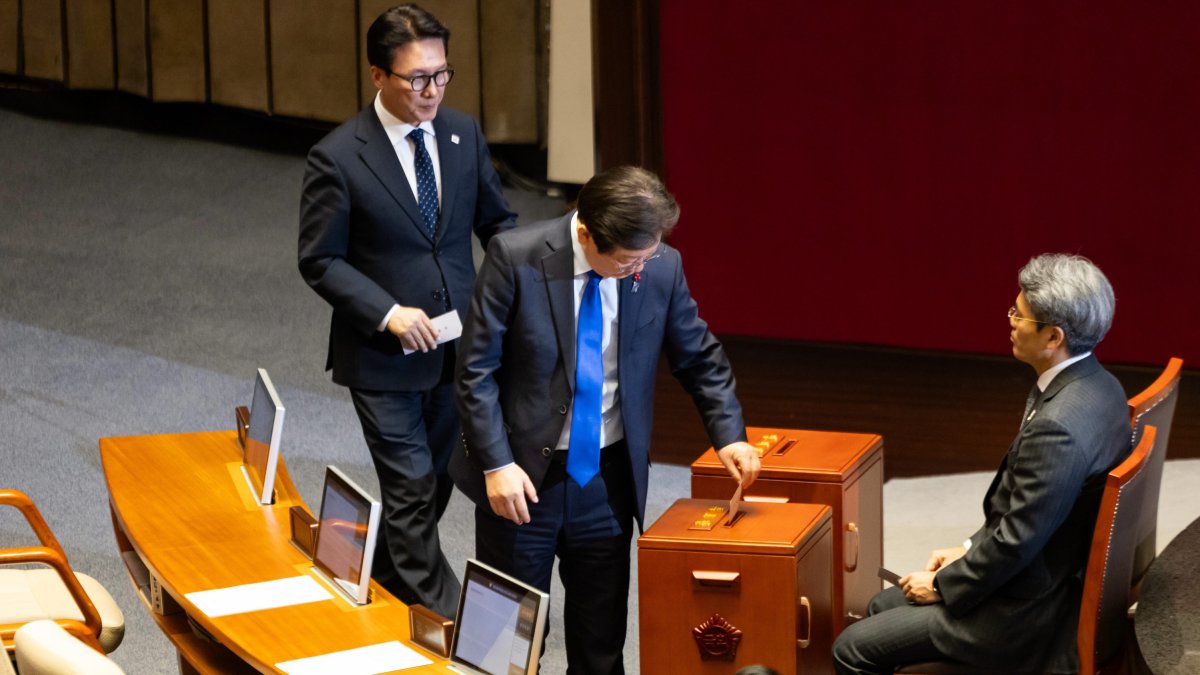
Lee Jae-myung, new president of South Korea.

Opposition leader Lee Jae-myung of the Democratic Party became the president-elect of South Korea after winning Tuesday's special presidential election, marking the return of the progressive bloc to power following the ouster of conservative Yoon Suk-yeol.
With 51.7% of the vote according to projections, Lee beat conservative Kim Moon-soo, who conceded defeat, by 12.4 points.
"I pay tribute to the great decision of the people," Lee declared in Incheon, vowing "not to disappoint" expectations after months of political crisis triggered by Yoon's failed imposition of martial law.
Lee's political life
Lee, 60, will take office Wednesday without a transition period, as required by law in extraordinary elections. Born into poverty in Andong, his career includes a successful tenure as mayor of Seongnam and governor of Gyeonggi, where he pushed for social programs such as a universal basic income for young people.
A criminal trial that is reopened
However, his term in office begins under the shadow of a criminal trial for alleged misrepresentation in an urban planning project in Daejang-dong. Although he was acquitted in the second instance, the Supreme Court ordered to reopen the case, with a hearing set for June 18.
In campaigning, Lee moderated his discourse, adopting a centrist approach with proposals such as a Ministry of Climate and Energy.
In foreign policy, he seeks to resume inter-Korean dialogue and "pragmatic" diplomacy.
He also promised to investigate the martial law insurrection and foster unity in a polarized country.
South Korea is preparing for a new phase marked by political and social challenges.

A challenge with Trump's tariffs
LATEST