Bad Bunny divides the U.S. right with his halftime show: 'Not everything in life has to be ruined by politics'
The Puerto Rican singer —who had previously generated controversy for his statements against ICE— signed a performance entirely in Spanish that sparked debate, praise and questioning.
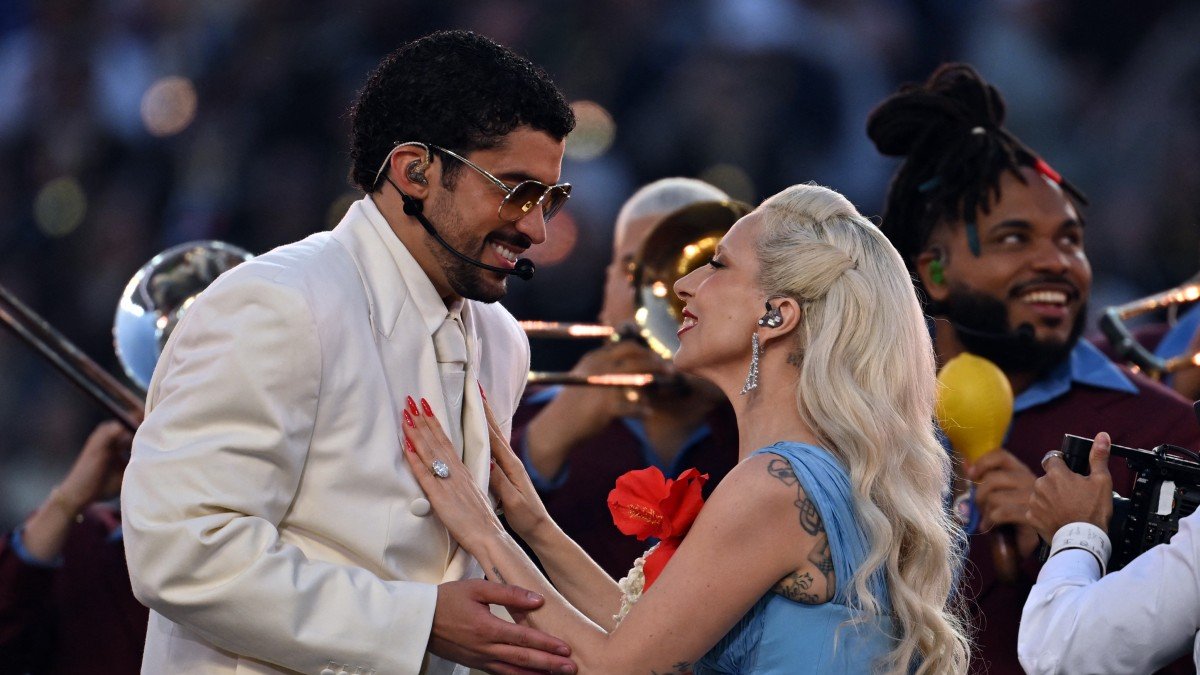
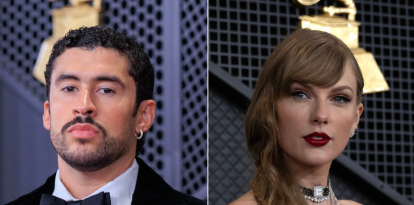
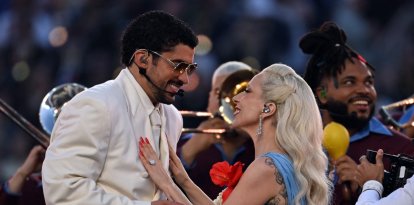
Lady Gaga and Puerto Rican singer Bad Bunny during the halftime show

After a wave of heavy criticism from the U.S. conservative ecosystem—especially after a harsh questioning from President Donald Trump—Bad Bunny's halftime show ended up dividing the country's right wing. Multiple commentators, activists, and conservative influencers came out in defense of the show or, failing that, questioned the angry reaction of a certain MAGA sector to an all-Spanish-language performance.
The Puerto Rican artist's performance, which combined high-impact staging with Latino cultural references, quickly became a new front in the U.S. cultural battle. One of the most forceful voices was Meghan McCain, who wrote, "I’m sorry, but I just genuinely question your taste level if you didn’t enjoy the Bad Bunny halftime show. And everything in life doesn’t have to be ruined with politics."
Along the same lines, Republican strategist Brittany Martínez —CEO of Principles First—rejected the criticism over the show’s supposed lack of “Americanness”: “My two biggest takeaways from Bad Bunny's halftime show: he said God bless America, and when all the flags came out, the first one was the US flag. So to all the clowns saying this wasn't American enough—spare me with the faux outrage and worry about actual important things.”
In the same vein, conservative commentator Vish Burra downplayed the controversy: "The hysteria over the Bad Bunny Super Bowl Halftime Show is unfounded. Bad Bunny makes bangers. Titi Me Pregunto is one of my favorite songs. The New Yorker in me loves to dance to his music. It was a good halftime show with minimal controversy."
From Florida, Christina Pushaw, an activist and member of the governor's team, Ron DeSantis, spoke about what she sees as a cultural double standard: "I don't understand people who look up translations of explicit Bad Bunny lyrics to get mad about it, but have no problem with Nicki Minaj, whose songs are just as explicit... in English."

Sports
Bad Bunny sacude el Super Bowl y genera duras críticas tras una actuación íntegra de salsa y reguetón en español
Emmanuel Alejandro Rondón
PragerU analyst Xaviaer DuRousseau offered a similar reading from an openly conservative stance: "I’m pro-ICE & MAGA and was nervous about Bad Bunny’s Super Bowl Halftime Show. I must say, I respected his performance. Rather than focusing on immigration, he instead highlighted Hispanic/Latino culture and how it’s a part of AMERICAN culture. If it’s pro-America, I’m for it."
Even to the surprise of many, controversial figures with identity nationalist stances agreed in appreciating the Puerto Rican artist's show. Nick Fuentes was brief: “I liked the halftime show; I thought it was fun.” The influencer Jake Paul, who had initially called for a boycott of the performance, later posted a strange and puzzling message: "Guys i love bad bunny idk what happened on my Twitter last night."
Entretenimiento
More than five million people watched TPUSA's Super Bowl halftime show live
Williams Perdomo
There were also several reactions from conservative profiles, but not linked to politics. Luis Medina, a U.S. Navy veteran, wrote in a viral post: "No gay propaganda / No leftist propaganda / Brings out an American flag / Promotes traditional marriage between a woman and a man / It went better than I expected."
Outside the U.S., British journalist Piers Morgan publicly disagreed with President Donald Trump: "Couldn’t disagree more, Mr President. I absolutely loved Bad Bunny’s halftime show. Amazing (best in Super Bowl history?) theatre/choreography, great energy, superbly confident performance, and a very welcome unifying message. Oh, and Spanish is 1st language for 50m+ Americans!"
For her part, singer and political commentator Alexis Wilkins highlighted the show's communicational impact: "Unpopular: Republicans need to unite and get on better messaging because this branding is fantastic and allows all Dems to get behind it. Also—super aesthetic." Meanwhile, Caroline Sunshine, who worked in the White House during the first Trump Administration, noted a different angle to the culturel debate: "Unpopular but interesting take: there was only one Super Bowl halftime show this year that highlighted the institution of marriage. And it wasn’t the Turning Point halftime show."
While conservative reactions to the halftime show were initially sharply critical, Bad Bunny ended up exposing certain cracks within the American right regarding how to interpret major cultural events in the country. The Puerto Rican —who had previously generated controversy for his statements against ICE— signed a performance entirely in Spanish that provoked debate, praise and questioning, consolidating himself as one of the most influential artists of the moment and evidencing the growing weight of Hispanic culture in the U.S. public conversation.
LATEST