ANALYSIS
Indigenous man and former Zapatista advisor could preside over Mexico's Supreme Court: Who is Hugo Aguilar?
If "the triumph" becomes official, the lawyer would be the second minister from Oaxaca to lead the highest court after Benito Juárez.

Hugo Aguilar, who could become the president of the Mexican Supreme Court in the next few days, is an indigenous Mixtec and former advisor to the Zapatista guerrillas who promises to settle the justice system's "debt" with the land's original peoples.
Born in 1973 in the southern state of Oaxaca, Aguilar is close to heading the Supreme Court of the United States' southern neighbor by achieving the highest percentage of votes with 87% of ballots counted in the unprecedented and controversial election for judges held in Mexico on Sunday, June 1.
If the victory becomes official, the lawyer would be the second minister from Oaxaca to lead the Supreme Court after Benito Juárez, considered the father of modern Mexico. Juárez led Mexico's highest court (1857-1858) before becoming president of the country (1858-1872), a milestone in Latin America.
AMLO official
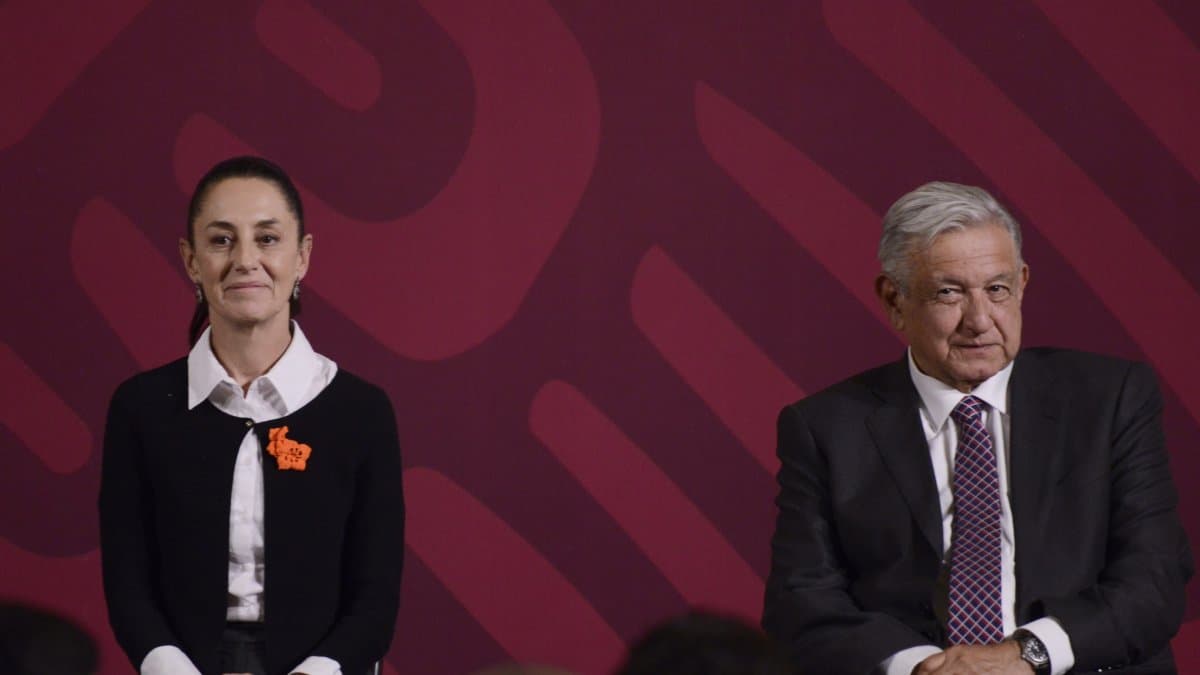
Aguilar, who was an official under former President Andrés Manuel López Obrador (2018-2024) at the National Institute of Indigenous Peoples (INPI), is a lawyer with a master's degree in constitutional law. His name was proposed by the government of President Claudia Sheinbaum, according to the regulations for the selection of candidates that delegated that task to the three branches of government.
Baptized by a newspaper as "the envoy of Benito Juárez," Aguilar, who usually wears shirts with colorful native embroidery, has not been a member of any party and has no experience as a judge.
The possible president of the Mexican Supreme Court, according to the country's most notable newspapers, was also a legal advisor to the Zapatista Army of National Liberation (EZLN) during a negotiation with the government in 1996.
The EZLN, led by Subcomandante Marcos, took up arms in the southern state of Chiapas in 1994 to vindicate indigenous rights. Although it has always been close to the left, it diverged from López Obrador.
A campaign of silence and 'erased' social media posts
Aguilar's links with the Zapatista movement hardly figured in his campaign, which focused on capturing the pro-government vote. The lawyer has been the target of accusations on social media for allegedly refusing to pay child support.
But a women's rights advocate in Oaxaca assured that just before the campaign, "all those posts disappeared" and it has not been possible to corroborate the accusations.
The leaders in the vote for Mexico's Supreme Court
According to the report, as of 9:30 p.m. Monday and with 86.57% of the votes counted, the five female candidates that are projected to occupy the Supreme Court are Batres Guadarrama (4.94%), Yasmín Esquivel Mossa (4.37%), Loretta Ortiz Ahlf (4.19%), María Estela Ríos (3.93%), and Sara Irene Herrerías (2.65%).
The four male candidates that are projected to make it are Aguilar (5.20%), Azael Figueroa Mejía (2.96%), Irving Espinosa Betanzo (2.87%), and Arístides Guerrero García (2.83%).
Empty ballot boxes and hundreds of protests
With an estimated participation between 12.57% and 13.32% of the electorate, Mexico was involved in a process that was the center of criticism and protests across the country.
Although authorities said it was a "historic" day, for millions of dissatisfied voters, it was a "farce." Although the low percentage of citizen approval would seemingly reflect the election as illegitimate, the government made clear that "whatever the data is, these election is legitimate because the Constitution does not indicate a minimum percentage of participation."
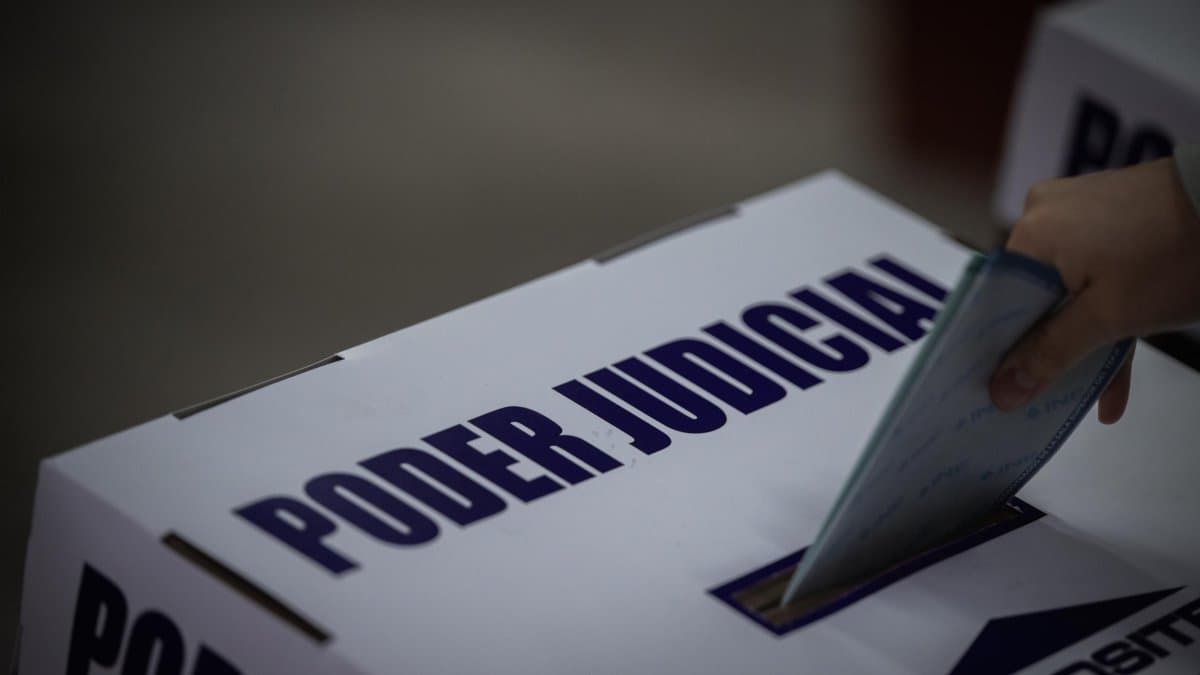
Throughout the day of the vote, polling stations became both voting centers and symbolic stages for protest, while in several states there were some violent incidents, null participation and even marches.
Threats and pigs' heads
It was also learned that at least 16 ballot boxes could not be installed. In another district, several ballots returned already manipulated or marked, which made them unusable.
Similar situations were reported in Sinaloa, specifically in Culiacan, where citizens and presumed polling place officials reported the reception of previously marked ballots, as well as voters arriving with "accordions," a term for multiple ballots stuck together, generating suspicions of voter fraud.
In Ciudad Juárez, Chihuahua, authorities and citizens found at least three coolers containing pig heads, feet and ears, along with a poster warning: "If you vote, there will be consequences."
"This reform is not by the people, it is by Morena"
"RIP to the Judiciary." "This reform is not by the people, it is by Morena." "Justice should not be political." "There is no justice without independence." These were some of the sentiments that circulated widely on social media in recent days.
Three of the five women projected to be SCJN ministers and some of the men would have been appointed by AMLO, a member of Morena, the current party in power, before the end of his term. Some of them face accusations of scandals, plagiarism of their theses and links to drug trafficking.
Over the course of the day, three deaths of elderly people were also reported at different polling stations. Although none of the deaths were related to violence, the cases left a stain on the day.
INE investigates Morena for manipulation and electoral interference
Days ago, Mexico's electoral authority revealed that it is investigating complaints about political groups, including Morena, for influencing voters.
Claudia Zavala, INE's electoral counselor, told Reuters that the institution is analyzing two complaints. The first alleges that the government of the state of Nuevo Leon and the political party Movimiento Ciudadano (M.C.) asked public officials to drive voters to the polls and shared pamphlets promoting the names of candidates.
The second complaint, in Mexico City, raises similar allegations against public officials and Morena.
🛠 Do you think there is an error in this article?
Recommendations
LATEST