What are the hazardous wind gust warnings and what areas will be affected?
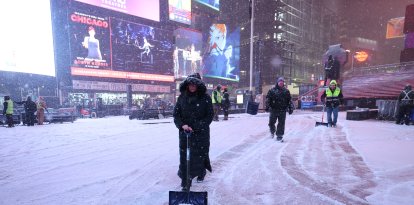
The NWS warns for winds up to 70 miles per hour, heavy snowfall and possible power outages in large regions of the country this Wednesday.

The NWS forecast high winds for much of the country.

The National Weather Service (NWS) has issued an urgent warning of a dangerous combination of intense winds and heavy snowfall that will impact much of the Northeast and other key regions of the United States.
According to the updated forecast, these extreme conditions will not only hamper mobility, but pose a risk to local infrastructure. "These wind gusts will result in numerous power outages, scattered tree and roof damage, and dangerous travel conditions," the NWS maintained in its official report.
Main areas affected by wind warnings
The weather phenomenon spans a wide corridor from the Pacific coast to the central plains. Sustained winds and gusts of between 50-70 miles per hour are expected to persist through Thursday.
States under watch and warning because of geographic proximity:
- Washington, Oregon, Nevada, California, Idaho, Idaho, Montana, Wyoming and Colorado.
- North Dakota, South Dakota, Nebraska, Kansas and New Mexico.
- Minnesota, Iowa and Missouri.
- Precautionary warnings have been issued for various areas of New York.
In addition, in the High Plains, snow flurries could drastically reduce visibility overnight, making highway travel a high-risk activity.

Society
Ice storm and winter storm alerts from Montana to Vermont: what they are and how to prepare
Santiago Ospital
City-specific forecast
The impact of wind gusts varies considerably by geographic location. Here the details of some affected sectors:
- Gusts up to 60 mph: Clayton, Sun Valley, Victor, Galena, Stanley, Borah Peak, Copper Basin and Ketchum (alert in effect until 5 p.m. Wednesday).
- Gusts up to 55 mph: Pocatello, Idaho Falls, Blackfoot, Shelley, American Falls, Soda Springs, Driggs, Burley and Rexburg, among other locations (through 5 p.m. Wednesday).
- Gusts up to 50 mph: Island Park, Spencer, Edie School and Dubois.
- Nevada/West Sector: Jarbidge, West Wendover, Owyhee and Ruby Lake (winds up to 60 through 8 p.m. Wednesday).
For real-time updates, it is recommended to consult the NWS interactive map. In addition, the latest warnings are available at the weather service's official website.
Types of NWS Warnings: Wind Advisory vs. High Wind Warning
It is crucial to understand the technical terminology used by the Weather Service in order to know how to react. The NWS classifies warnings into three main categories based on the intensity and probability of the event:
- Wind Advisory:
When issued: When there are high winds that do not reach destructive levels but are hazardous.
Criteria: Sustained winds of 30 to 40 miles per hour or gusts of 45-60 miles per hour.
- High Wind Watch:
When issued: When there is a possibility of high winds in the near future (24 to 48 hours).
Criteria: Sustained winds of 40 miles per hour or gusts of 60 miles per hour or more.
- High Wind Warning:
When issued: When the event is imminent or already occurring.
Criteria: Winds of 40 miles per hour or gusts above 60 miles per hour. This is the maximum level of alert.

Safety guide: how to prepare for extreme winds?
In the event of a High Wind Warning: Act now!
- Stake shelter: stay inside a sturdy building.
- Road safety: if you must drive, reduce speed and hold the steering wheel with both hands.
- Avoid hazards: stay away from trees, light poles and metal structures.
- Secure your property: stow or secure lawn furniture, trash cans, and any loose objects that could become projectiles when blown by the wind.
- Plan: adjust your travel to avoid being outdoors during a storm.
- Although this is the least urgent level, stay informed. Secure light objects and use extreme caution when driving across bridges or open areas.
Be prepared for a High Wind Watch: Be prepared.
Wind Advisory: Use caution.
LATEST