A weary USS Abraham Lincoln returns home after nine-month mission: This was its odyssey
The USS Abraham Lincoln set sail from San Diego on November 21 and has spent virtually all of its 272-day deployment at sea.
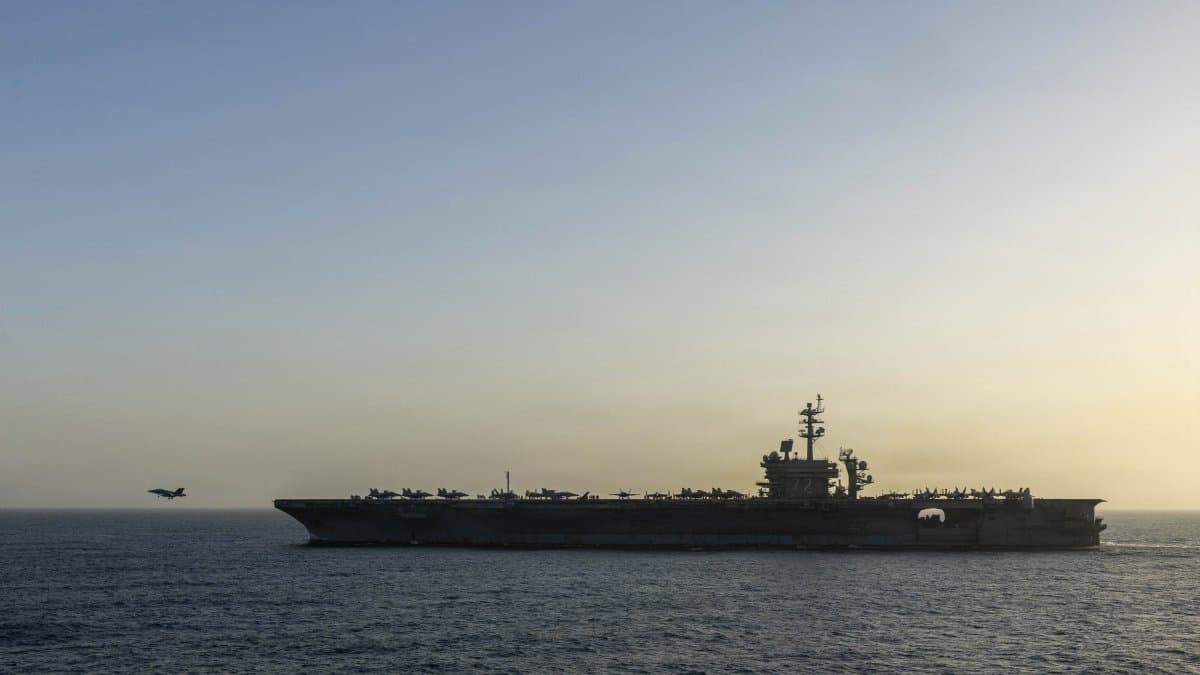
The aircraft carrier USS Abraham Lincoln officially began its return voyage to its home port in San Diego on Thursday, bringing to an end a grueling nine-month mission in the Middle East.
The ship, which carries a crew of approximately 5,000 sailors, has completed its assigned tasks in the region as part of the deterrence strategy against Iran's actions. U.S. officials confirmed the information, and The New York Times reported it.
Admiral Brad Cooper, head of U.S. Central Command (CENTCOM), anticipated the operational handover in an op-ed published in The Wall Street Journal. In his farewell remarks to the crew, the senior military commander stated:
"Good luck, and enjoy your well-deserved reunion soon." CENTCOM formalized the transfer of command by confirming the arrival of the aircraft carrier USS George Washington in the area, coming from its bases in Japan.
Nine months of continuous deployment
The USS Abraham Lincoln set sail from San Diego on November 21 and has spent virtually all of its 272-day deployment at sea.
Except for brief logistical stops in Guam and Oman, the naval contingent has maintained an uninterrupted presence in the Middle East area of operations. The return voyage covers nearly 13,000 nautical miles and will take between four and five weeks of sailing.
Naval operations took place under extremely demanding logistical conditions, resulting from damage sustained months earlier at the naval base in Manama, Bahrain—a strategic supply hub for U.S. forces.
In response to criticism from Democratic lawmakers about the conditions of personnel at sea, Admiral Cooper dismissed concerns about the ship's operational capability, noting that many of the allegations pertained to issues already resolved.
The Crew's Odyssey
The Lincoln left San Diego on Nov. 21 on a mission originally planned for the Pacific, headed toward the South China Sea. In January, though, the Navy redirected the carrier to the Middle East to join operations against Iran, which formally erupted on Feb. 28. What was supposed to be a six-month deployment, with a return date planned for May, stretched to nine — the longest for a U.S. aircraft carrier since the Cold War.
That sudden shift came at a real cost to the crew. Relatives told NBC News and CBS News about weeks without hot water, rationed purchases at the ship's commissary, and stretches of up to four months without mail, tied directly to the abrupt change of course toward the new theater of operations. One sailor's mother said her son lost weight because the Lincoln's commissary was limiting what service members could buy, that he spent weeks "eating what he could eat," and that hot water was sometimes out for days at a time. According to her, several shipmates "weren't doing too well" — one had simply given up, stopped reporting for duty, and wanted to be sent home. Conditions briefly improved in April after other parents began speaking out publicly.
On Aug. 3, a crew member fell overboard and was rescued alive, a "man overboard" incident the Navy confirmed, adding to other similar episodes reported by Military Times throughout the deployment. Jefferson Kelley, whose son Jackson was aboard the Lincoln on his first deployment, described the anguish of waiting to CBS News: "What's going through my mind as a parent is that need to want to be there, to want to be there for your child. I would get on a plane or helicopter tonight to get shipped out to the Lincoln if it meant bringing him home to his mom and his siblings and his family."
Naval muscle and enforcement of the blockade in the region
The departure of the USS Abraham Lincoln does not compromise the U.S. military posture in the area. U.S. Central Command maintains a significant naval deployment consisting of approximately 20 warships in waters adjacent to the Persian Gulf.
This presence is organized around two strike groups led by the USS George H.W. Bush and the newly arrived USS George Washington, accompanied by an amphibious group comprising Marine Corps units and multiple destroyers.
This combined force continues to carry out the Trump administration's directives as part of the naval blockade of Iranian ports—a pressure tactic that has now lasted 38 days and aims to strangle Tehran's operational and financial capacity in the region.



🛠 Do you think there is an error in this article?
Recommendations





LATEST