Hong Kong convicts two activists over Tiananmen memorials as Beijing's security law continues erasing dissent
The ruling against lawyer Chow Hang-tung and labor union leader Lee Cheuk-yan adds to a list that now includes more than 400 arrests for allegedly endangering national security since the law took effect, with 212 people formally charged and 182 convicted, according to figures from Hong Kong's own Security Bureau.
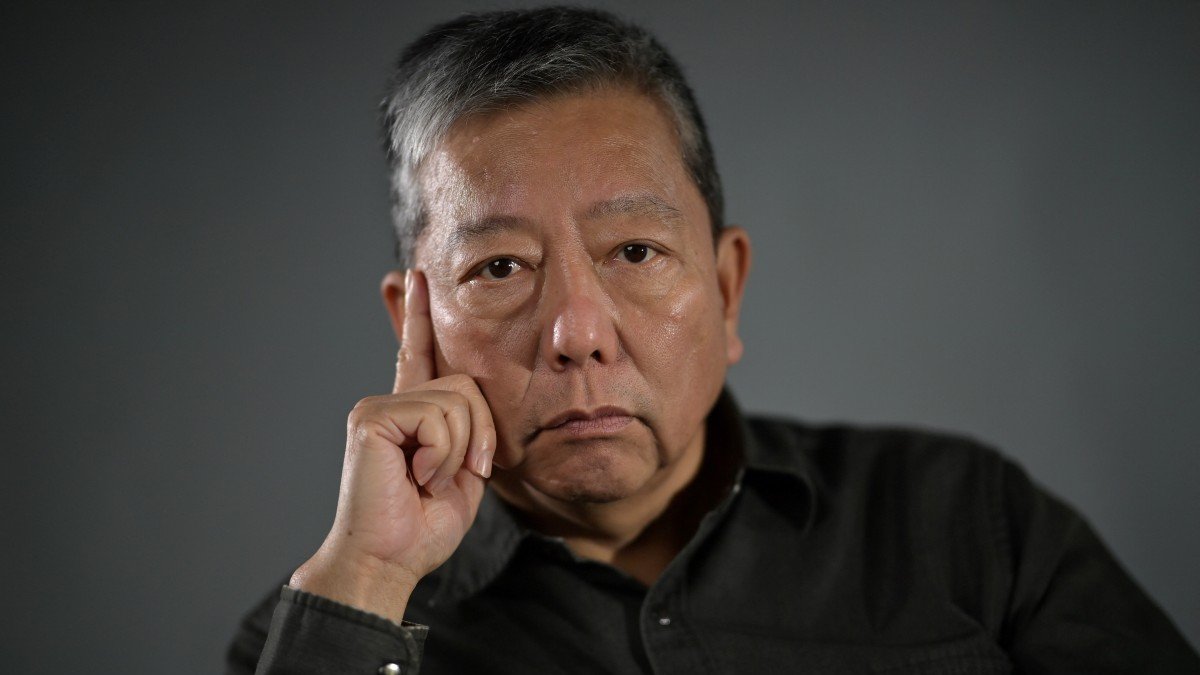
Hong Kong pro-democracy activist Lee Cheuk-yan poses during a photo shoot in 2021

A court in Hong Kong convicted lawyer Chow Hang-tung and labor activist Lee Cheuk-yan of inciting subversion on Friday, in a ruling that brings to a close one of the last major political trials stemming from the crackdown that Beijing unleashed on the territory following the massive 2019 protests against the Chinese regime. Both face sentences of up to 10 years in prison, which will be announced at a later date.
According to a report by The Wall Street Journal, the two activists were prosecuted under the national security law that the Beijing regime imposed on Hong Kong in 2020, the same legislation that has served as a tool to systematically dismantle any form of dissent in the former British colony. A third defendant, lawyer and former legislator Albert Ho, had pleaded guilty at the start of the trial, which lasted 24 days in January.
The case against Chow, Lee, and Ho did not center on whether they organized the June 4 vigils in memory of the victims of the 1989 Tiananmen Square massacre, a fact that was never in dispute. The real legal debate, the New York newspaper noted, centered on whether criticizing an act by the Chinese government could be equated with a direct challenge to state power—a question that lays bare the overtly political nature of the trial.
All three were part of the leadership of the Hong Kong Alliance in Support of Patriotic Movements in China, an organization dissolved in 2021 that for years demanded an end to what it defined as the "one-party dictatorship" in the Asian giant. The three-judge panel that presided over the trial concluded that the defendants sought to end the control of the Chinese Communist Party over the country, and maintained that their actions were aimed at sowing distrust toward the regime through "hostility" and "division."

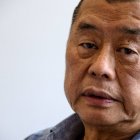
The ruling adds to a list that already includes more than 400 arrests for allegedly endangering national security since the law took effect, with 212 people formally charged and 182 convicted, according to figures from Hong Kong's own Security Bureau cited by the WSJ. Among those already sentenced are dozens of the territory's most prominent dissident voices, including 78-year-old media mogul Jimmy Lai, who was jailed for his journalistic work critical of Beijing.
The legislation also shields the Chinese regime from any local judicial scrutiny. Hong Kong's Court of Final Appeal ruled in 2021 that the territory's courts lack jurisdiction to review whether the security law violates the constitutional protections that theoretically govern the former colony. In practice, the final say on its interpretation rests directly with the National People's Congress, the Communist Party-controlled legislative body in Beijing.
For decades, the Victoria Park vigils were the only large-scale public event in all of China dedicated to honoring the victims of 1989, and they represented one of the last vestiges of the freedoms of speech and assembly that distinguished Hong Kong from the rest of the country after its return to Chinese control in 1997. That distinction, which once seemed untouchable, has been rapidly eroded under Beijing's legal and political offensive.
Authorities first used health restrictions due to the COVID-19 as an excuse to suspend the vigil in 2020, before banning it outright. Today, the very same fields where thousands of people used to light candles every June 4 are filled with a food festival organized by the Chinese regime itself—a stark contrast that starkly illustrates the systematic erasure of historical memory in Hong Kong.
LATEST