Global controversy over 'Vinicius-Prestianni Rule': Jude Bellingham brings his hand to his mouth during an exchange with Ayew, but doesn’t receive a red card like Almirón. Is there an explanation?
The English star apparently had a friendly exchange with the Ghanaian captain, yet he made the new gesture banned by FIFA. In contrast, Paraguayan player Miguel Almirón did receive an exemplary punishment for a similar situation, albeit one with a slightly different context. Are we facing a double standard by the referees or a pointless controversy?
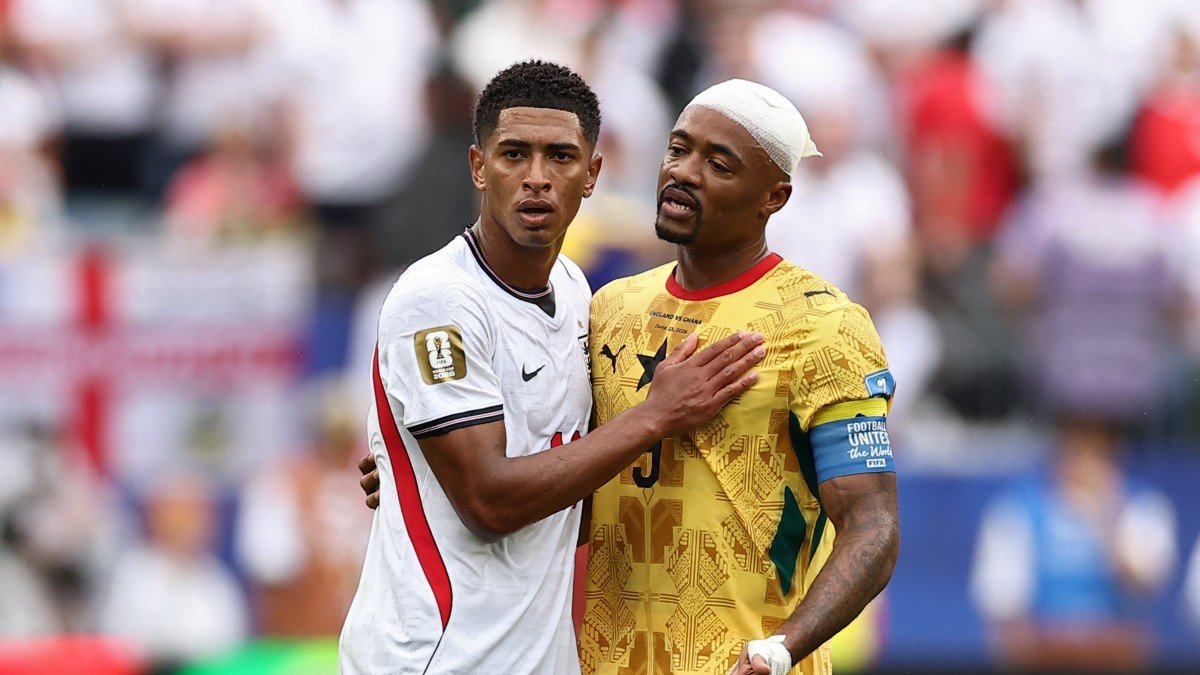
Jude Bellingham during an exchange with Ghanaian captain Jordan Ayew

During the scoreless draw between England and Ghana, in addition to a possible uncalled penalty for the African team in the second half at a pivotal moment in the match, there was an incident that, after the final whistle, sparked controversy and intense debate around the world, especially thanks to the swift coverage by British tabloids and social media: Jude Bellingham, Real Madrid star and icon of the English national team, had a conversation with the Ghanaian captain, Jordan Ayew, and, during the incident, he immediately brought his hand to his mouth.
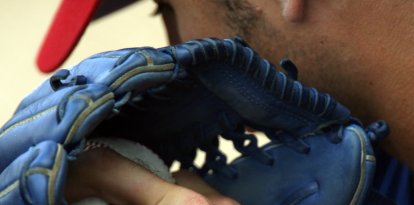
Although covering one’s mouth has been a common practice among soccer players for decades—a move intended to protect themselves from highly skilled lip-readers—this gesture can now be penalized with a red card thanks to a controversial new rule that FIFA is enforcing in this 2026 World Cup.
Background: Months before the tournament, during a Champions League match between Portugal’s Benfica and Spain’s Real Madrid, an Argentine player, Gianluca Prestianni, got into an argument with Brazilian star Vinicius Jr. amid a heated altercation between the two teams. During the altercation, Prestianni put his hand to his mouth and addressed the Brazilian winger, who did not hesitate to accuse the Argentine of committing a racist act. The situation could never be fully clarified because the Argentine player had his mouth covered. Prestianni did not deny that he insulted the Brazilian, but he denied having uttered a racist slur. It didn’t matter much; the Argentine was sanctioned anyway, and Vinicius’s complaint led to the creation of a new FIFA rule, better known as the “Vinicius-Prestianni Rule.”
Now, specifically regarding the World Cup, FIFA President Gianni Infantino himself had made it clear well in advance that such gestures would be met with an exemplary red-card penalty, urging players not to cover their mouths during matches when addressing opponents.

Sports
Un heroico Paraguay se sobrepone a expulsión de Almirón y sigue vivo en el Mundial; Brasil golea con facilidad a Haití
Emmanuel Alejandro Rondón
That was exactly what Bellingham did, but he received no punishment, warning, or VAR review. Some British tabloids reported the incident as a risk taken by the English player, who ultimately avoided a red card—especially after another player was penalized for the same gesture during this World Cup: Paraguayan Miguel Almirón.
During the intense 1–0 match between Paraguay and Turkey—a do-or-die match for both teams, which had lost their openers—a scuffle toward the end of the first half escalated into a brawl between the Paraguayans and the Turks. In a matter of seconds, the course of the match changed: Almirón, a Paraguayan midfielder who plays in the MLS, briefly turned toward Turkish fullback Mert Müldür, who, upon seeing the gesture, rushed toward the referee to accuse Almirón of doing it.
VAR intervened quickly and alerted Salvadoran head referee Iván Barton to the situation. The referee showed Almirón a red card, and Almirón could only react with gestures of disbelief at the time.
Almirón’s red card sparked a heated debate on social media and in the news. Many called the Paraguayan player reckless, as it was well known that such an action could result in a red card. Others, however, argued that Müldür took advantage of the new rule and deliberately provoked Almirón to get him sent off. So far, it remains unclear what Almirón said or what the Turkish player told the authorities, but the Paraguayan press reported that Almirón asked to know what his fellow player had said, clarifying that he had not disrespected his opponent.
In fact, journalist Dale Johnson of the BBC, explains that Bellingham was not penalized because the English player was reportedly having a friendly conversation with Ayew, which is permitted under the rules. But Johnson himself clarifies: “There are questions about how reliable this law change is, however. There is the possibility that a player could use it to get an opponent sent off in a situation like this.”
This confusion had already led many to question FIFA’s controversial new rule, which can be subject to broad interpretation, subjectivity, and—why not—injustice.
In Paraguay, in particular, fans and the press feel especially aggrieved, denouncing unequal treatment and double standards in the rules. In fact, one journalist, Jorge ‘Chipi’ Vera, was sanctioned by FIFA and lost his press credentials for lashing out at the referees, accusing the organization of corruption, and discrediting the new rules that harmed the Paraguayan national team.
Now, the new controversy surrounding Bellingham only serves to fan the flames, fuel criticism, and reinforce allegations of double standards in a tournament that has already gone down in sports history.
LATEST