What if Cape Verde isn't such a surprise?
The African team earned a draw against Uruguay, complicating the South Americans’ chances of advancing past the group stage. Egypt soundly defeated New Zealand, led by Mo Salah.
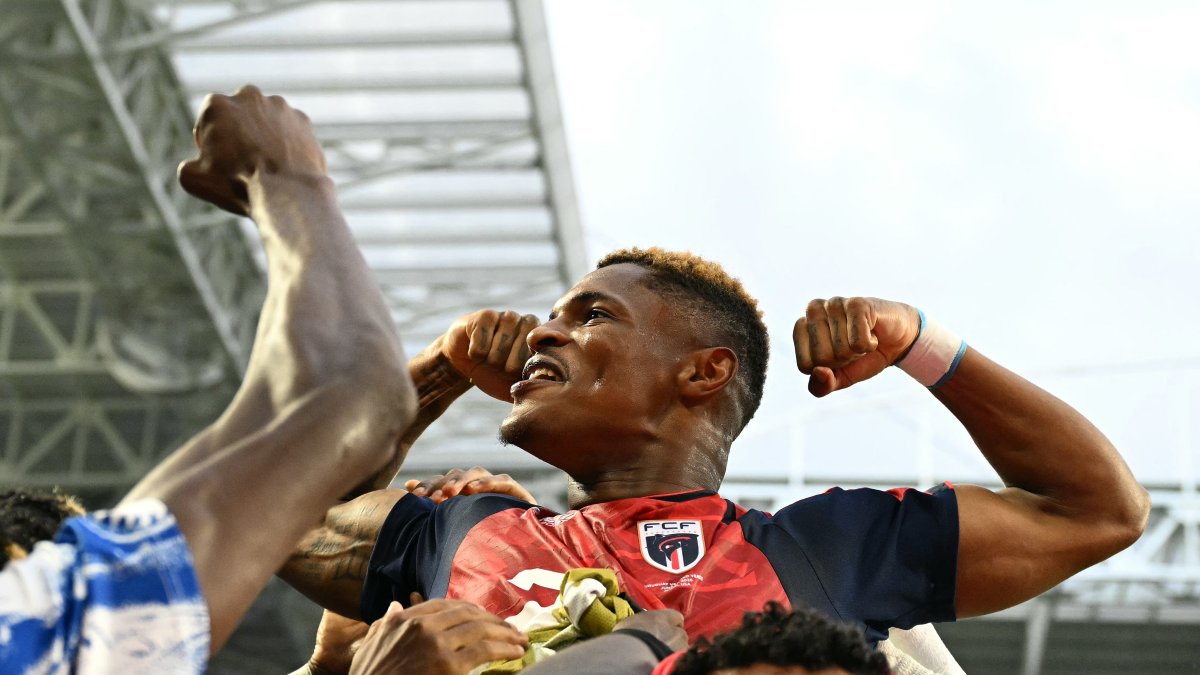
Cape Verde’s players celebrate the 2-2 draw against Uruguay

While the draw against Spain put Cape Verde on the global soccer map in what was seen as a major upset, the draw against Uruguay leaves the African team with a chance to advance to the next round in its debut.
In fact, Cape Verde is currently the favorite alongside Spain to advance, since their fate is in their own hands: they would only need to defeat Saudi Arabia—the weakest team in the qualifying round—to secure a spot in the Round of 16.
The Uruguayan team thought it had done the hard part by the end of the first half, when it came back from its opponent’s surprising opening goal, but a defensive error cost them the victory against an uninhibited team that even had chances to win the match.
Uruguay must beat Spain to control its own destiny
With this draw, Uruguay sits in second place in Group H with two points—the same as Cape Verde—and will face Spain, the group leader with four points, on the final matchday, needing to win to avoid depending on other results. Saudi Arabia brings up the rear with one point.
And yet Uruguay came out determined to assert its status as the favorite in the match. The side pressed high up the field, with their wingers cutting in like daggers, but failed to find the back of the net.
And in soccer, you pay dearly for that. Cape Verde reminded them of this, determined to prove that they could do more than just defend. Spurred on by their left back, Sidny Lopes Cabral, and midfielders Jamiro Monteiro and Telmo Arcanjo, the team began to shake off the Uruguayan pressure.
Thus, in a seemingly innocuous play, Arcanjo received the ball in midfield, dribbled past a defender, and drew a foul about 30 yards from the Uruguayan goal. The distance didn’t seem to pose a threat, but midfielder Kevin Pina took a chance and was rewarded. He took a deep breath, gathered momentum, and scored Cape Verde’s first-ever World Cup goal with a rocket that skimmed the post—a shot Fernando Muslera, who was out of position, couldn’t reach.
In a World Cup where goalkeepers are the heroes, Muslera became the villain
The "Blue Sharks" didn’t give up, and their fans—far fewer in number than the Uruguayan supporters in Miami—were now much louder. Uruguay struggled to absorb the blow but managed to regroup just before halftime.
In a scramble in the box, Lopes Cabral headed the ball off the post, and Maxi Araújo capitalized on the rebound to tie the game with a header in the six-yard box. Shortly afterward, Canobbio scored the second goal by finishing from point-blank range off a header deflection by Federico Viñas following a pass from Manuel Ugarte.
With the score reflecting the logical outcome, Uruguay was controlling the match, but a defensive error changed everything. Out wide on the left, Mathías Olivera misjudged a pass toward the center; Muslera came off his line too early, and forward Hélio Varela beat him to the ball to tie the game with a shot into an empty net.
The goal emboldened the African team, which came close to scoring a third two minutes later on a counterattack finished by Monteiro with a shot that grazed the crossbar.
An open finish that could have gone either way
“It’s extremely difficult to score a goal, and conceding two like the ones we did helps a team—which, in my view, has fewer resources than Uruguay—stay in the game,” lamented Uruguayan coach Marcelo Bielsa at the postgame press conference, in remarks reported by AFP.
With the match already a wild, back-and-forth affair, "La Celeste" regained momentum and ended up laying siege to their opponents. In stoppage time, Valverde nearly connected with a low cross from Darwin Núñez, and a shot by Canobbio grazed the crossbar after a final counterattack.
Cape Verde, heroic in defense once again, also had its chances on the counterattack, but was unable to knock out La Celeste. “We’re at a point where we can clearly say that we’re going to fight for qualification,” said Cape Verde’s head coach, Bubista, after the match. “We may be a small country facing difficulties, but with organization and determination, we can also compete with the big teams,” he celebrated.
The "Pharaohs" devour the "Kiwis"
The "Pharaohs" emerged as the sole leaders of the tightly contested Group G with four points, followed by Belgium and Iran, who drew 0-0 earlier in the day, with two points each. New Zealand stands at just one point.
LATEST