ANALYSIS.
European Court rules that the hyperandrogenic athlete Caster Semenya did not have a fair trial in Switzerland
However, the highest European court concluded that the double Olympic champion was not a victim of discrimination and declined to rule on World Athletics’ requirement that she undergo treatment to lower her naturally produced testosterone levels.
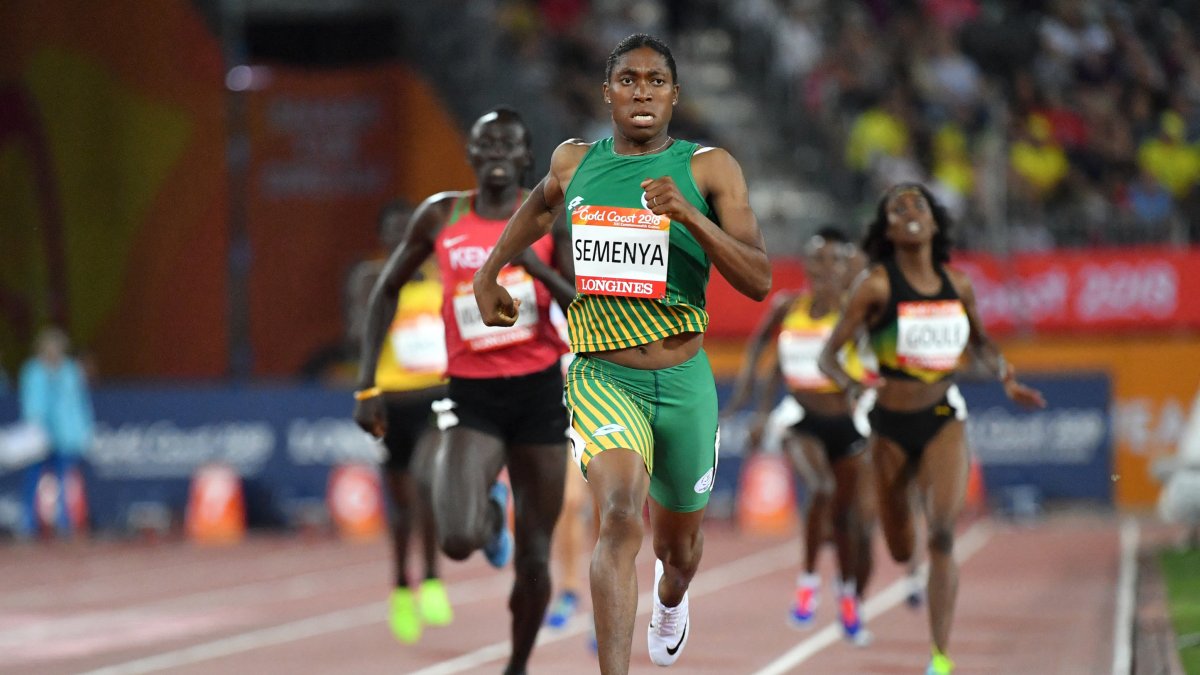
Semenya, during a competition in 2018.

In a key moment for the future of women's sport, the European Court of Human Rights ruled that Switzerland violated the right of South African hyperandrogenic athlete Caster Semenya to a fair trial. By contrast, the highest European judicial instance considered her complaint as a victim of discrimination inadmissible.
However, the origin of the judicial process—the imposition by World Athletics (the International Athletics Federation) of a treatment to reduce the levels of testosterone that Semenya naturally produces so that she can compete—was not addressed by the judges.
In 2023, the same court ruled that Semenya was a victim of discrimination
The Grand Chamber of the pan-European court based in Strasbourg, in northeastern France, thus reversed an earlier decision of this court, which found in 2023 that the South African was a victim of discrimination and violation of her private life.
After learning of the ruling, Semenya, in statements picked up by AFP, said "we must respect the athletes, we must put their rights first.... It's just a reminder to the leaders that the priority is the protection of athletes," said the long-distance runner, who has always been legally identified as a woman. Semenya also left the door open to continue her battle: "The fight will never end as long as we have injustice."
Semenya, out of international competitions since 2018
Since 2018, the South African double Olympic champion has not participated in international competitions because of her refusal to undergo hormone treatment to reduce her testosterone rate, as imposed by World Athletics.
The double Olympic champion of the 800 meters (2012 and 2016) and triple world champion (2009, 2011 and 2017) naturally produces an excess of male hormones (androgens), which can increase her muscle mass and improve her performance.
A career marked by doubts about her gender
Since her revelation to the general public at the 2009 World Championships in Berlin, where she won the gold medal, her physical appearance and deep voice heightened debates and generated speculation about the sex of the 34-year-old athlete.
Following her success in the German capital, the athlete was not allowed to compete for 11 months and was forced to undergo "femininity" tests, the results of which remain secret. In July 2010, she was cleared to compete again.
The 2018 regulations that changed everything
But in 2018, the World Athletics regulations changed everything. The Court of Arbitration for Sport (CAS, based in Lausanne) approved it in 2019. Semenya appealed this decision to the Swiss Federal Supreme Court, which dismissed the appeal in 2020.
The ECtHR considers that, with that decision, the Swiss high court violated the right to a fair trial of the athlete. According to the ruling, that court "did not act sufficiently on the doubts expressed" nor did it "reach the level of rigor required" to respond to Semenya's appeal against the rules applied to athletes with "differences in sexual development" (DSD).
Athletics seeks to have only women compete in the women's category
Beyond the Semenya case, the gender issue shakes the world of sport. The International Olympic Committee is weighing reintroducing gender checks, under pressure from several sports. World Athletics and World Boxing, the world boxing federation, have already announced the adoption of chromosomal tests, something already planned in 2023 by the swimming federation World Aquatics.
The idea is to admit "XX athletes" - according to World Athletics' term - and exclude transgender women and those considered female but who present XY chromosomes, one of the forms of DDS or biological intersexuality.
LATEST