Free buses and millions in losses: Mamdani's proposal shakes up New York's transportation budget
The transit authority is collecting tens of millions of dollars less than expected in bus fares, while concerns about fare evasion are growing. Mayor Zohran Mamdani argues that this phenomenon demonstrates the need to move toward a free system.
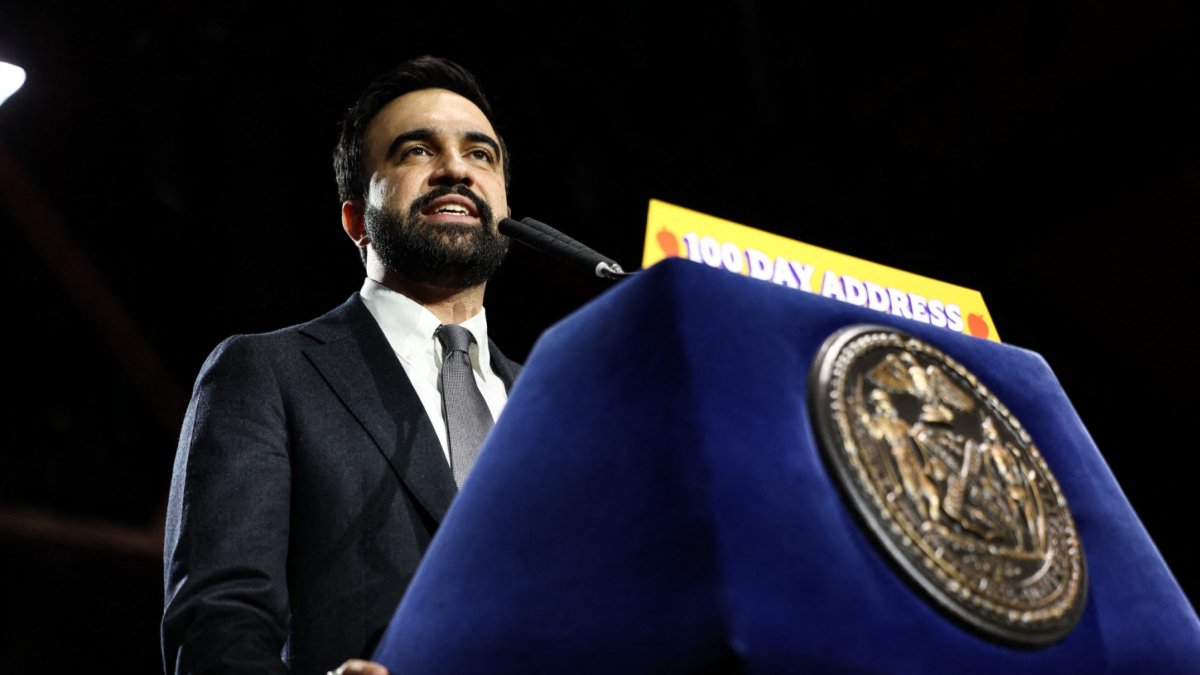
New York Mayor Zohran Mamdani

The promise by New York City Mayor Zohran Mamdani to move toward a free bus system has opened a new front in the debate over the city's public transit funding, after data from the Metropolitan Transportation Authority (MTA) showed a significant drop in paying passengers and fare revenue.
MTA President and CEO Janno Lieber warned in late July that the growing political debate over free bus rides could be influencing ridership patterns.
"I say all of the talk of free buses, it has an impact," Lieber said, though he avoided directly mentioning Mamdani, according to statements reported by local media.
The MTA's official financial documents for June show that New York City Transit collected $291.3 million in bus fares during the first six months of 2026, compared to the budgeted $314.4 million—a shortfall of $23.1 million.
Added to that amount is MTA Bus, which collected $88.6 million—about $12.6 million below budget. Combined, the two bus operations fell short of projections by approximately $35.7 million through June.
The MTA itself attributes part of the shortfall to a lower number of paying passengers on both New York City Transit and MTA Bus. In June, revenue from city buses was 4.9% below budget, while MTA Bus revenue was 10.5% below budget.

Politics
'This is communism': Mamdani's plan for public supermarkets sparks a strong Republican backlash
Diane Hernández
Number of paying riders falls
This concern is particularly relevant because fare evasion was already a significant problem before Mamdani took office as mayor.
The MTA reported in January 2025 that about half of bus passengers had evaded fares during the most critical period, although authorities later managed to slightly reduce that proportion through enforcement operations.
Now, data released in July once again show a decline in paid trips. According to figures from the agency cited by The New York Post, the number of passengers who paid the fare fell 7.7% year-over-year in June.
Lieber argued that the problem cannot be attributed solely to people facing financial hardship and urged those who can afford the fare to pay it.
The MTA official particularly criticized passengers who are commuting to office jobs and have the financial means but board the bus without paying the fare.
"You’re just passing along the cost to another taxpayer. Somebody’s going to have to pay for that ride," he said.

Politics
Mamdani presses full speed ahead with his socialist agenda, stirring up growing discontent across New York
Emmanuel Alejandro Rondón
Union cites "worst" levels of fare evasion
John V. Chiarello, president of the Transport Workers Union Local 100, which represents tens of thousands of New York City transit workers, told Fox News that drivers are seeing some of the highest fare evasion rates in recent years.
According to Chiarello, the temporary free bus service during the COVID pandemic helped change the habits of certain passengers, and the subsequent political campaign in favor of free buses may have further reinforced that perception.
"Once you make something free, and you give people a feeling of entitlement, and then the mayor says that he wants to make buses free, you have a perfect storm of people not wanting to pay," he told Fox News.
The union leader added that drivers are instructed not to confront fare-dodging passengers directly due to the risk of assault.
Mamdani's proposal could cost more than $1 billion a year
Free bus service was one of Mamdani's flagship proposals during his 2025 campaign.
However, converting the entire network to a fare-free system would come at a considerable cost.
New York's Independent Budget Office estimated that implementing free buses citywide would have a net cost of approximately $1.1 billion annually by 2027, primarily due to the revenue the MTA would forgo.
The issue is particularly complex because the transit system is not under the mayor's sole control.
The MTA is under the jurisdiction of New York state, and Governor Kathy Hochul plays a decisive role in its funding and operations, so Mamdani cannot unilaterally eliminate fares.

Politics
New York: Mamdani's new luxury-home tax gets back in the game after appeals court lifts judicial block
Emmanuel Alejandro Rondón
In fact, when the two leaders announced their major bus system reform on July 8, the proposal focused for the time being on improving speed and service quality, not on eliminating fares.
The program, called ”Next Stop: Fast Buses, Better Service,” includes 50 priority corridors, new express routes, improvements to bus stops, and approximately 2,500 new buses. The city has committed $254 million in operating expenses and $628 million in capital investments over five years.
With millions of daily trips on the bus network and a budget that relies partly on fare revenue, the question is no longer just whether New York can offer free buses, but who would end up paying for them.
LATEST